



Rendering Text with Glyphy - Zen and the Art of GNOME
Submitted by Roy Schestowitz on Sunday 20th of March 2022 09:13:34 AM
Filed under 

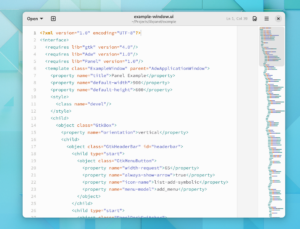
HarfBuzz 4.0 was recently released and it gained the ability to draw shapes using hb_draw(). Recently Behdad updated Glyphy to use that new HarfBuzz API which allows us to draw fonts on the GPU without involving FreeType.
I created a branch and along with Matthias we taught GTK’s OpenGL renderer to use Glyphy to store size-independent descriptions of glyphs in GL texture atlases which are drawn with shaders. All the magic really comes from Glyphy, so this was largely an integration project.
Contrast this with how things worked previously, which is to render the glyph for a particular size and x/y shift on the CPU and upload that to a texture atlas. The glyph is then drawn by using the coloring shader to apply color while copying into place. This has all sorts of drawbacks like pixel alignment restrictions and needing a copy of every glyph at every size and shift you need to render in the frame in a texture atlas (which can be reused across frames). Just as an example, if you wanted to animate the size of some text, you’d have a pretty expensive operation every frame and still run into perceived jitter as you align to pixel boundaries each frame.

»
-

- Login or register to post comments
 Printer-friendly version
- 1504 reads
 PDF version
More in Tux Machines
- Highlights
- Front Page
- Latest Headlines
- Archive
- Recent comments
- All-Time Popular Stories
- Hot Topics
- New Members
digiKam 7.7.0 is released
After three months of active maintenance and another bug triage, the digiKam team is proud to present version 7.7.0 of its open source digital photo manager. See below the list of most important features coming with this release.
|
Dilution and Misuse of the "Linux" Brand
|
Samsung, Red Hat to Work on Linux Drivers for Future Tech
The metaverse is expected to uproot system design as we know it, and Samsung is one of many hardware vendors re-imagining data center infrastructure in preparation for a parallel 3D world.
Samsung is working on new memory technologies that provide faster bandwidth inside hardware for data to travel between CPUs, storage and other computing resources. The company also announced it was partnering with Red Hat to ensure these technologies have Linux compatibility.
|
today's howtos
|


 Content (where original) is available under CC-BY-SA, copyrighted by original author/s.



Recent comments
1 year 11 weeks ago
1 year 11 weeks ago
1 year 11 weeks ago
1 year 11 weeks ago
1 year 11 weeks ago
1 year 11 weeks ago
1 year 11 weeks ago
1 year 11 weeks ago
1 year 11 weeks ago
1 year 11 weeks ago