



Programming Leftovers
Submitted by Roy Schestowitz on Friday 11th of March 2022 12:27:39 PM
Filed under 
-
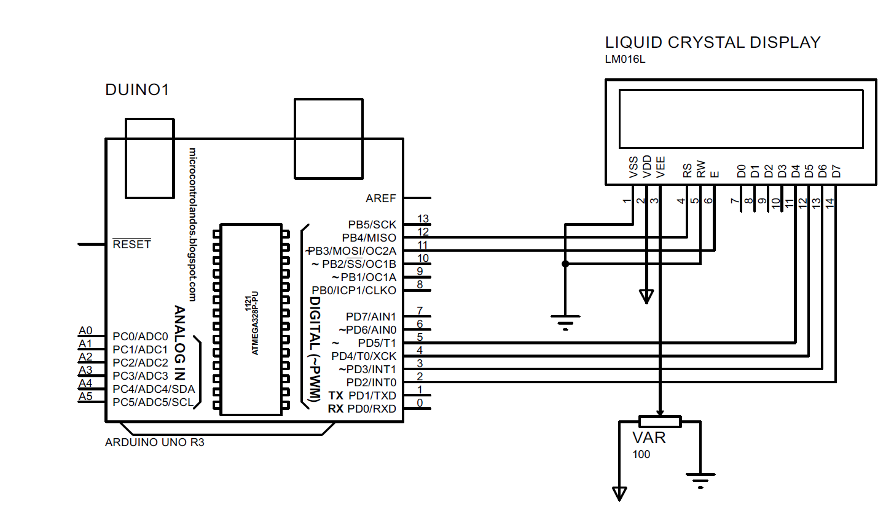
How to Display Special Characters on LCD using Arduino Uno
For better understanding of the inputs and outputs of an Arduino program they must be displayed in an organized manner. For displaying the data of the Arduino code, the most viable option is the 16×2 LCD because it is easy to interface with Arduino boards. To display the data and to make it more readable or understandable, we can take the help of the customized special characters that can be created by the user. For example, creating the symbols that indicate temperature, pressure or symbol for identification of any type of data. We have created some special characters and displayed them on the LCD in this discourse.
-
How to Fix “not declared in this scope” Error in Arduino
When programming the Arduino learners come across various types of errors and sometimes it becomes difficult to troubleshoot the error code. The error codes mostly come when the Arduino program is compiled, and these errors are displayed in the output menu of the Arduino IDE which is at the bottom of the software. The Arduino IDE also indicates on which line of the code the error exists and it also suggests suitable actions for rectifying the error. The most common error beginners face is the “not declared in this scope” and we have discussed why such type of error arises and how we can fix this error.
-
Dirk Eddelbuettel: dtts 0.1.0 on CRAN: New Package
Leonardo and I are thrilled to announce the first CRAN release of dtts. The dtts package builds on top of both our nanotime package and the well-loved and widely-used data.table package by Matt, Arun, Jan, and numerous collaborators.
In a very rough nutshell, you can think of dtts as combining both these potent ingredients to produce something not-entirely-unlike the venerable xts package by our friends Jeff and Josh—but using highest-precision nanosecond increments rather than not-quite-microseconds or dates.
-
Create 3D worlds with code on our first-ever Unity livestream
-
Things I hate about Rust, redux
Two years ago, I wrote a post with a handful of grievances about Rust, a language that I then (and still) consider my favorite compiled language.
In the two years since I’ve gone from considering myself familiar with Rust, to comfortable in it, to thinking in Rust even when writing in other languages (sometimes to my detriment). So, like two years ago, this post should be read from a place of love for Rust, and not a cheap attempt to knock it.
»
-

- Login or register to post comments
 Printer-friendly version
- 1802 reads
 PDF version
More in Tux Machines
- Highlights
- Front Page
- Latest Headlines
- Archive
- Recent comments
- All-Time Popular Stories
- Hot Topics
- New Members
digiKam 7.7.0 is released
After three months of active maintenance and another bug triage, the digiKam team is proud to present version 7.7.0 of its open source digital photo manager. See below the list of most important features coming with this release.
|
Dilution and Misuse of the "Linux" Brand
|
Samsung, Red Hat to Work on Linux Drivers for Future Tech
The metaverse is expected to uproot system design as we know it, and Samsung is one of many hardware vendors re-imagining data center infrastructure in preparation for a parallel 3D world.
Samsung is working on new memory technologies that provide faster bandwidth inside hardware for data to travel between CPUs, storage and other computing resources. The company also announced it was partnering with Red Hat to ensure these technologies have Linux compatibility.
|
today's howtos
|


 Content (where original) is available under CC-BY-SA, copyrighted by original author/s.



Recent comments
1 year 11 weeks ago
1 year 11 weeks ago
1 year 11 weeks ago
1 year 11 weeks ago
1 year 11 weeks ago
1 year 11 weeks ago
1 year 11 weeks ago
1 year 11 weeks ago
1 year 11 weeks ago
1 year 11 weeks ago