



today's leftovers
Submitted by Roy Schestowitz on Wednesday 9th of March 2022 12:36:24 AM
Filed under 
-
FSF job opportunity: program manager
The Free Software Foundation (FSF), a Massachusetts 501(c)(3) charity with a worldwide mission to protect computer user freedom, seeks a motivated and talented Boston-based individual to be our full-time program manager.
Reporting to the executive director, the program manager co-leads our campaigns team. This position develops and promotes longer-term resources and advocacy programs related to increasing the use of free software and expanding and advancing the free software movement. The program manager plays a key role in external communications, fundraising, member engagement, and special events.
-
DataStax updates K8ssandra to help Cassandra operate worldwide
DataStax has released a new open-source Kubernetes operator for Cassandra, the wide-column store distributed database about to work across multiple clusters for the first time.
K8ssandra is DataStax's open-source distribution of Apache Cassandra which is designed specifically for Kubernetes and supports stateful workloads. Released today, the update also supports multiple clusters.
The idea, DataStax says, is to allow users to deploy Cassandra-based applications that require high availability on Kubernetes, across multiple regions.
-
CrowdSec: Why we support the OSI
CrowdSec is a next-gen security tool. It’s open source and free. It locally blocks attacks based on both behavior and crowd-generated block lists, then calls on its community of sysadmins, devops & secops professionals to share back IPs detected as aggressive with other members of the CrowdSec community. It runs seamlessly on virtual machines, bare-metal servers, and containers, or it can be called directly from code via API. CrowdSec’s philosophy, culture and values mirror that of the Open Source Initiative, believing that if cybercriminals are collaborating to attack, then collaboration is also the best defense.
[...]
Having an open source approach brings us visibility, virality, new recruits, trust from our peers, and so much more. Scaling a network effect in cybersecurity with a tool like CrowdSec would just be impossible without open source. So for us, it’s natural to commit to giving back to the community, helping other projects, and supporting open source as broadly as we can.
By sponsoring the OSI, we want to advance its mission to protect open source software, boost development, and build bridges among various open source communities so they can organize open source cooperation. There are so many projects that are created and maintained on goodwill and spare time by great professionals who often are not paid or even recognized for what they do. OSI is an organization that works to protect those projects and those collaborators. There are many companies out there benefitting from open source that don’t give back. At CrowdSec we know that because of our involvement with OSI, even if we fail as a company, our good work will live on.
-
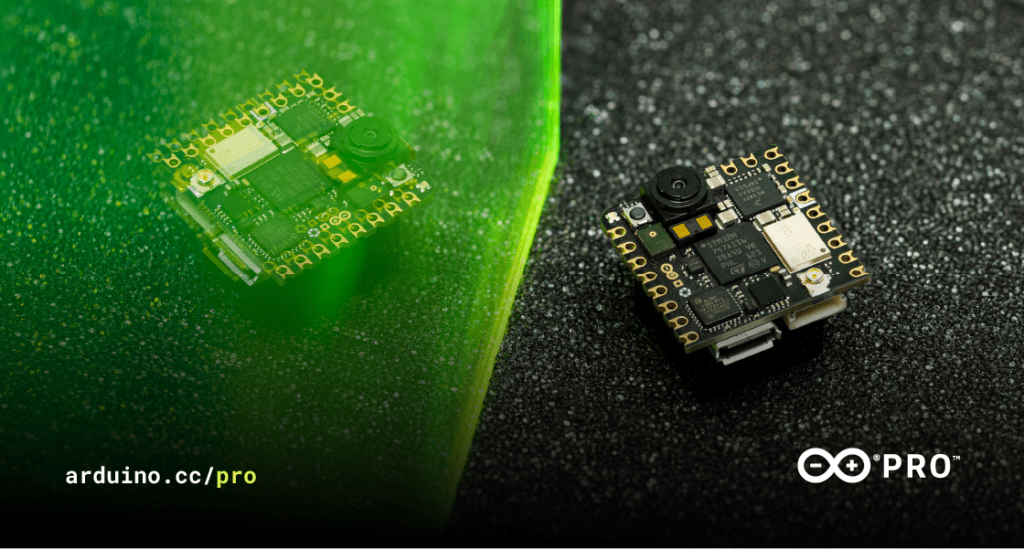
Meet the Nicla Vision: Love at first sight! | Arduino Blog
We’re proud to announce a new addition to the Arduino ecosystem, the Nicla Vision.
This is a brand new, ready-to-use, 2MP standalone camera that lets you analyze and process images on the edge for advanced machine vision and edge computing applications.
Now you can add image detection, facial recognition, automated optical inspection, vehicle plate reading, gesture recognition and more to your projects. Nicla Vision has a powerful dual processor and is packed with features that make an infinite number of applications possible in building and industrial automation, safety and security, and prototyping. Everything from business-savvy predictive maintenance (by detecting and analyzing surface wear, for example) to user-friendly smart kiosks that anyone can explore via intuitive gestures. All true to Nicla’s mission to provide a new range of easy-to-use, cost-effective and accessible tools to advanced users and enthusiasts alike.
-
New ray-tracing benchmark software Relic of Life released for free — see system requirements - Gamepur
It’s called Relic of Life, and it’s totally free to download. Windows 10/11, Ubuntu, and Linux Flatpak versions are available on Basemark’s website. Relic of Life is meant for any device that utilizes ray-tracing and meets the system requirements (listed at the bottom of this article), including mobile devices to consoles, but if you’re grabbing the free version, you’ll most likely be doing so to test your PC gaming rig. Note that the free version requires you to be connected online and will automatically share your scores on Basemark’s Powerboard page — that’s the tradeoff for getting it at no cost.
»
-

- Login or register to post comments
 Printer-friendly version
- 1639 reads
 PDF version
More in Tux Machines
- Highlights
- Front Page
- Latest Headlines
- Archive
- Recent comments
- All-Time Popular Stories
- Hot Topics
- New Members
digiKam 7.7.0 is released
After three months of active maintenance and another bug triage, the digiKam team is proud to present version 7.7.0 of its open source digital photo manager. See below the list of most important features coming with this release.
|
Dilution and Misuse of the "Linux" Brand
|
Samsung, Red Hat to Work on Linux Drivers for Future Tech
The metaverse is expected to uproot system design as we know it, and Samsung is one of many hardware vendors re-imagining data center infrastructure in preparation for a parallel 3D world.
Samsung is working on new memory technologies that provide faster bandwidth inside hardware for data to travel between CPUs, storage and other computing resources. The company also announced it was partnering with Red Hat to ensure these technologies have Linux compatibility.
|
today's howtos
|


 Content (where original) is available under CC-BY-SA, copyrighted by original author/s.



Recent comments
1 year 11 weeks ago
1 year 11 weeks ago
1 year 11 weeks ago
1 year 11 weeks ago
1 year 11 weeks ago
1 year 11 weeks ago
1 year 11 weeks ago
1 year 11 weeks ago
1 year 11 weeks ago
1 year 11 weeks ago