



Raspberry Pi bootloader enables OS installs with no separate PC required
Submitted by Roy Schestowitz on Tuesday 8th of February 2022 11:47:52 PM
Filed under 



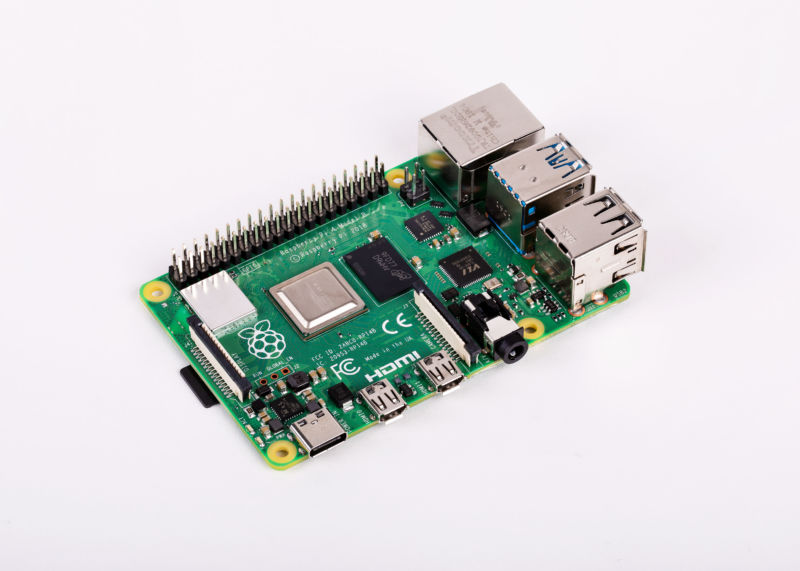
Setting up a Raspberry Pi board has always required a second computer, which is used to flash your operating system of choice to an SD card so your Pi can boot. But the Pi Foundation is working on a new version of its bootloader that could connect an OS-less Pi board directly to the Internet, allowing it to download and install the official Raspberry Pi OS to a blank SD card without requiring another computer.
To test the networked booting feature, you'll need to use the Pi Imager on a separate computer to copy an updater for the bootloader over to an SD card—Pi firmware updates are normally installed along with new OS updates rather than separately, but since this is still in testing, it requires extra steps.
Once it's installed, there are a number of conditions that have to be met for network booting to work. It only works on Pi 4 boards (and Pi 4-derived devices, like the Pi 400 computer) that have both a keyboard and an Ethernet cable connected. If you already have an SD card or USB drive with a bootable OS connected, the Pi will boot from those as it normally does so it doesn't slow down the regular boot process. And you'll be limited to the OS image selection in the official Pi imager, though this covers a wide range of popular distributions, including Ubuntu, LibreELEC, a couple of retro-gaming emulation OSes, and Homebridge. For other OSes, downloading the image on a separate PC and installing it to an SD card manually is still the best way to go.

»
-

- Login or register to post comments
 Printer-friendly version
- 3028 reads
 PDF version
More in Tux Machines
- Highlights
- Front Page
- Latest Headlines
- Archive
- Recent comments
- All-Time Popular Stories
- Hot Topics
- New Members
digiKam 7.7.0 is released
After three months of active maintenance and another bug triage, the digiKam team is proud to present version 7.7.0 of its open source digital photo manager. See below the list of most important features coming with this release.
|
Dilution and Misuse of the "Linux" Brand
|
Samsung, Red Hat to Work on Linux Drivers for Future Tech
The metaverse is expected to uproot system design as we know it, and Samsung is one of many hardware vendors re-imagining data center infrastructure in preparation for a parallel 3D world.
Samsung is working on new memory technologies that provide faster bandwidth inside hardware for data to travel between CPUs, storage and other computing resources. The company also announced it was partnering with Red Hat to ensure these technologies have Linux compatibility.
|
today's howtos
|


 Content (where original) is available under CC-BY-SA, copyrighted by original author/s.



Recent comments
1 year 11 weeks ago
1 year 11 weeks ago
1 year 11 weeks ago
1 year 11 weeks ago
1 year 11 weeks ago
1 year 11 weeks ago
1 year 11 weeks ago
1 year 11 weeks ago
1 year 11 weeks ago
1 year 11 weeks ago