



Linux-driven ADAS fleet computer looks out and in
Submitted by Roy Schestowitz on Thursday 16th of December 2021 01:45:21 AM
Filed under 


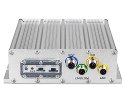
VIA’s “Mobile360 M800 Video Telematics System” for ADAS and fleet management runs Linux on an AI-boosted dual-core Cortex-A7 SoC. The IP67-protected system is accompanied by driver-facing and front-facing cameras.
VIA Technologies has lately been focusing on its Mobile360 in-vehicle systems for ADAS (Advanced Driver Assistance Systems). Its new VIA Mobile360 M800 Video Telematics System enables fleet operators to add “cutting-edge collision alert and driver monitoring capabilities to buses, trucks, and other large vehicles,” says VIA.
The Mobile360 M800 comprises an ultra-compact IP67-rated system, a front-facing ADAS camera, and an interior-facing driver camera. The in-vehicle system can detect potential dangers on the road, as well as signs of driver distraction, drowsiness, smoking, and smartphone usage.
[...]
The 194.6 x 178 x 53.8mm system is equipped with 1GB DDR3, 512MB SPI NAND, and a microSD slot for up to 512GB. The IP67-protected computer offers M12 connectors for 10/100 Ethernet, DIO (for debug), CAN/COM (TX/RX for RS-232), and a combination 9-36VDC input and CAN interface with ACC/IGN with support for OBDII and J1939 telematics protocols. A J1939 cable is included.

Also: UP Squared 6000 SBC and mini-PC launch with Elkhart Lake
»
-

- Login or register to post comments
 Printer-friendly version
- 2213 reads
 PDF version
More in Tux Machines
- Highlights
- Front Page
- Latest Headlines
- Archive
- Recent comments
- All-Time Popular Stories
- Hot Topics
- New Members
digiKam 7.7.0 is released
After three months of active maintenance and another bug triage, the digiKam team is proud to present version 7.7.0 of its open source digital photo manager. See below the list of most important features coming with this release.
|
Dilution and Misuse of the "Linux" Brand
|
Samsung, Red Hat to Work on Linux Drivers for Future Tech
The metaverse is expected to uproot system design as we know it, and Samsung is one of many hardware vendors re-imagining data center infrastructure in preparation for a parallel 3D world.
Samsung is working on new memory technologies that provide faster bandwidth inside hardware for data to travel between CPUs, storage and other computing resources. The company also announced it was partnering with Red Hat to ensure these technologies have Linux compatibility.
|
today's howtos
|


 Content (where original) is available under CC-BY-SA, copyrighted by original author/s.



Recent comments
1 year 11 weeks ago
1 year 11 weeks ago
1 year 11 weeks ago
1 year 11 weeks ago
1 year 11 weeks ago
1 year 11 weeks ago
1 year 11 weeks ago
1 year 11 weeks ago
1 year 11 weeks ago
1 year 11 weeks ago