



SiFive RISC-V Rack Cluster and Sifive Essential 6-Series RISC-V CPUs
Submitted by Roy Schestowitz on Friday 10th of December 2021 12:32:13 AM
Filed under 


-
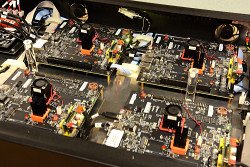
SiFive RISC-V Rack Cluster and custom PC power up with HiFive Unmatched
SiFive and AB Open demoed a “SiFive RISC-V Rack Cluster” that runs Linux on four of SiFive’s RISC-V U74 based HiFive Unmatched boards. AB Open and Future Computing recently announced a PC design based on the SBC.
At the RISC-V Summit in San Francisco this week, RISC-V chipmaker and designer SiFive demonstrated a SiFive RISC-V Rack Cluster with 4x HiFive Unmatched SBCs. The four-way, rackmount cluster collaboration with AB Open appears to be the first cluster kit using RISC-V technology. Last month, AB Open joined with Future Computing to unveil a custom desktop PC based on the Unmatched and has posted some open source hardware and software files for the project (see farther below).
-
Sifive Essential 6-Series RISC-V processors target Linux, real-time applications - CNX Software
SiFive has been busy. Just a few days after SiFive Performance P650 announcement, the company has announced the SiFive Essential 6-Series RISC-V processor family starting with four 64-bit/32-bit real-time core, and two Linux capable application cores, plus the SiFive 21G3 release with various improvements to existing families.
»
-

- Login or register to post comments
 Printer-friendly version
- 2588 reads
 PDF version
More in Tux Machines
- Highlights
- Front Page
- Latest Headlines
- Archive
- Recent comments
- All-Time Popular Stories
- Hot Topics
- New Members
digiKam 7.7.0 is released
After three months of active maintenance and another bug triage, the digiKam team is proud to present version 7.7.0 of its open source digital photo manager. See below the list of most important features coming with this release.
|
Dilution and Misuse of the "Linux" Brand
|
Samsung, Red Hat to Work on Linux Drivers for Future Tech
The metaverse is expected to uproot system design as we know it, and Samsung is one of many hardware vendors re-imagining data center infrastructure in preparation for a parallel 3D world.
Samsung is working on new memory technologies that provide faster bandwidth inside hardware for data to travel between CPUs, storage and other computing resources. The company also announced it was partnering with Red Hat to ensure these technologies have Linux compatibility.
|
today's howtos
|


 Content (where original) is available under CC-BY-SA, copyrighted by original author/s.



Recent comments
1 year 11 weeks ago
1 year 11 weeks ago
1 year 11 weeks ago
1 year 11 weeks ago
1 year 11 weeks ago
1 year 11 weeks ago
1 year 11 weeks ago
1 year 11 weeks ago
1 year 11 weeks ago
1 year 11 weeks ago