



Raspberry Pi Helps Forgotten Home Computer Rise From The Grave
Submitted by Roy Schestowitz on Friday 10th of December 2021 12:17:46 AM
Filed under 


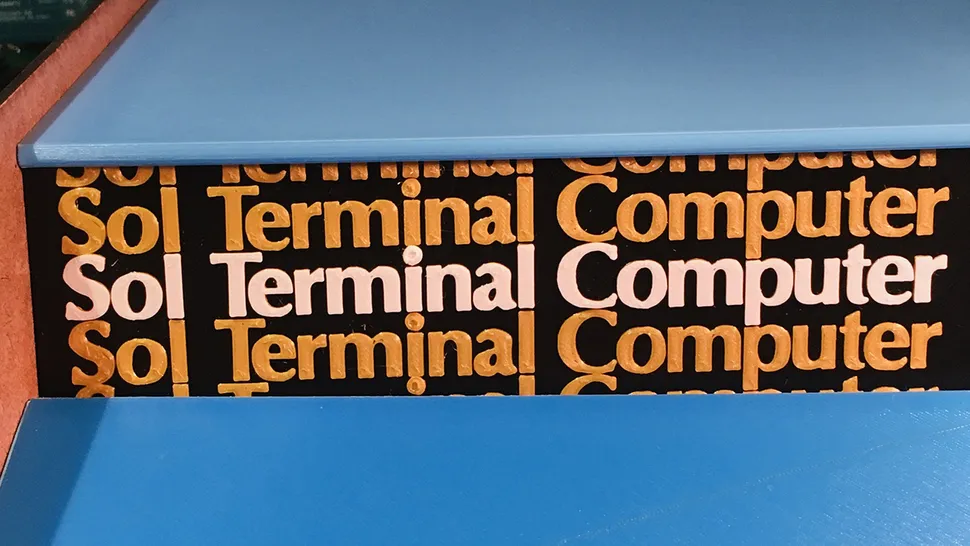
Who remembers the Sol-20? Us neither, but it was an important milestone on the path to where we, and our computers, are today. Without the Sol-20 the home computer world would be very different. This important point in home computer history is an excellent choice, then, for a retro computer reproduction project such as that carried out by Michael Gardi (and highlighted by Hackaday) using a Raspberry Pi in place of the Intel 8080 at the original computer’s heart.
The first fully assembled microcomputer with both a built-in keyboard and a TV output, the Sol-20 had the misfortune to be released in 1976, a year before Apple, Commodore and Tandy came and stomped all over the market with the Apple II, Pet and TRS-80. Initially sold in three versions - a motherboard kit; the Sol-10 added a case, keyboard and power supply, but came with no expansion slots; and the Sol-20 beefed up that power supply and added five S-100 bus slots (the Sol-20 would be by far the most popular model). The computer stayed in production until 1979 and would sell around 12,000 units, making them incredibly rare today. For contrast, total Apple II sales would hit around six million, including a million in 1983 alone.
For the 2021 version, having an authentic-looking case was a priority. The distinctive blue original was made of sheet metal with wooden sides, but Gardi reached for his 3D printer rather than his cutting torch to make the build more accessible to others. The sides are made from walnut, a material slightly befitting the aesthetic of the time.
Gardi also made a matching display for the Sol-20, again 3D printed and embellished with walnut, it utilises a 4:3 LCD panel and connects to the Pi via an HDMI cable.

»
-

- Login or register to post comments
 Printer-friendly version
- 2324 reads
 PDF version
More in Tux Machines
- Highlights
- Front Page
- Latest Headlines
- Archive
- Recent comments
- All-Time Popular Stories
- Hot Topics
- New Members
digiKam 7.7.0 is released
After three months of active maintenance and another bug triage, the digiKam team is proud to present version 7.7.0 of its open source digital photo manager. See below the list of most important features coming with this release.
|
Dilution and Misuse of the "Linux" Brand
|
Samsung, Red Hat to Work on Linux Drivers for Future Tech
The metaverse is expected to uproot system design as we know it, and Samsung is one of many hardware vendors re-imagining data center infrastructure in preparation for a parallel 3D world.
Samsung is working on new memory technologies that provide faster bandwidth inside hardware for data to travel between CPUs, storage and other computing resources. The company also announced it was partnering with Red Hat to ensure these technologies have Linux compatibility.
|
today's howtos
|


 Content (where original) is available under CC-BY-SA, copyrighted by original author/s.



Recent comments
1 year 11 weeks ago
1 year 11 weeks ago
1 year 11 weeks ago
1 year 11 weeks ago
1 year 11 weeks ago
1 year 11 weeks ago
1 year 11 weeks ago
1 year 11 weeks ago
1 year 11 weeks ago
1 year 11 weeks ago