



Community Member Monday: Nige Verity
Submitted by Roy Schestowitz on Monday 8th of November 2021 11:09:52 PM
Filed under 

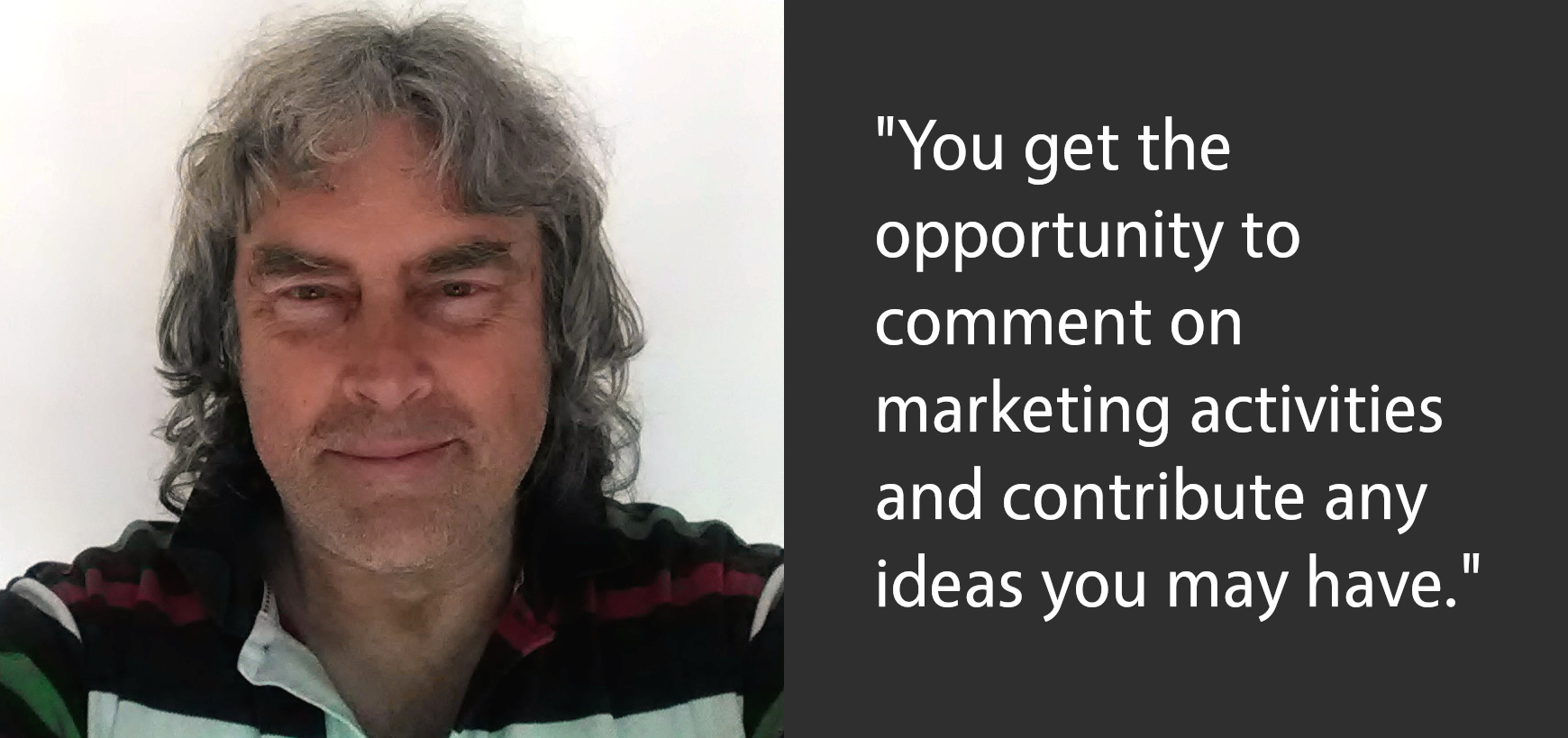
I’ve been working in IT since the mid 1980s, spread across the aerospace, defence, science and financial services sectors. In the beginning I was mostly coding and testing, but as time went by I found myself working on requirements, designing systems and documenting them as much as doing any actual coding.
I first learned to program using Fortran on a VAX computer running the VMS operating system. Since then I’ve used all sorts of hardware and programming languages, even including a brief spell updating an ancient legacy system written in Algol running on an Elliott computer of late 1960’s vintage, for which the program was loaded from paper tape. This was an experience that gave me enormous respect for the programmers of the past for whom that was hi-tech.
Having worked on some extremely complex systems over the years I have come to value simplicity. When I am developing software for my own use my tool of choice these days is Gambas – an amazing but surprisingly little-known IDE, best described as “Visual Basic for Linux”, only Gambas is far superior to VB and leaves Python for dead in terms of productivity and performance.
Away from IT I am a musician – playing flamenco and blues guitar, and also the piano. In parallel with IT I’ve worked on the fringes of the art world, helping to organise four large-scale public art shows in recent years.
Although originally from London, I am blessed to live in rural South Shropshire, surrounded by farmland and arguably the most beautiful scenery the UK has to offer.

»
-

- Login or register to post comments
 Printer-friendly version
- 2242 reads
 PDF version
More in Tux Machines
- Highlights
- Front Page
- Latest Headlines
- Archive
- Recent comments
- All-Time Popular Stories
- Hot Topics
- New Members
digiKam 7.7.0 is released
After three months of active maintenance and another bug triage, the digiKam team is proud to present version 7.7.0 of its open source digital photo manager. See below the list of most important features coming with this release.
|
Dilution and Misuse of the "Linux" Brand
|
Samsung, Red Hat to Work on Linux Drivers for Future Tech
The metaverse is expected to uproot system design as we know it, and Samsung is one of many hardware vendors re-imagining data center infrastructure in preparation for a parallel 3D world.
Samsung is working on new memory technologies that provide faster bandwidth inside hardware for data to travel between CPUs, storage and other computing resources. The company also announced it was partnering with Red Hat to ensure these technologies have Linux compatibility.
|
today's howtos
|


 Content (where original) is available under CC-BY-SA, copyrighted by original author/s.



Recent comments
1 year 11 weeks ago
1 year 11 weeks ago
1 year 11 weeks ago
1 year 11 weeks ago
1 year 11 weeks ago
1 year 11 weeks ago
1 year 11 weeks ago
1 year 11 weeks ago
1 year 11 weeks ago
1 year 11 weeks ago