



More in Linux 5.16 and AMD Graphics
Submitted by Roy Schestowitz on Tuesday 2nd of November 2021 09:13:37 PM
Filed under 
-
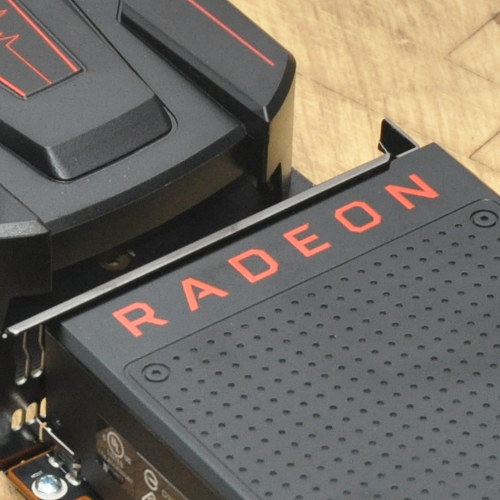
Radeon ROCm 4.5 Released With HIP Runtime Compilation, Unified Memory Support - Phoronix
AMD today released Radeon Open eCosystem 4.5 (ROCm 4.5) as the latest version to their open-source GPU compute stack for Linux systems. ROCm 4.5 brings with it a number of new features and improvements but one area on the consumer Radeon side will leave some potential users frustrated.
First up when it comes to installing ROCm 4.5, they have added support for using the amdgpu-install / amdgpu-uninstall scripts just like the Radeon Software for Linux packaged driver. The amdgpu-install-based process aims to streamline the Radeon Open Compute install process and make it just like installing the packaged driver driver. It also makes it easy to uninstall too.
-
Cluster-Aware Scheduling Lands In Linux 5.16 - Phoronix
The "sched/core" scheduler updates landed on Monday into the Linux 5.16 kernel. Notable this pull request is the cluster-aware scheduling support.
The cluster scheduler support new to Linux 5.16 allows for enhancing the CPU scheduler's behavior for x86_64 and AArch64 having clusters of CPU cores that share an L2 cache or other mid-level resources.
The work was started to improve select 64-bit ARM SoCs like the Kunpeng 920 server chip with clusters of cores sharing an L3 cache. With the scheduler aware of the cluster topology it was able to make better scheduling decisions that improved the overall performance and efficiency of the system.
-
Microsoft Begins Landing Hyper-V Isolation VM Support In Linux 5.16 - Phoronix
Microsoft has submitted their set of Hyper-V hypervisor updates today for the Linux 5.16 merge window. This time around it's noteworthy with the initial enablement work around Hyper-V "Isolation VM" support.
»
-

- Login or register to post comments
 Printer-friendly version
- 1818 reads
 PDF version
More in Tux Machines
- Highlights
- Front Page
- Latest Headlines
- Archive
- Recent comments
- All-Time Popular Stories
- Hot Topics
- New Members
digiKam 7.7.0 is released
After three months of active maintenance and another bug triage, the digiKam team is proud to present version 7.7.0 of its open source digital photo manager. See below the list of most important features coming with this release.
|
Dilution and Misuse of the "Linux" Brand
|
Samsung, Red Hat to Work on Linux Drivers for Future Tech
The metaverse is expected to uproot system design as we know it, and Samsung is one of many hardware vendors re-imagining data center infrastructure in preparation for a parallel 3D world.
Samsung is working on new memory technologies that provide faster bandwidth inside hardware for data to travel between CPUs, storage and other computing resources. The company also announced it was partnering with Red Hat to ensure these technologies have Linux compatibility.
|
today's howtos
|


 Content (where original) is available under CC-BY-SA, copyrighted by original author/s.



Recent comments
1 year 11 weeks ago
1 year 11 weeks ago
1 year 11 weeks ago
1 year 11 weeks ago
1 year 11 weeks ago
1 year 11 weeks ago
1 year 11 weeks ago
1 year 11 weeks ago
1 year 11 weeks ago
1 year 11 weeks ago