



I look forward to all the improvements KDE Plasma will get with the Steam Deck
Submitted by Roy Schestowitz on Tuesday 10th of August 2021 02:20:17 PM
Filed under 

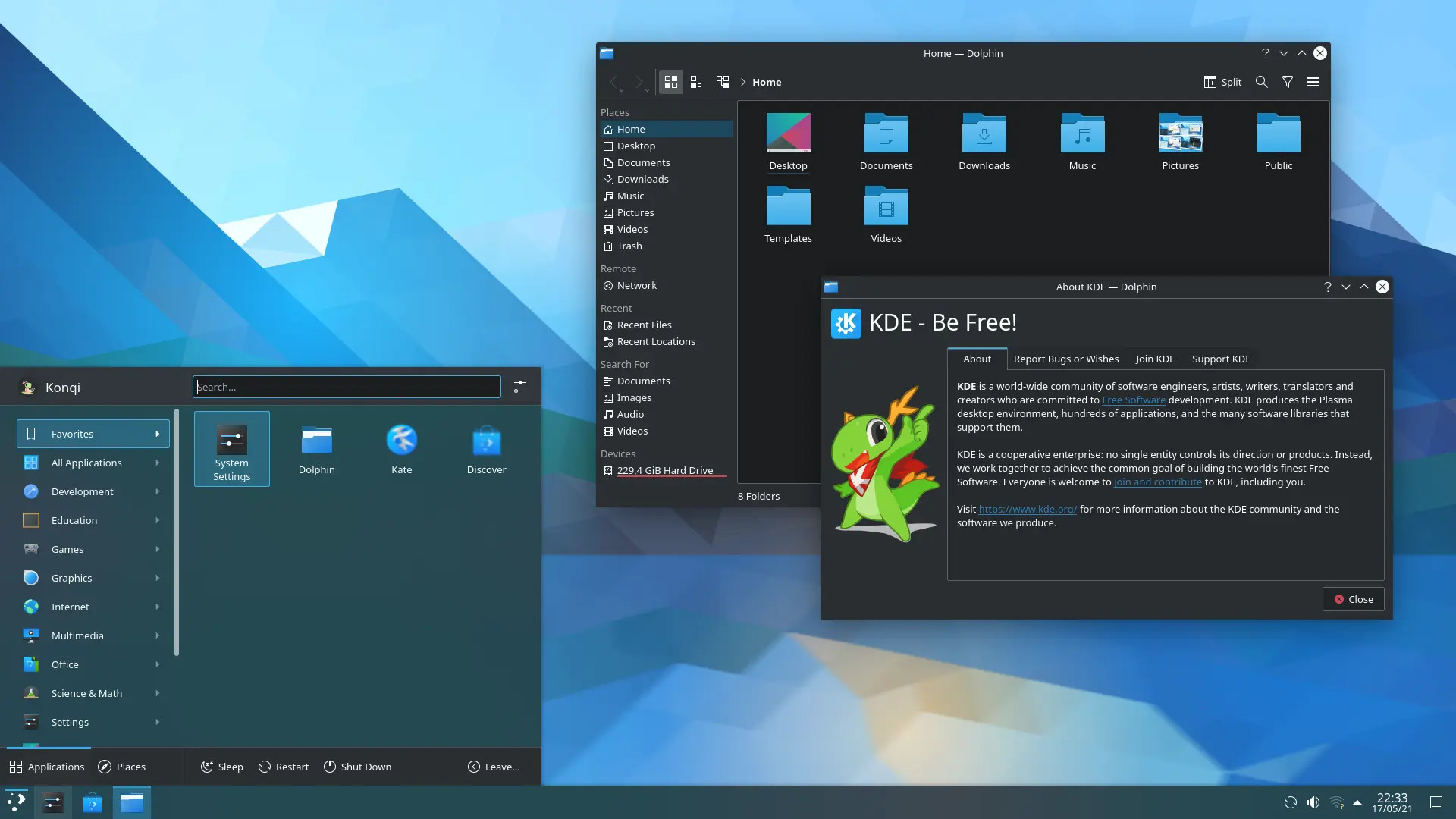
One thing I am excited about when it comes to the Steam Deck is that it has a full desktop Linux mode, which is powered by KDE Plasma and I don't think that's getting the attention it deserves.
Sure, it is primarily a handheld Steam gaming machine. That comes with a lot of excitement due to the power, the form factor, Steam Play Proton being able to play a huge amount of Windows games and much more. Emulation is a big one too, it's likely going to be one of the absolute best portable emulation devices around.
For me though, perhaps just as exciting is the desktop mode. We know the Steam Deck is running a new version of SteamOS, which is based upon Arch Linux with a KDE Plasma desktop mode. Thanks to this, Valve can pull in updates quicker than we would have seen with their older Debian based SteamOS and so upgrades and fixes for the desktop mode can come whenever they're wanted or needed.
The KDE team are obviously keeping a close eye on it too, and the big thing we all know is that having FOSS used in such a huge way like this will end up being a big boon for Plasma. There's nothing like being available on possibly millions of devices to make work progress to make it an ever better experience - one that will ultimately benefit all "normal" desktop Linux users who choose Plasma as their desktop environment.

»
-

- Login or register to post comments
 Printer-friendly version
- 1895 reads
 PDF version
More in Tux Machines
- Highlights
- Front Page
- Latest Headlines
- Archive
- Recent comments
- All-Time Popular Stories
- Hot Topics
- New Members
digiKam 7.7.0 is released
After three months of active maintenance and another bug triage, the digiKam team is proud to present version 7.7.0 of its open source digital photo manager. See below the list of most important features coming with this release.
|
Dilution and Misuse of the "Linux" Brand
|
Samsung, Red Hat to Work on Linux Drivers for Future Tech
The metaverse is expected to uproot system design as we know it, and Samsung is one of many hardware vendors re-imagining data center infrastructure in preparation for a parallel 3D world.
Samsung is working on new memory technologies that provide faster bandwidth inside hardware for data to travel between CPUs, storage and other computing resources. The company also announced it was partnering with Red Hat to ensure these technologies have Linux compatibility.
|
today's howtos
|


 Content (where original) is available under CC-BY-SA, copyrighted by original author/s.



Recent comments
1 year 11 weeks ago
1 year 11 weeks ago
1 year 11 weeks ago
1 year 11 weeks ago
1 year 11 weeks ago
1 year 11 weeks ago
1 year 11 weeks ago
1 year 11 weeks ago
1 year 11 weeks ago
1 year 11 weeks ago