



Plasma, Mesa, curl Update in Tumbleweed
Submitted by Roy Schestowitz on Friday 11th of June 2021 04:21:26 PM
Filed under 
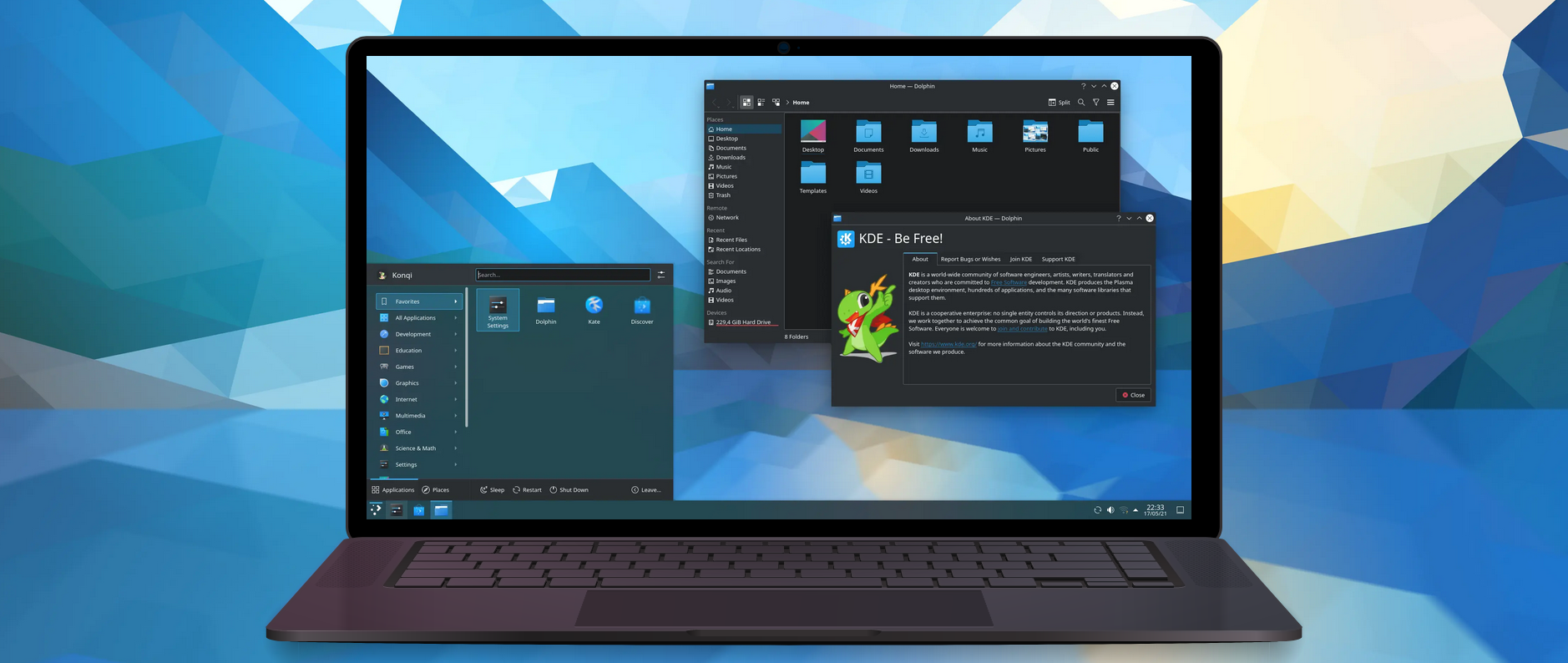
Three openSUSE Tumbleweed snapshots were released this week with the possibility of another snapshot being released over the weekend if it passes openQA testing.
The latest snapshot, 20210609, brought an update for KDE users; Plasma 5.22.0 was released just days ago and improves stability and usability across the board, according to the release announcement. Developers put in a lot of work on the aesthetics of the release. The big new feature in the release is called Adaptive Transparency, which provides a pleasant translucent panel and panel widgets that become entirely opaque if there are any maximized windows; this is done to avoid any visual distractions when users need to focus. The new version also opens up on a speed dial page in System Settings that gives users direct access to the most commonly used settings, as well as to the ones accessed the most. Mozilla Thunderbird renewed an expired keyring in the 78.11.0 version and fixed two Common Vulnerabilities and Exposures. Wireshark 3.4.6 fixed a display filter crash and macro filters’ handling of escaped characters. A major version update for the basic directory structure was made with the jump of the filesystem package from version 15.5 to 84.87. GNOME 40 also received some updates in the snapshot with an update of gnome-software to version 40.2; some crash fixes were made and an improvement in reporting errors low disk space for Flatpak were made. Other packages to update in the snapshot were git 2.32.0, powertop 2.14, xfce4-settings and nftables 0.9.9.

»
-

- Login or register to post comments
 Printer-friendly version
- 5271 reads
 PDF version
More in Tux Machines
- Highlights
- Front Page
- Latest Headlines
- Archive
- Recent comments
- All-Time Popular Stories
- Hot Topics
- New Members
digiKam 7.7.0 is released
After three months of active maintenance and another bug triage, the digiKam team is proud to present version 7.7.0 of its open source digital photo manager. See below the list of most important features coming with this release.
|
Dilution and Misuse of the "Linux" Brand
|
Samsung, Red Hat to Work on Linux Drivers for Future Tech
The metaverse is expected to uproot system design as we know it, and Samsung is one of many hardware vendors re-imagining data center infrastructure in preparation for a parallel 3D world.
Samsung is working on new memory technologies that provide faster bandwidth inside hardware for data to travel between CPUs, storage and other computing resources. The company also announced it was partnering with Red Hat to ensure these technologies have Linux compatibility.
|
today's howtos
|


 Content (where original) is available under CC-BY-SA, copyrighted by original author/s.



Recent comments
1 year 11 weeks ago
1 year 11 weeks ago
1 year 11 weeks ago
1 year 11 weeks ago
1 year 11 weeks ago
1 year 11 weeks ago
1 year 11 weeks ago
1 year 11 weeks ago
1 year 11 weeks ago
1 year 11 weeks ago