



nnn: The Terminal Based File Manager You Never Knew You Needed
Submitted by Roy Schestowitz on Wednesday 2nd of June 2021 07:33:01 PM
Filed under 
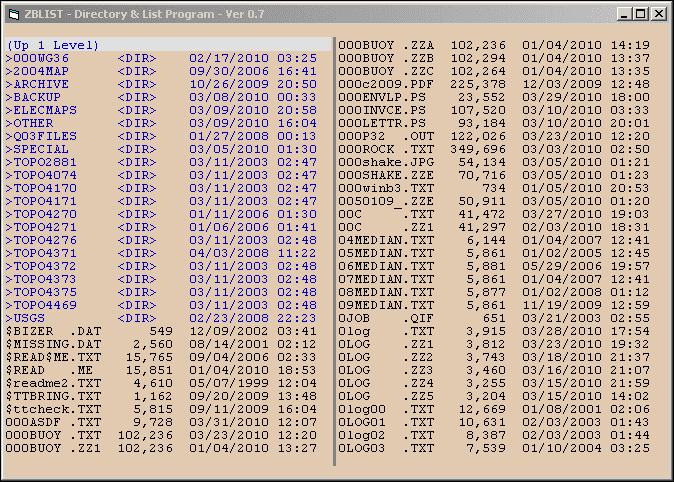
Just like most people around these parts, I was a DOS and Windows user. It was a time before I even heard of Linux, much less tried it. Early Windows users -- I'm talking about Windows 3.1 and Windows for Workgroups 3.11 -- spent an equal amount of time in DOS as they did in Windows. Back then, Windows ran on top of DOS, so knowledge of the DOS command prompt was pretty much a requirement.
One program that I **always** installed on my DOS systems was Vernon D. Buerg's excellent LIST program. It was a simple file manager for the DOS command prompt that mostly did one thing, and did it well: it listed files in the selected directory. It also allowed users to view the contents of the selected file. Simply highlight the file and press the "Enter" key. The contents of that selected file -- whether it was a simple *.txt file or a binary file -- was opened in a simple viewer. The user could view the contents of the selected file. When a user was finished viewing the contents of a file, hitting the "Escape" key brought the user back to the listing of files. List was small, efficient, and pretty much stayed "out of the way," allowing users to navigate and work quickly.

»
-

- Login or register to post comments
 Printer-friendly version
- 1834 reads
 PDF version
More in Tux Machines
- Highlights
- Front Page
- Latest Headlines
- Archive
- Recent comments
- All-Time Popular Stories
- Hot Topics
- New Members
digiKam 7.7.0 is released
After three months of active maintenance and another bug triage, the digiKam team is proud to present version 7.7.0 of its open source digital photo manager. See below the list of most important features coming with this release.
|
Dilution and Misuse of the "Linux" Brand
|
Samsung, Red Hat to Work on Linux Drivers for Future Tech
The metaverse is expected to uproot system design as we know it, and Samsung is one of many hardware vendors re-imagining data center infrastructure in preparation for a parallel 3D world.
Samsung is working on new memory technologies that provide faster bandwidth inside hardware for data to travel between CPUs, storage and other computing resources. The company also announced it was partnering with Red Hat to ensure these technologies have Linux compatibility.
|
today's howtos
|


 Content (where original) is available under CC-BY-SA, copyrighted by original author/s.



Recent comments
1 year 11 weeks ago
1 year 11 weeks ago
1 year 11 weeks ago
1 year 11 weeks ago
1 year 11 weeks ago
1 year 11 weeks ago
1 year 11 weeks ago
1 year 11 weeks ago
1 year 11 weeks ago
1 year 11 weeks ago