



Ingo Juergensmann: The Fediverse – What About Ressources?
Submitted by Roy Schestowitz on Saturday 1st of May 2021 07:09:40 PM
Today ist May, 1st. In about two weeks on May, 15th WhatsApp will put their changed Terms of Service into action and when you don’t accept their rules you won’t be able to use WhatsApp any longer.
Early this year there was already a strong movement away from WhatsApp towards other solutions. Mainly to Signal, but also some other services like the Fediverse gained some new users. And also XMPP got their fair share of new users.
So, what to do about the WhatsApp ToS change then? Shall we go all to Signal? Surely not. Signal is another vendor lock-in silo. It’s centralistic and recent development plans want to implement some crypto payment system. Even Bruce Schneier thinks that this is a bad idea.
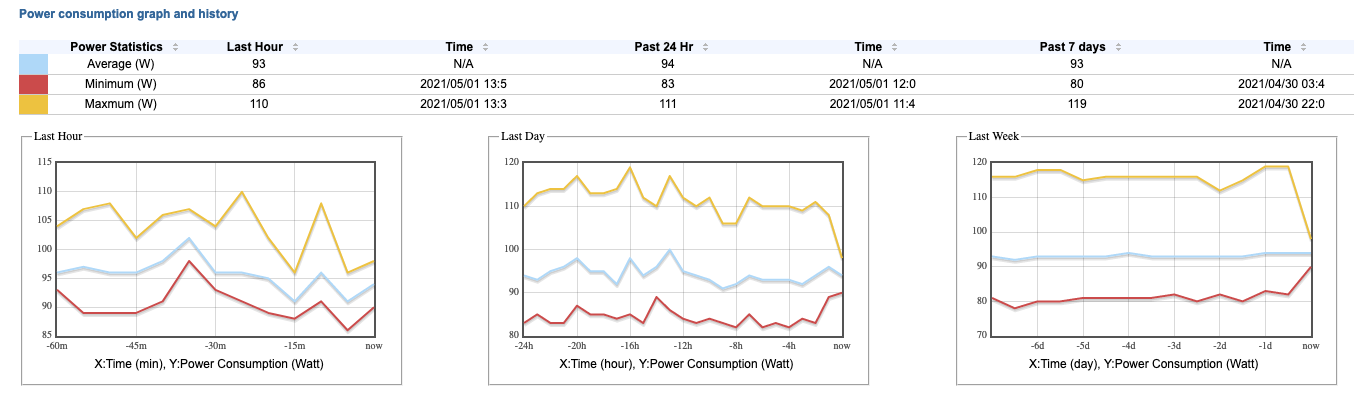
Other alternatives often named include Matrix/Element or XMPP. Today, Don di Dislessia in the (german) Fediverse asked about power consumption of the Fediverse incl. Matrix and XMPP and how much renewable energy is being used. Of course this is no easy answer to this question, but I tried my best – at least for my own server.
[...]
Overall, and my personal impression, is that Matrix is really bad in regards of ressource usage. Given that I’m the only active user it uses exceptionally many ressources. When you also consider that Matrix is using a distributed database for its chat rooms, you can assume that the ressource usage is multiplied across the network, making things even worse.
Friendica is using a large database and many disk accesses, but has a fairly large user base, so it seems ok, but of course should be improved.
Mastodon seems to be quite good, considering the database size, the number of log lines and the user count.
XMPP turns out to be the most efficient contestant in this comparison: it uses much less CPU cycles and database disk I/O.

»
-

- Login or register to post comments
 Printer-friendly version
- 3909 reads
 PDF version
More in Tux Machines
- Highlights
- Front Page
- Latest Headlines
- Archive
- Recent comments
- All-Time Popular Stories
- Hot Topics
- New Members
digiKam 7.7.0 is released
After three months of active maintenance and another bug triage, the digiKam team is proud to present version 7.7.0 of its open source digital photo manager. See below the list of most important features coming with this release.
|
Dilution and Misuse of the "Linux" Brand
|
Samsung, Red Hat to Work on Linux Drivers for Future Tech
The metaverse is expected to uproot system design as we know it, and Samsung is one of many hardware vendors re-imagining data center infrastructure in preparation for a parallel 3D world.
Samsung is working on new memory technologies that provide faster bandwidth inside hardware for data to travel between CPUs, storage and other computing resources. The company also announced it was partnering with Red Hat to ensure these technologies have Linux compatibility.
|
today's howtos
|


 Content (where original) is available under CC-BY-SA, copyrighted by original author/s.



Recent comments
1 year 11 weeks ago
1 year 11 weeks ago
1 year 11 weeks ago
1 year 11 weeks ago
1 year 11 weeks ago
1 year 11 weeks ago
1 year 11 weeks ago
1 year 11 weeks ago
1 year 11 weeks ago
1 year 11 weeks ago