



Programming Leftovers
Submitted by Roy Schestowitz on Friday 30th of April 2021 11:12:03 AM
Filed under 
-
Remi Collet: PHP version 7.3.28 ,7.4.18 and 8.0.5
RPMs of PHP version 8.0.5 are available in remi-php80 repository for Fedora 32-34 and Enterprise Linux (RHEL, CentOS).
RPMs of PHP version 7.4.18 are available in remi repository for Fedora 32-34 and remi-php74 repository Enterprise Linux (RHEL, CentOS).
RPMs of PHP version 7.3.28 are available in remi-php73 repository for Enterprise Linux (RHEL, CentOS).
-
Multi-thread and Data Race Basics in C++ – Linux Hint
A process is a program that is running on the computer. In modern computers, many processes run at the same time. A program can be broken down into sub-processes for the sub-processes to run at the same time. These sub-processes are called threads. Threads must run as parts of one program.
Some programs require more than one input simultaneously. Such a program needs threads. If threads run in parallel, then the overall speed of the program is increased. Threads also share data among themselves. This data sharing leads to conflicts on which result is valid and when the result is valid. This conflict is a data race and can be resolved.
-
How to iterate over the map in C++ – Linux Hint
In this quick tutorial, we will see how to iterate over in map in C++.
There are multiple ways to iterate over the map in C++. With newer versions of C++, there are more advanced ways to iterate over the map in C++. -
How to Use Open System Call in C – Linux Hint
The system calls are used in the Linux distributions to provide a doorway within the Linux OS and the programs. The Linux operating system uses the Glibc library to support system calls in it while using the C language. There are a lot more ways to use system calls as well. In this article guide, we will be discussing the open system call in the Linux system. The “Open” system call has been used to open the file specified in the path quickly. It let us know about the file descriptor of a user-created file. We have been using Ubuntu 20.04 to get some hands-on “Open” system call.
-
Detecting memory management bugs with GCC 11, Part 1: Understanding dynamic allocation
Memory management bugs are among the hardest to find in C and C++ programs, and are a favorite target of exploits. These errors are difficult to debug because they involve three distinct sites in a program that are often far apart and obscured by the use of pointers: memory allocation, the use of the allocated memory, and the release of memory back to the system by deallocation. In this two-part article, we’ll look at GNU Compiler Collection (GCC) 11 enhancements that help detect the subset of these bugs that affect dynamically allocated memory. The enhancements discussed here have been made to the GCC core. Related improvements to the GCC static analyzer are covered by David Malcolm in his article Static analysis updates in GCC 11.
Throughout this article, I include links to the code examples on Compiler Explorer for those who would like to experiment. You will find the links above the source code of each example.
-
The GDB developer’s GNU Debugger tutorial, Part 1: Getting started with the debugger
This article is the first in a series demonstrating how to use the GNU Debugger (GDB) effectively to debug applications in C and C++. If you have limited or no experience using GDB, this series will teach you how to debug your code more efficiently. If you are already a seasoned professional using GDB, perhaps you will discover something you haven’t seen before.
In addition to providing developer tips and tricks for many GDB commands, future articles will also cover topics such as debugging optimized code, offline debugging (core files), and server-based sessions (aka gdbserver, used in container debugging).
-
How Rust makes Rayon's data parallelism magical - Red Hat Developer
Rayon is a data parallelism library for the Rust programming language. Common reactions from programmers who start to use Rayon express how it seems magical: “I changed one line and my code now runs in parallel!” As one of Rayon’s authors, I am of course glad to see happy users, but I want to dispel some of the magic and give credit where it’s due—to Rust itself.
-
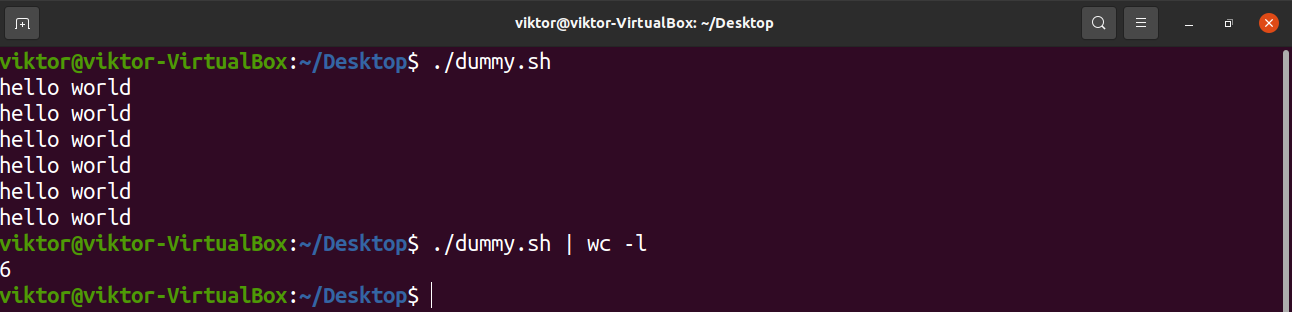
Nested Loop in Bash Script Examples – Linux Hint
In programming or scripting, the loop is one of the most basic and powerful concepts. A loop is performing certain tasks until the specified conditions are met. Each programming or scripting language has different ways of implementing the concept.
In this guide, check out the nested loop in bash scripting.
»
-

- Login or register to post comments
 Printer-friendly version
- 2332 reads
 PDF version
More in Tux Machines
- Highlights
- Front Page
- Latest Headlines
- Archive
- Recent comments
- All-Time Popular Stories
- Hot Topics
- New Members
digiKam 7.7.0 is released
After three months of active maintenance and another bug triage, the digiKam team is proud to present version 7.7.0 of its open source digital photo manager. See below the list of most important features coming with this release.
|
Dilution and Misuse of the "Linux" Brand
|
Samsung, Red Hat to Work on Linux Drivers for Future Tech
The metaverse is expected to uproot system design as we know it, and Samsung is one of many hardware vendors re-imagining data center infrastructure in preparation for a parallel 3D world.
Samsung is working on new memory technologies that provide faster bandwidth inside hardware for data to travel between CPUs, storage and other computing resources. The company also announced it was partnering with Red Hat to ensure these technologies have Linux compatibility.
|
today's howtos
|


 Content (where original) is available under CC-BY-SA, copyrighted by original author/s.



Recent comments
1 year 11 weeks ago
1 year 11 weeks ago
1 year 11 weeks ago
1 year 11 weeks ago
1 year 11 weeks ago
1 year 11 weeks ago
1 year 11 weeks ago
1 year 11 weeks ago
1 year 11 weeks ago
1 year 11 weeks ago