



Alyssa Rosenzweig: Dissecting the Apple M1 GPU, part III
Submitted by Roy Schestowitz on Monday 19th of April 2021 01:07:54 AM
Filed under 

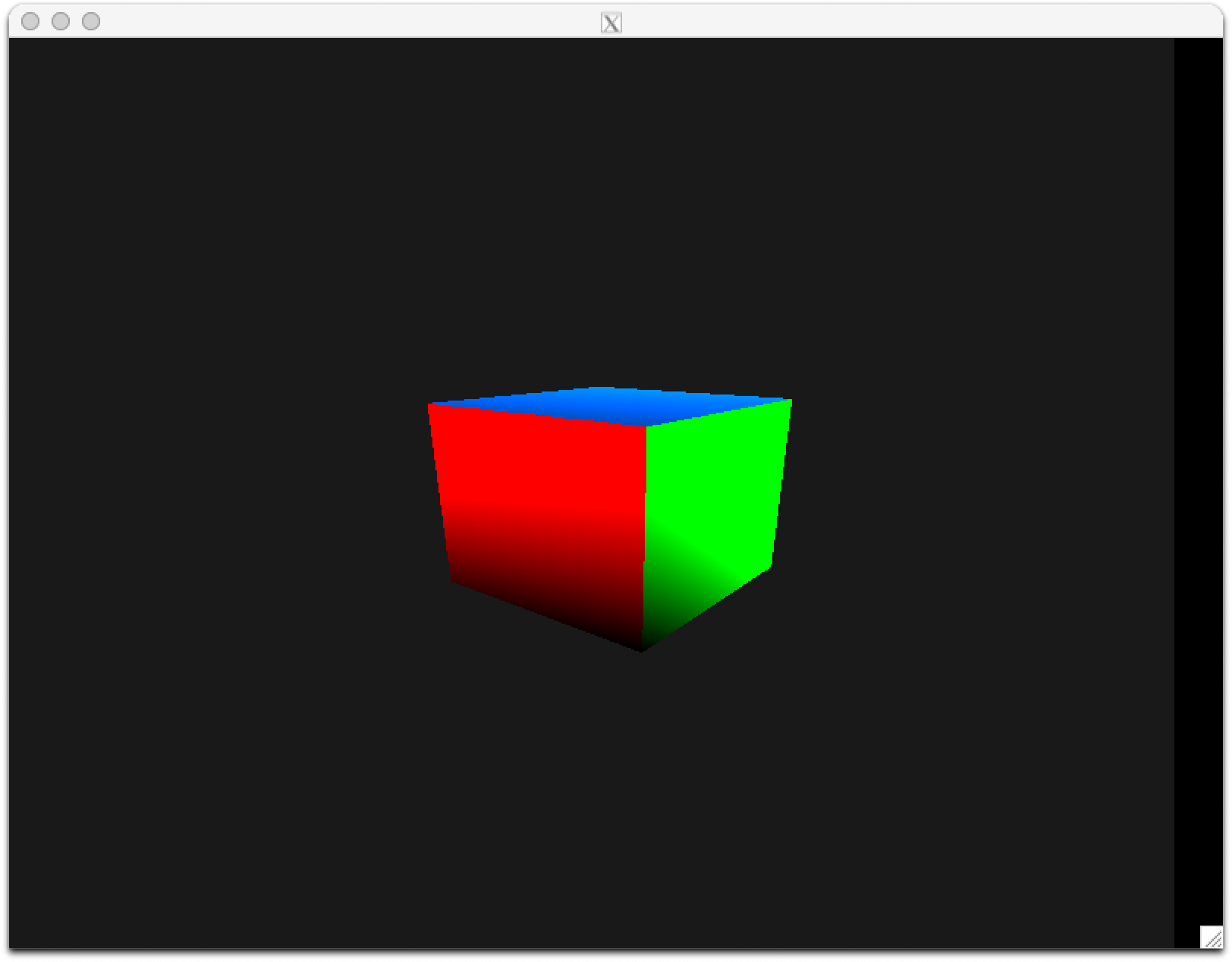
After a few weeks of investigating the Apple M1 GPU in January, I was able to draw a triangle with my own open source code. Although I began dissecting the instruction set, the shaders there were specified as machine code. A real graphics driver needs a compiler from high-level shading languages (GLSL or Metal) to a native binary. Our understanding of the M1 GPU’s instruction set has advanced over the past few months. Last week, I began writing a free and open source shader compiler targeting the Apple GPU. Progress has been rapid: at the end of its first week, it can compile both basic vertex and fragment shaders, sufficient to render 3D scenes. The spinning cube pictured above has its shaders written in idiomatic GLSL, compiled with the nascent free software compiler, and rendered with native code like the first triangle in January. No proprietary blobs here!
Over the past few months, Dougall Johnson has investigated the instruction set in-depth, building on my initial work. His findings on the architecture are outstanding, focusing on compute kernels to complement my focus on graphics. Armed with his notes and my command stream tooling, I could chip away at a compiler.
The compiler’s design must fit into the development context. Asahi Linux aims to run a Linux desktop on Apple Silicon, so our driver should follow Linux’s best practices like upstream development. That includes using the New Intermediate Representation (NIR) in Mesa, the home for open source graphics drivers. NIR is a lightweight library for shader compilers, with a GLSL frontend and backend targets including Intel and AMD. NIR is an alternative to LLVM, the compiler framework used by Apple. Just because Apple prefers LLVM doesn’t mean we have to. A team at Valve famously rewrote AMD’s LLVM backend as a NIR compiler, improving performance. If it’s good enough for Valve, it’s good enough for me.

Also: More Progress Is Made Understanding Apple's M1 GPU, Working Towards An Open Driver
»
-

- Login or register to post comments
 Printer-friendly version
- 3871 reads
 PDF version
More in Tux Machines
- Highlights
- Front Page
- Latest Headlines
- Archive
- Recent comments
- All-Time Popular Stories
- Hot Topics
- New Members
digiKam 7.7.0 is released
After three months of active maintenance and another bug triage, the digiKam team is proud to present version 7.7.0 of its open source digital photo manager. See below the list of most important features coming with this release.
|
Dilution and Misuse of the "Linux" Brand
|
Samsung, Red Hat to Work on Linux Drivers for Future Tech
The metaverse is expected to uproot system design as we know it, and Samsung is one of many hardware vendors re-imagining data center infrastructure in preparation for a parallel 3D world.
Samsung is working on new memory technologies that provide faster bandwidth inside hardware for data to travel between CPUs, storage and other computing resources. The company also announced it was partnering with Red Hat to ensure these technologies have Linux compatibility.
|
today's howtos
|


 Content (where original) is available under CC-BY-SA, copyrighted by original author/s.



Recent comments
1 year 11 weeks ago
1 year 11 weeks ago
1 year 11 weeks ago
1 year 11 weeks ago
1 year 11 weeks ago
1 year 11 weeks ago
1 year 11 weeks ago
1 year 11 weeks ago
1 year 11 weeks ago
1 year 11 weeks ago