



Devices With Android, Linux, and Arduino
Submitted by Roy Schestowitz on Tuesday 9th of March 2021 07:30:38 AM
Filed under 
-
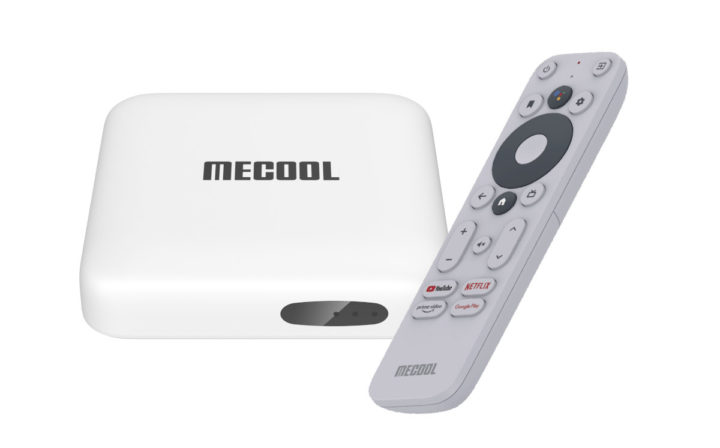
Netflix 4K certified MECOOL KM2 S905X2-B TV Box runs Android TV 10
There are plenty of Amlogic TV boxes around, but unless you buy from the big players, most devices won’t support Netflix FullHD/4K because certification is hard to get for smaller companies.
The Hailstorm device scaling program launched in 2018 aimed to make the process easier on Amlogic and Hisilicon processors, and HiMedia S1 TV dongle was one of the first to get approved. But now MECOOL KM2 joins the rank of Netflix 4K certified devices. The TV box is powered by an Amlogic S905X2-B processor running Android TV 10, also known as Android TV on Android 10.
-
Arduino With Python Tutorial for Beginners – Linux Hint
When you have started playing with Arduino boards, the standard programming language is provided by Arduino. This language is extremely useful for getting started and can even be used for real use. People who have used it for a while, though, notice a few limitations. You might also be used to programming in Python already. For this reason, developers have invented Micropython.
With Micropython, you have all the basics of Python, with limitations due to the hardware you are finally running it on. This article will not discuss these limitations. Hopefully, you have a clear picture of what a microcontroller can do. Most likely, you will find that it can do much more than you imagined before you started.
-
NXP i.MX 8M Plus 2.5-inch Pico-ITX SBC supports UIO40-Express expansion modules
With NXP i.MX 8M Plus AI processor nearing mass production, we’ve seen many companies introduce i.MX 8M Plus systems-on-module at Embedded World 2021. But as one would come to expect, there should also be single board computers based on the new processor, and Advantech has unveiled the RSB-3720 2.5-inch SBC (aka Pico-ITX SBC) compatible with the company’s UIO40-Express expansion boards.
»
-

- Login or register to post comments
 Printer-friendly version
- 3528 reads
 PDF version
More in Tux Machines
- Highlights
- Front Page
- Latest Headlines
- Archive
- Recent comments
- All-Time Popular Stories
- Hot Topics
- New Members
digiKam 7.7.0 is released
After three months of active maintenance and another bug triage, the digiKam team is proud to present version 7.7.0 of its open source digital photo manager. See below the list of most important features coming with this release.
|
Dilution and Misuse of the "Linux" Brand
|
Samsung, Red Hat to Work on Linux Drivers for Future Tech
The metaverse is expected to uproot system design as we know it, and Samsung is one of many hardware vendors re-imagining data center infrastructure in preparation for a parallel 3D world.
Samsung is working on new memory technologies that provide faster bandwidth inside hardware for data to travel between CPUs, storage and other computing resources. The company also announced it was partnering with Red Hat to ensure these technologies have Linux compatibility.
|
today's howtos
|


 Content (where original) is available under CC-BY-SA, copyrighted by original author/s.



Recent comments
1 year 11 weeks ago
1 year 11 weeks ago
1 year 11 weeks ago
1 year 11 weeks ago
1 year 11 weeks ago
1 year 11 weeks ago
1 year 11 weeks ago
1 year 11 weeks ago
1 year 11 weeks ago
1 year 11 weeks ago