



Programming Leftovers
Submitted by Roy Schestowitz on Thursday 4th of March 2021 11:10:18 AM
Filed under 
-
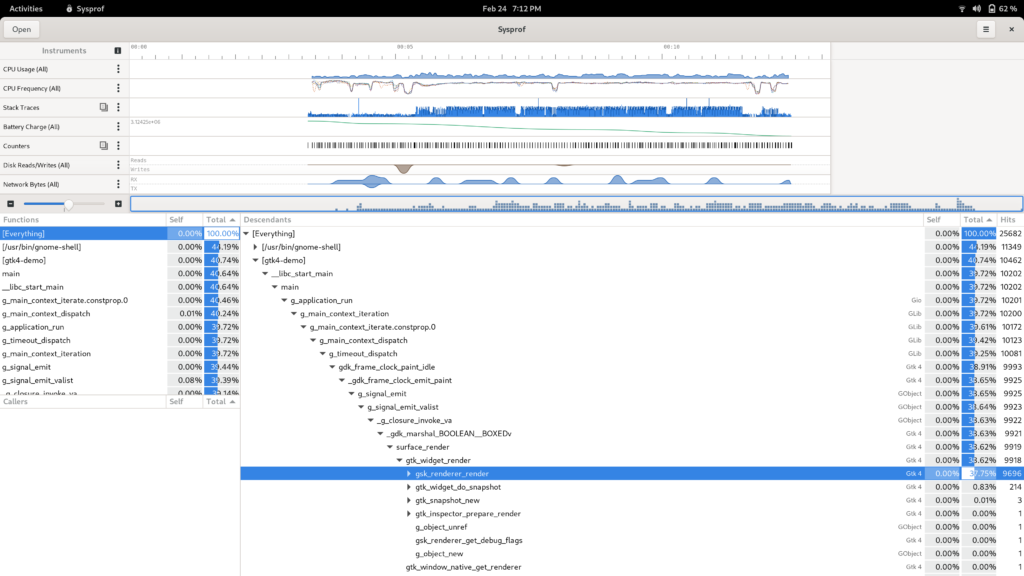
Christian Hergert: Rust and GNOME Builder
In this tutorial, we will learn how to setup docker private registry on Ubuntu 20.04 and learn how to push and pull images to and from private registry.
[...]
Just create a new project using the “GNOME Application” template, select “Rust” as the language, and Run.
-
This Week In Rust: This Week in Rust 380
-
3 Excellent Free Books to Learn about VHDL - LinuxLinks
VHDL (VHSIC-HDL, Very High Speed Integrated Circuit Hardware Description Language) is a hardware description language used in electronic design automation to describe digital and mixed-signal systems such as field-programmable gate arrays and integrated circuits. VHDL can also be used as a general-purpose parallel programming language.
VHDL is an extremely powerful tool. The more you understand as you work and study with VHDL, the more it will enhance your learning experience independently of your particular area of interest. The concept of using software to design hardware that is controlled by software will definitely provide you with endless hours of contemplation.
VHDL is designed to fill a number of needs in the design process. Firstly, it allows description of the structure of a design, that is how it is decomposed into sub-designs, and how those sub-designs are interconnected. Secondly, it allows the specification of the function of designs using familiar programming language forms. Thirdly, as a result, it allows a design to be simulated before being manufactured, so that designers can quickly compare alternatives and test for correctness without the delay and expense of hardware prototyping.
-
Building rootless containers for JavaScript front ends
By default, most containers are run as the root user. It is much easier to install dependencies, edit files, and run processes on restricted ports when they run as root. As is usually the case in computer science, though, simplicity comes at a cost. In this case, containers run as root are more vulnerable to malicious code and attacks. To avoid those potential security gaps, Red Hat OpenShift won’t let you run containers as a root user. This restriction adds a layer of security and isolates the containers.
This article shows you how to run a JavaScript front-end application in a rootless container. The example builds on the code from my previous article, Making environment variables accessible in front-end containers.
-
Learn to debug code with the GNU Debugger
The GNU Debugger, more commonly known by its command, gdb, is an interactive console to help you step through source code, analyze what gets executed, and essentially reverse-engineer what's going wrong in a buggy application.
[...]
Whether you're just learning GDB or you're a pro at it, it never hurts to have a reminder of what commands are available to you and what the syntax for those commands are.
-
Runaway JavaScript Spec
XML is tree based. Logical and good, feels like all extensions have their perfect places, and it degrades gracefully if you are a little behind. Things can, in theory, also get deprecated (i.e. things that are too old could also degrade gracefully, if people would’ve been mature enough to remove old stale things from their specs—an example of this that did happen is <blink>; in many browsers blink text now is rendered as just plain text).
CSS is based around selectors and properties. Another setup that’s a very robust and future-proof spine.
JavaScript is a language that is grown in a wild way. Compared to languages like Lisp and Forth that can be expanded with the same consistent, logical methods that XML and CSS can.
-
Lotus 1-2-3
I tend to use a lot of retro software, partly because I’m a big nerd but also because I just prefer to work in a terminal. There were a ton of major commercial software products for MS-DOS that were highly polished, and can still be used effectively in an xterm today.
I do like using Lotus 1-2-3, I even have a boxed copy of the last DOS version released, version 4!
»
-

- Login or register to post comments
 Printer-friendly version
- 6761 reads
 PDF version
More in Tux Machines
- Highlights
- Front Page
- Latest Headlines
- Archive
- Recent comments
- All-Time Popular Stories
- Hot Topics
- New Members
digiKam 7.7.0 is released
After three months of active maintenance and another bug triage, the digiKam team is proud to present version 7.7.0 of its open source digital photo manager. See below the list of most important features coming with this release.
|
Dilution and Misuse of the "Linux" Brand
|
Samsung, Red Hat to Work on Linux Drivers for Future Tech
The metaverse is expected to uproot system design as we know it, and Samsung is one of many hardware vendors re-imagining data center infrastructure in preparation for a parallel 3D world.
Samsung is working on new memory technologies that provide faster bandwidth inside hardware for data to travel between CPUs, storage and other computing resources. The company also announced it was partnering with Red Hat to ensure these technologies have Linux compatibility.
|
today's howtos
|


 Content (where original) is available under CC-BY-SA, copyrighted by original author/s.



Recent comments
1 year 11 weeks ago
1 year 11 weeks ago
1 year 11 weeks ago
1 year 11 weeks ago
1 year 11 weeks ago
1 year 11 weeks ago
1 year 11 weeks ago
1 year 11 weeks ago
1 year 11 weeks ago
1 year 11 weeks ago