



today's leftovers
Submitted by Roy Schestowitz on Wednesday 3rd of March 2021 11:41:32 PM
Filed under 
-
Changing Of The Guard For HPC And Big Iron At HPE
Hewlett Packard Enterprise has been building a mainstream and grassroots server business aimed at large enterprises, HPC centers, and academic and government institutions for two decades. HPE took a run at the hyperscalers and cloud builders and large service providers with its Cloudline minimalist machinery, but has largely backed away from that business because margins are thin to non-existent.
The systems business that is left represents the core of HPE after it has largely divested its software and services business, which it spent tens of billions of dollars to acquire to try to create a clone of IBM, and split off its PC and printer business into an entirely different company.
While the original Hewlett Packard has a long history in proprietary and Unix systems, it was the acquisition of Compaq way back in September 2001 for $25 billion that gave what is now HPE a volume server business aimed at small, medium, and large enterprises as well as the emerging webscale companies. The rivalry with Dell (and to a lesser extent with Lenovo, Inspur, and Sugon) and the rise of the original design manufacturers who work directly with the hyperscalers and large public cloud builders (Foxconn, Quanta, Inventec, WiWynn, and such) have put the hurt on this ProLiant server business. But that ProLiant business is still formidable, and has many millions of loyal customers.
-
SUSE: 7 Digital Transformation Questions IT Should Ask Their Business Managers
During the journey of digital transformation, organizations have to master several things at the same time: adopting new innovations, increasing efficiency, and maintaining continuity. IT not only plays a crucial role in these improvements but in many cases also leads transformation projects that improve the business.
-
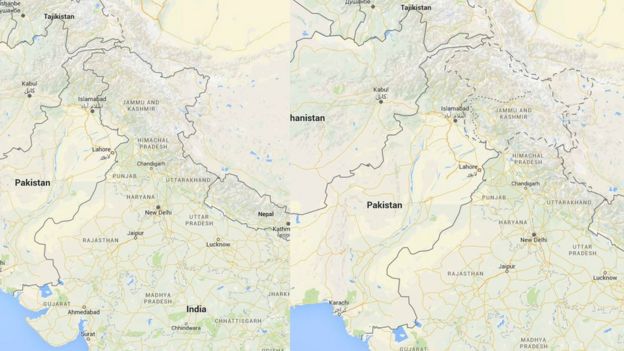
Freedom to map depends on WHO delivers it
At the moment, I do not know enough about this reform and its general background, to have a definite opinion on who is wrong or right here. But that is not important. My only goal with this post is to remind everybody, in India and everywhere else, that “map or you will be mapped” is not just a fancy slogan.
Whoever draws the maps, or controls the data needed to draw them, can concretely increase, or limit, your personal freedom and rights. This is the only thing that you surely want to learn from all the congratulations and concerns above. Take them as concrete examples of what could actually go wrong, or right, with mapping laws, whatever digital map you are already living in.
-
Microsoft Attacks The Open Web Because It's Jealous Of Google's Success
»
-

- Login or register to post comments
 Printer-friendly version
- 1779 reads
 PDF version
More in Tux Machines
- Highlights
- Front Page
- Latest Headlines
- Archive
- Recent comments
- All-Time Popular Stories
- Hot Topics
- New Members
digiKam 7.7.0 is released
After three months of active maintenance and another bug triage, the digiKam team is proud to present version 7.7.0 of its open source digital photo manager. See below the list of most important features coming with this release.
|
Dilution and Misuse of the "Linux" Brand
|
Samsung, Red Hat to Work on Linux Drivers for Future Tech
The metaverse is expected to uproot system design as we know it, and Samsung is one of many hardware vendors re-imagining data center infrastructure in preparation for a parallel 3D world.
Samsung is working on new memory technologies that provide faster bandwidth inside hardware for data to travel between CPUs, storage and other computing resources. The company also announced it was partnering with Red Hat to ensure these technologies have Linux compatibility.
|
today's howtos
|


 Content (where original) is available under CC-BY-SA, copyrighted by original author/s.



Recent comments
1 year 11 weeks ago
1 year 11 weeks ago
1 year 11 weeks ago
1 year 11 weeks ago
1 year 11 weeks ago
1 year 11 weeks ago
1 year 11 weeks ago
1 year 11 weeks ago
1 year 11 weeks ago
1 year 11 weeks ago