



GNU/Linux Devices and Arduino
Submitted by Roy Schestowitz on Tuesday 15th of December 2020 01:31:12 AM
Filed under 


-
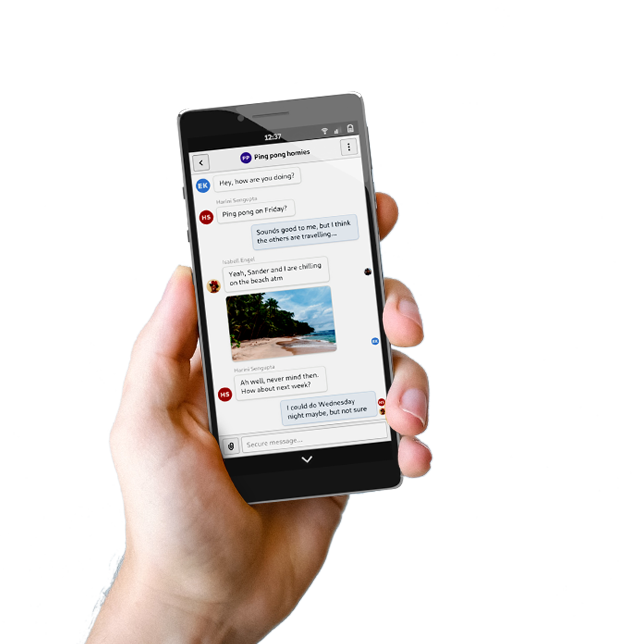
A Phone That Respects Your Children – Purism
Even if a child doesn’t have a phone of their own, they often borrow their parent’s phone to play games or watch videos. Most phones don’t distinguish between children or adults when it comes to the data they collect.
The Librem 5 respects the privacy of you and your children by running free software that does not track you. The Librem 5’s hardware kill switches allow you to disable the network completely with a flip of the switch so your child doesn’t accidentally end up online, making it the best phone for a child’s privacy.
-
Ultra-compact Apollo Lake net appliance has mini-PCIe and M.2 too
Axiomtek’s “NA347” network appliance runs Linux or Win 10 on a dual-core Celeron N3350 with up to 8GB RAM, 3x GbE, 2x USB 3.0, HDMI, M.2 for SATA, and mini-PCIe and nano-SIM for wireless.
Axiomtek has released an even smaller, 146 x 118.2 x 26mm variation on its quad-port, 146 x 118.2 x 33.5mm NA346 network appliance. The NA347 similarly runs Yocto-based Linux or Win 10 on a dual-core, up to 2.4GHz Celeron N3350 Apollo Lake SoC with a a 6W TDP. The 3-port system is designed as an entry-level SD-WAN, VPN, and security gateway for small and home offices and other IIoT security applications
-
Banana Pi BPI-M5 SBC with 4GB RAM, 16GB flash launched for $53
Last September, we wrote Banana Pi team was working on an Amlogic S905X3 SBC called BPI-M5 and very similar to Hardkernel ODROID-C4 board launched in April 2020. At the time, we noted the Banana Pi BPI-M5 did add a 16GB eMMC flash on-board by default, while ODROID-C4 requires booting from a MicroSD card or a separate eMMC flash module.
-
Arduino Blog » Know what time it is anywhere in the world with this Nano 33 IoT-based NTP clock
Kaleb Clark, like many of us, works with others from all around the globe. While he could view any number of websites or commercial options to see what time it is for these other people, he decided to make a world clock to get this info at a glance.
What he came up with uses a 3.5″ SPI TFT screen to show eight time zones in the device’s main section, plus a pair of 7-segment displays for two more “slots.” The unit runs on an Arduino Nano 33 IoT, which checks the time over WiFi via the Network Time Protocol, or NTP.
»
-

- Login or register to post comments
 Printer-friendly version
- 1846 reads
 PDF version
More in Tux Machines
- Highlights
- Front Page
- Latest Headlines
- Archive
- Recent comments
- All-Time Popular Stories
- Hot Topics
- New Members
digiKam 7.7.0 is released
After three months of active maintenance and another bug triage, the digiKam team is proud to present version 7.7.0 of its open source digital photo manager. See below the list of most important features coming with this release.
|
Dilution and Misuse of the "Linux" Brand
|
Samsung, Red Hat to Work on Linux Drivers for Future Tech
The metaverse is expected to uproot system design as we know it, and Samsung is one of many hardware vendors re-imagining data center infrastructure in preparation for a parallel 3D world.
Samsung is working on new memory technologies that provide faster bandwidth inside hardware for data to travel between CPUs, storage and other computing resources. The company also announced it was partnering with Red Hat to ensure these technologies have Linux compatibility.
|
today's howtos
|


 Content (where original) is available under CC-BY-SA, copyrighted by original author/s.



Recent comments
1 year 11 weeks ago
1 year 11 weeks ago
1 year 11 weeks ago
1 year 11 weeks ago
1 year 11 weeks ago
1 year 11 weeks ago
1 year 11 weeks ago
1 year 11 weeks ago
1 year 11 weeks ago
1 year 11 weeks ago