



GNU Guix: Introduction to the Guix Data Service, the missing blog post
Submitted by Roy Schestowitz on Monday 9th of November 2020 01:43:58 AM
Filed under 

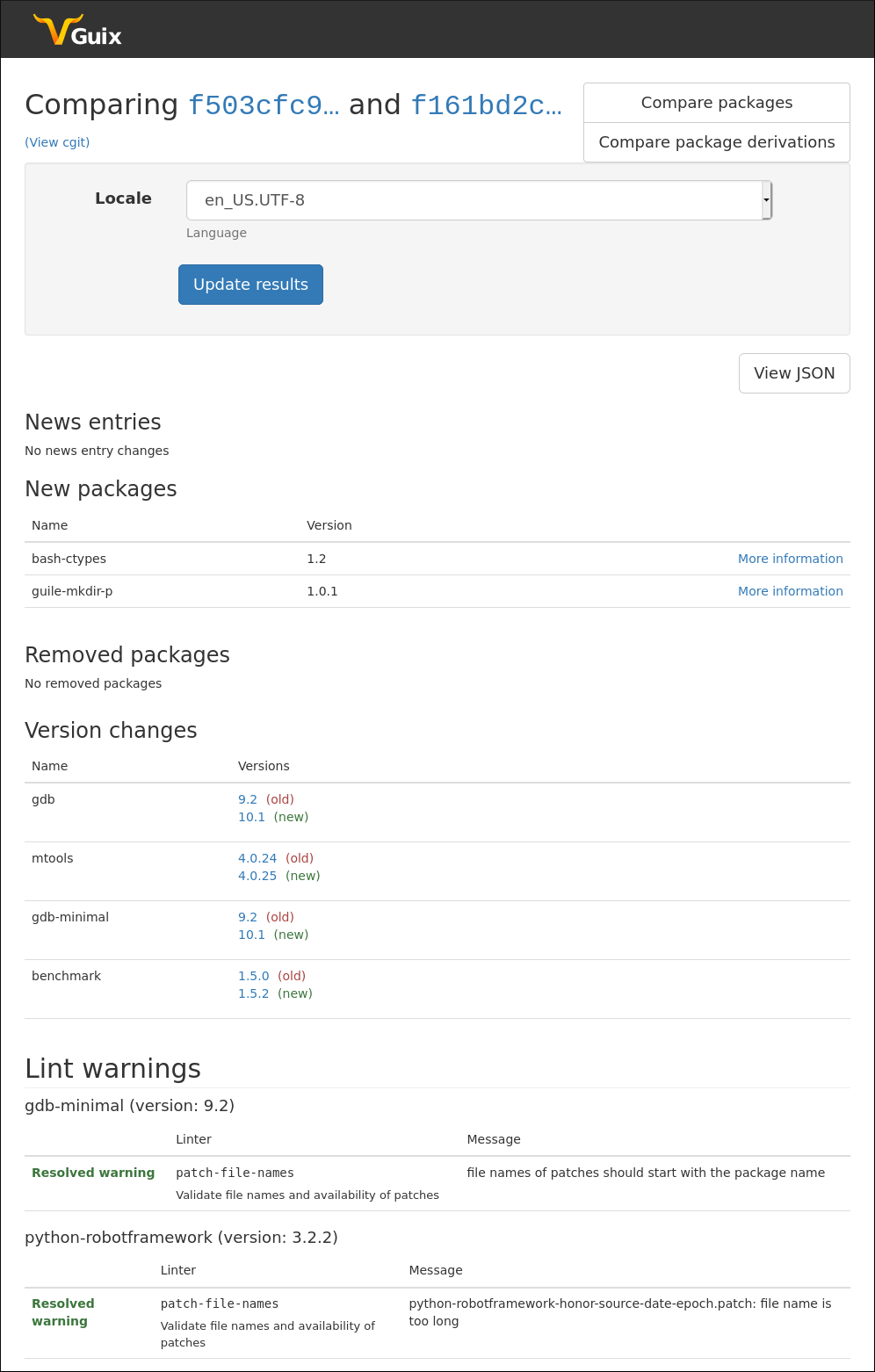
The initial motivation came from trying to automate aspects of reviewing patches for Guix. If you have some patches for Guix, one aspect of review might be to apply the patches and then build the affected packages. How do you know what packages are affected though?
You could try and guess based on the content of the patches, and this could work some of the time, but because Guix packages relate to one another, changing one package may cause dependent packages to change. Additionally, there are places in Guix where small changes could affect a large number of packages, build systems for example. The guix refresh -l command is really helpful when testing packages locally, but it can in some cases miss some packages that are effected by changes, as it only explores the package graph.
The approach taken to working out what packages are affected by a set of patches, was to record information about all the packages in the "base" revision of Guix, prior to applying the patches, and also record information about the "target" revision generated from applying the patches. With all that information about the two revisions, you can then compare the data to determine what's changed. This goes beyond finding out what packages are affected, and includes things like looking at changes to lint warnings, channel news entries, and more.

»
-

- Login or register to post comments
 Printer-friendly version
- 2487 reads
 PDF version
More in Tux Machines
- Highlights
- Front Page
- Latest Headlines
- Archive
- Recent comments
- All-Time Popular Stories
- Hot Topics
- New Members
digiKam 7.7.0 is released
After three months of active maintenance and another bug triage, the digiKam team is proud to present version 7.7.0 of its open source digital photo manager. See below the list of most important features coming with this release.
|
Dilution and Misuse of the "Linux" Brand
|
Samsung, Red Hat to Work on Linux Drivers for Future Tech
The metaverse is expected to uproot system design as we know it, and Samsung is one of many hardware vendors re-imagining data center infrastructure in preparation for a parallel 3D world.
Samsung is working on new memory technologies that provide faster bandwidth inside hardware for data to travel between CPUs, storage and other computing resources. The company also announced it was partnering with Red Hat to ensure these technologies have Linux compatibility.
|
today's howtos
|


 Content (where original) is available under CC-BY-SA, copyrighted by original author/s.



Recent comments
1 year 11 weeks ago
1 year 11 weeks ago
1 year 11 weeks ago
1 year 11 weeks ago
1 year 11 weeks ago
1 year 11 weeks ago
1 year 11 weeks ago
1 year 11 weeks ago
1 year 11 weeks ago
1 year 11 weeks ago