



Graphics: AMD, Intel and Mesa Latest
Submitted by Roy Schestowitz on Saturday 7th of November 2020 01:00:55 PM
Filed under 
-
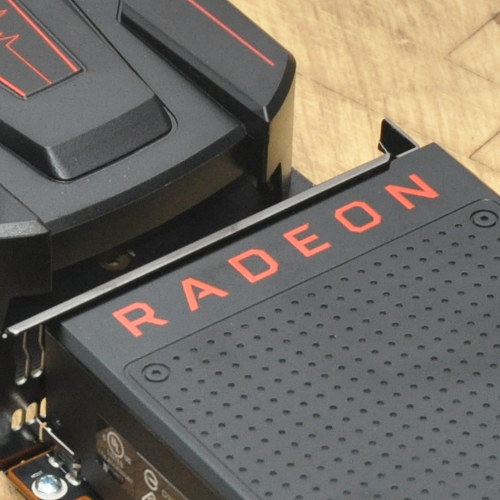
AMD Radeon Graphics Updates For Linux 5.11 Bring New Hardware, Other Enhancements - Phoronix
An initial round of predominantly AMDGPU kernel driver patches have been called upon for pulling into DRM-Next as new feature work for Linux 5.11.
Among the highlights for this early feature code queuing up for the Linux 5.11 kernel cycle includes:
- Initial support for next-gen Van Gogh APUs. AMD published Van Gogh graphics support at the end of September while it is coming with Linux 5.11. Van Gogh is expected to be a combination of Zen 2 CPU cores and RDNA2 graphics. The Linux graphics driver bring-up does reinforce the RDNA2/Navi graphics. Also exciting with Van Gogh is DDR5 system memory support. It's also bringing other new features like as a "fix" for Linux 5.10. Green Sardine looks like it may be the Ryzen 5000 Cezanne APUs.
-
Intel Lands Vulkan Ray-Tracing Prep Work In Mesa 20.3 - Phoronix
Following the news that we were first to report last month on Intel starting open-source public patches for Vulkan ray-tracing in preparation for their forthcoming Xe HPG graphics card, the initial prep work for that Vulkan ray-tracing support has now been merged in time for Mesa 20.3.
The Mesa 20.3 code branching is imminent and merged as of writing has just been patches to prep the infrastructure for allowing Intel's "ANV" Vulkan driver to support ray-tracing but not the actual extension enablement. Thus for this Q4'2020 Mesa3D update there might not be the working implementation, but that in turn would then most likely come with Mesa 21.0 next quarter. Given the Xe HPG release doesn't appear imminent, that timing should ultimately turn out fine.
-
Mesa Moves Closer To Having OpenCL 3.0 Support In Clover Gallium3D - Phoronix
It's not across the finish line at least yet but Mesa 20.3 just merged today the initial prep changes needed for exposing OpenCL 3.0 support within the Clover Gallium3D state tracker.
David Airlie of Red Hat has merged Clover's "CL3.0 precursor patches" as the initial changes in moving this OpenCL Gallium3D state tracker to OpenCL 3.0 support. Basically it adds the new version number and other prep work around differences in the OpenCL 3.0 spec but doesn't yet enable / flip on any OpenCL 3.0 support as of yet.
-
Intel "Big Joiner" Enabling Nearly Squared Away For Allowing 8K Output On A Single Port - Phoronix
For the past several months there have been a number of Intel Linux DRM patch series around "big joiner" support and that is looking like it may soon be finished up for allowing support for driving 8K displays off a single port.
Intel's "big joiner" support with Ice Lake / Gen11 and newer is for allowing two pipes to drive a single transcoder. The main focus of big joiner is for being able to drive an 8K display (at 30Hz or 60Hz, depending upon conditions) off a single DP port.
»
-

- Login or register to post comments
 Printer-friendly version
- 2438 reads
 PDF version
More in Tux Machines
- Highlights
- Front Page
- Latest Headlines
- Archive
- Recent comments
- All-Time Popular Stories
- Hot Topics
- New Members
digiKam 7.7.0 is released
After three months of active maintenance and another bug triage, the digiKam team is proud to present version 7.7.0 of its open source digital photo manager. See below the list of most important features coming with this release.
|
Dilution and Misuse of the "Linux" Brand
|
Samsung, Red Hat to Work on Linux Drivers for Future Tech
The metaverse is expected to uproot system design as we know it, and Samsung is one of many hardware vendors re-imagining data center infrastructure in preparation for a parallel 3D world.
Samsung is working on new memory technologies that provide faster bandwidth inside hardware for data to travel between CPUs, storage and other computing resources. The company also announced it was partnering with Red Hat to ensure these technologies have Linux compatibility.
|
today's howtos
|


 Content (where original) is available under CC-BY-SA, copyrighted by original author/s.



Recent comments
1 year 11 weeks ago
1 year 11 weeks ago
1 year 11 weeks ago
1 year 11 weeks ago
1 year 11 weeks ago
1 year 11 weeks ago
1 year 11 weeks ago
1 year 11 weeks ago
1 year 11 weeks ago
1 year 11 weeks ago