



Programming: RISC-V Dev Board, JS, Bash and More
Submitted by Roy Schestowitz on Sunday 25th of October 2020 06:52:27 AM
Filed under 
-
BL602 IoT SDK and $5 DT-BL10 WiFi & BLE RISC-V development board
Go to Doiting_BL/docs/html folder and then open index.html in your browser to access the documentation. The SDK works both in Windows and Linux and relies on either Eclipse & OpenOCD or Freedom Studio & OpenOCD. A graphical software called Dev Cube is used for flashing the board.
The documentation is made for a specific board Doit.am DT-BL10 development board powered by BL602 WiSoC that sells for $5 plus shipping on Aliexpress or 19.99 RMB on Taobao (about $3). We’re not at ESP8266 board price level ($2+) yet, but still affordable and interesting for evaluation.
-
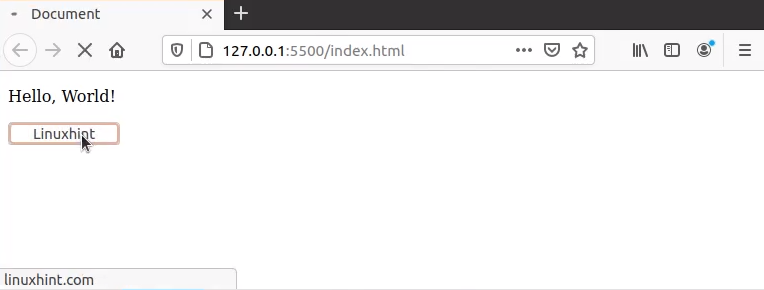
Javascript Redirect – Linux Hint
Javascript is a web-oriented programming language. When using the web, you will often need to navigate through pages. When you click on any button, submit a form, or log in to any website, you get redirected to a different new page. Page redirection is an essential part of any website, but it is not only restricted to page navigation on a website.
-
JavaScript Sleep Function – Linux Hint
Javascript is the language of freedom yet is a function-oriented language at the same time. Unlike other languages, javascript does not provide a built-in sleep() function. You can either build a custom sleep() function using the built-in setTimeout() function, or the latest ECMAScript promises an async-await function. This article shows you how to stop or pause the execution of the sleep function for a desired amount of time using promises or async-await functions.
-
3 Hour Bash Tutorial – Linux Hint
In this article, you will learn from printing a simple “Hello World” to using conditional statements such as if statements, case statements to using loops such as while, for until loops to awk, grep, sed, and debugging bash scripts. We will cover the following topics in this article:
-
Dirk Eddelbuettel: digest 0.6.27: Build fix
Exactly one week after the previous release 0.6.26 of digest, a minor cleanup release 0.6.27 just arrived on CRAN and will go to Debian shortly.
digest creates hash digests of arbitrary R objects (using the md5, sha-1, sha-256, sha-512, crc32, xxhash32, xxhash64, murmur32, spookyhash, and blake3 algorithms) permitting easy comparison of R language objects. It is a fairly widely-used package (currently listed at one million monthly downloads, 282 direct reverse dependencies and 8068 indirect reverse dependencies, or just under half of CRAN) as many tasks may involve caching of objects for which it provides convenient general-purpose hash key generation.
»
-

- Login or register to post comments
 Printer-friendly version
- 2597 reads
 PDF version
More in Tux Machines
- Highlights
- Front Page
- Latest Headlines
- Archive
- Recent comments
- All-Time Popular Stories
- Hot Topics
- New Members
digiKam 7.7.0 is released
After three months of active maintenance and another bug triage, the digiKam team is proud to present version 7.7.0 of its open source digital photo manager. See below the list of most important features coming with this release.
|
Dilution and Misuse of the "Linux" Brand
|
Samsung, Red Hat to Work on Linux Drivers for Future Tech
The metaverse is expected to uproot system design as we know it, and Samsung is one of many hardware vendors re-imagining data center infrastructure in preparation for a parallel 3D world.
Samsung is working on new memory technologies that provide faster bandwidth inside hardware for data to travel between CPUs, storage and other computing resources. The company also announced it was partnering with Red Hat to ensure these technologies have Linux compatibility.
|
today's howtos
|


 Content (where original) is available under CC-BY-SA, copyrighted by original author/s.



Recent comments
1 year 11 weeks ago
1 year 11 weeks ago
1 year 11 weeks ago
1 year 11 weeks ago
1 year 11 weeks ago
1 year 11 weeks ago
1 year 11 weeks ago
1 year 11 weeks ago
1 year 11 weeks ago
1 year 11 weeks ago