



Programming Leftovers
Submitted by Roy Schestowitz on Thursday 15th of October 2020 10:55:58 PM
Filed under 
-
Ruby 3.0 brings new type checking and concurrency features [LWN.net]
The first preview of Ruby version 3.0 was released on September 25. It includes better support for type checking, additional language features, and two new experimental features: a parallel execution mechanism called Ractor, and Scheduler, which provides concurrency improvements.
According to a 2019 keynote [YouTube] by Ruby chief designer Yukihiro "Matz" Matsumoto, type checking is a major focus of Ruby 3. In his presentation, he noted that Python 3, PHP, and JavaScript have all implemented some version of the feature. In fact, Ruby already has type-checking abilities in the form of a third-party project, Sorbet. For Ruby 3.0, type checking has been promoted into the core project, implemented as a new sub-language called Ruby Signature (RBS). This mirrors the approach taken by Sorbet, which implemented a sub-language called Ruby Interface (RBI). Sorbet allows annotations to exist within Ruby scripts, something that the community wanted to avoid, according to a presentation [YouTube] (slides [PDF]) by contributor Yusuke Endoh; by keeping RBS separate from Ruby, he explained, the project doesn't have to worry about conflicts in syntax or grammar between the two languages. In a recent blog post, the Sorbet project committed to supporting RBS in addition to its RBI format.
In a post introducing RBS, core developer Soutaro Matsumoto provided a detailed look at the feature. Conceptually, RBS files are similar to C/C++ header files, and currently are used in static code analysis with a project called Steep. As a part of the 3.0 release, Ruby will ship with a full collection of type annotations for the standard library.
-
Zig heading toward a self-hosting compiler [LWN.net]
The Zig programming language is a relatively recent entrant into the "systems programming" realm; it looks to interoperate with C, while adding safety features without sacrificing performance. The language has been gaining some attention of late and has announced progress toward a Zig compiler written in Zig in September. That change will allow LLVM to become an optional component, which will be a big step forward for the "maturity and stability" of Zig.
Zig came about in 2015, when Andrew Kelley started a GitHub repository to house his work. He described the project and its goals in an introductory blog post in 2016. As he noted then, it is an ambitious project, with a goal to effectively supplant C; in part, that is done by adopting the C application binary interface (ABI) for exported functions and providing easy mechanisms to import C header files. "Interop with C is crucial. Zig embraces C like the mean older brother who you are a little afraid of but you still want to like you and be your friend."
-
Dirk Eddelbuettel: dang 0.0.12: Two new functions
A new release of the dang package is now on CRAN, roughly one year after the last release. The dang package regroups a few functions of mine that had no other home as for example lsos() from a StackOverflow question from 2009 (!!) is one, this overbought/oversold price band plotter from an older blog post is another. More recently added were helpers for data.table to xts conversion and a git repo root finder.
This release adds two functions. One was mentioned just days ago in a tweet by Nathan and is a reworked version of something Colin tweeted about a few weeks ago: a little data wrangling off the kewl rtweet to find maximally spammy accounts per search topic. In other words those who include more than ‘N’ hashtags for given search term. The other is something I, if memory serves, picked up a while back on one of the lists: a base R function to identify non-ASCII characters in a file. It is a C function that is not directly exported by and hence no accessible, so we put it here (with credits, of course). I mentioned it yesterday when announcing tidyCpp as I this C function was the starting point for the new tidyCpp wrapper around some C API of R functions.
-
Jussi Pakkanen: Does C++ still deserve the bad rap it has had for so long?
Traditionally C++ has been seen by many (and you know who you are) as just plain bad: the code is unreadably verbose, error messages are undecipherable, it's unsafe, compilation takes forever and so on. In fact making fun of C++ is even a fun pastime for some. All of this was certainly true in the 90s and even as recent as 10 years ago. But is it still the case? What would be a good way to determine this?
-
Bash For Loop on Linux - idroot
In this tutorial, we will show you how to use bash for loop on Linux systems. For those of you who didn’t know, Loops are one of the fundamental concepts of programming languages. Loops are handy when you want to run a series of commands over and over again until a certain condition is reached. Like any other programming language, bash shell scripting also supports ‘for loops’ to perform repetitive tasks. It helps us to iterate a particular set of statements over a series of words in a string, or elements in an array.
-
What is a Bash Script? – Linux Hint
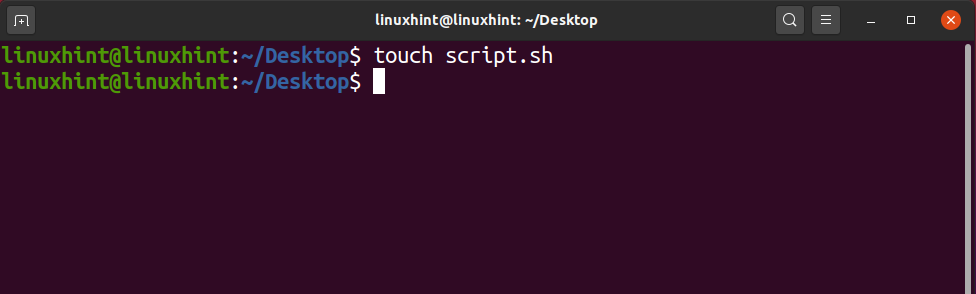
Have you ever heard your father telling you to grab a glass of water? You have a choice to say No, but computers don’t have that choice. Computers are going to do exactly what you would tell them to do. Bash is just a shell that allows you to communicate with the computer and allow you to give instructions to it. A script is basically just a set of instructions given to the computer to execute different meaningful tasks. A script helps you automate different tasks along with the luxury to accomplish results faster than the normal procedure. Normally, in the terminal, you write a basic or advance bash command and it executes on it right away. In bash scripts, you could give multiple instructions or commands at once and the computer would execute all of them only when you would execute the script. In a nutshell, single bash command can be executed in the terminal but to execute a combination of multiple commands at once, you need to create a bash script.
»
-

- Login or register to post comments
 Printer-friendly version
- 3395 reads
 PDF version
More in Tux Machines
- Highlights
- Front Page
- Latest Headlines
- Archive
- Recent comments
- All-Time Popular Stories
- Hot Topics
- New Members
digiKam 7.7.0 is released
After three months of active maintenance and another bug triage, the digiKam team is proud to present version 7.7.0 of its open source digital photo manager. See below the list of most important features coming with this release.
|
Dilution and Misuse of the "Linux" Brand
|
Samsung, Red Hat to Work on Linux Drivers for Future Tech
The metaverse is expected to uproot system design as we know it, and Samsung is one of many hardware vendors re-imagining data center infrastructure in preparation for a parallel 3D world.
Samsung is working on new memory technologies that provide faster bandwidth inside hardware for data to travel between CPUs, storage and other computing resources. The company also announced it was partnering with Red Hat to ensure these technologies have Linux compatibility.
|
today's howtos
|


 Content (where original) is available under CC-BY-SA, copyrighted by original author/s.



Recent comments
1 year 11 weeks ago
1 year 11 weeks ago
1 year 11 weeks ago
1 year 11 weeks ago
1 year 11 weeks ago
1 year 11 weeks ago
1 year 11 weeks ago
1 year 11 weeks ago
1 year 11 weeks ago
1 year 11 weeks ago