



Plasma adventures - 5.19.4 tried and tested
Submitted by Roy Schestowitz on Wednesday 23rd of September 2020 07:37:29 PM
Filed under 
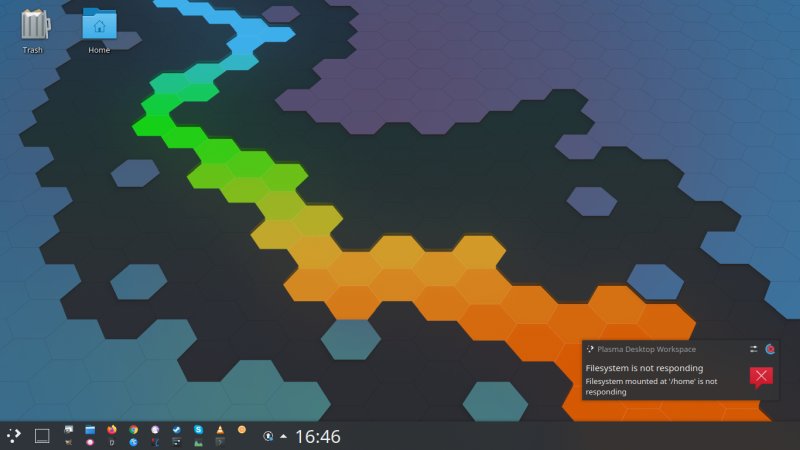
I like the momentum in the Plasma space. The last three years have been phenomenal, and there does not seem to be any fatigue, which typically affects most software projects after a while. Given that Plasma has been chugging on for a looong time now, this is rather impressive. What worries me, though, is that each new version brings in more fragility, more bugs. And this brings me back to the fundamental issue with the Linux desktop. It's simply not robust enough to be a day-to-day system for most people.
My mind simply cannot reconcile with breakages and compatibility issues. They feel like the easy way out of difficult situations with legacy models and usage patterns. Instead of creating a smooth transition to whatever the new thing is, what most projects seem to be doing is - break stuff. Why should plasma 5.19 be any less stable than say 5.18 or 5.15 or whatever. All in all, there's decent progress in Plasma, most notably the visuals and the responsiveness of the desktop, but these seem to come at the cost of good ole stability. Hopefully, future versions of Plasma will be able to give us both. That said, despite my grumbling, if you're after a solid desktop, Plasma is still the indubitable winner. Version 5.20 test coming soon!

»
-

- Login or register to post comments
 Printer-friendly version
- 2424 reads
 PDF version
More in Tux Machines
- Highlights
- Front Page
- Latest Headlines
- Archive
- Recent comments
- All-Time Popular Stories
- Hot Topics
- New Members
digiKam 7.7.0 is released
After three months of active maintenance and another bug triage, the digiKam team is proud to present version 7.7.0 of its open source digital photo manager. See below the list of most important features coming with this release.
|
Dilution and Misuse of the "Linux" Brand
|
Samsung, Red Hat to Work on Linux Drivers for Future Tech
The metaverse is expected to uproot system design as we know it, and Samsung is one of many hardware vendors re-imagining data center infrastructure in preparation for a parallel 3D world.
Samsung is working on new memory technologies that provide faster bandwidth inside hardware for data to travel between CPUs, storage and other computing resources. The company also announced it was partnering with Red Hat to ensure these technologies have Linux compatibility.
|
today's howtos
|


 Content (where original) is available under CC-BY-SA, copyrighted by original author/s.



Recent comments
1 year 11 weeks ago
1 year 11 weeks ago
1 year 11 weeks ago
1 year 11 weeks ago
1 year 11 weeks ago
1 year 11 weeks ago
1 year 11 weeks ago
1 year 11 weeks ago
1 year 11 weeks ago
1 year 11 weeks ago