



Linux Impressions
Submitted by Rianne Schestowitz on Tuesday 28th of July 2020 08:06:17 PM
Filed under 

I won’t try to do any benchmarking here. More interesting to me is the perceived performance.
Here I can say that the biggest difference is as, already mentioned, Docker.
Apart from that file search in my editor and also starting applications are both definitely faster on Linux. KRunner in KDE also feels faster than searching in Gnome or Spotlight on a Mac.
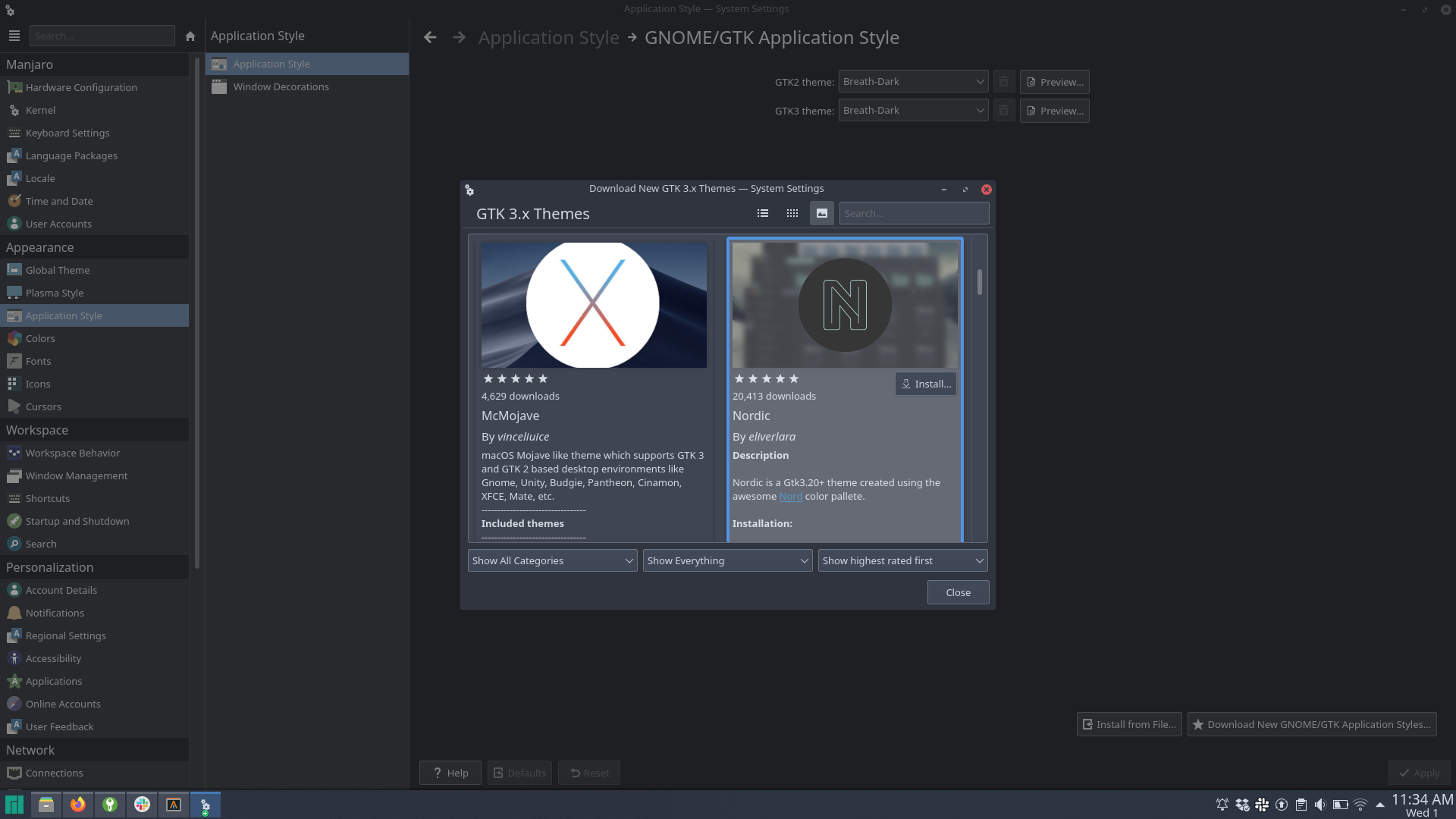
I mostly cannot tell a difference between Manjaro+KDE and Ubuntu+Gnome, but looking at the system status you can see that Manjaro+KDE consumes less ressources and has less systemd services running. For me it was definitely a surprise to find out that in 2020 KDE is more lightweight than Gnome. That used to be very different.
Booting the system I have to say that Dell BIOS seems to be the fastest and Lenovo Thinkpad the slowest. Or Lenovo prefers likes to show their giant red logo for a bit longer.
The actual Linux distros are both pretty fast. I find that KDE gives you a smoother booting experience and Manjaro doesn’t have a loading screen while Ubuntu shows a loading screen for 1-2 seconds.
One point for the MacBooks is that their sleep mode (closing the laptop lid) lasts longer. I think the Mac switches to hibernate automatically. While hibernate works on the Linux laptops, it seems to be not faster than rebooting from scratch.

»
-

- Login or register to post comments
 Printer-friendly version
- 2695 reads
 PDF version
More in Tux Machines
- Highlights
- Front Page
- Latest Headlines
- Archive
- Recent comments
- All-Time Popular Stories
- Hot Topics
- New Members
digiKam 7.7.0 is released
After three months of active maintenance and another bug triage, the digiKam team is proud to present version 7.7.0 of its open source digital photo manager. See below the list of most important features coming with this release.
|
Dilution and Misuse of the "Linux" Brand
|
Samsung, Red Hat to Work on Linux Drivers for Future Tech
The metaverse is expected to uproot system design as we know it, and Samsung is one of many hardware vendors re-imagining data center infrastructure in preparation for a parallel 3D world.
Samsung is working on new memory technologies that provide faster bandwidth inside hardware for data to travel between CPUs, storage and other computing resources. The company also announced it was partnering with Red Hat to ensure these technologies have Linux compatibility.
|
today's howtos
|


 Content (where original) is available under CC-BY-SA, copyrighted by original author/s.



Recent comments
1 year 11 weeks ago
1 year 11 weeks ago
1 year 11 weeks ago
1 year 11 weeks ago
1 year 11 weeks ago
1 year 11 weeks ago
1 year 11 weeks ago
1 year 11 weeks ago
1 year 11 weeks ago
1 year 11 weeks ago