



IBM/Red Hat/Fedora: Open(washing) Mainframe Project, Christof Damian's (Fedora) Desk, Podman 2.0 and GNOME Internet Radio Locator 3.0.2 on F32
Submitted by Roy Schestowitz on Monday 27th of July 2020 01:46:48 PM
Filed under 
-
Open Mainframe Project Unveils Major Technical Milestone with Zowe’s Long Term Support Release
The Open Mainframe Project has announced that Zowe, an open source software framework for the mainframe that strengthens integration with modern enterprise applications, has marked a technical milestone with the first Long Term Support (LTS) release.
The Open Mainframe Project launched Zowe, an open source project based on z/OS, in 2018 to serve as an integration platform for the next generation of administration, management and development tools on z/OS mainframes. The Zowe framework uses the latest web technologies among products and solutions from multiple vendors. Zowe enables developers to use familiar, industry-standard, open source tools to access mainframe resources and services.
“Mainframes are the foundation of businesses in every industry,” said John Mertic, director of program management for the Linux Foundation and Open Mainframe Project. “Zowe continues to evolve rapidly due to numerous contributions from the open source community. The LTS release is our first major step into longevity and security that will offer innovative possibilities for the next generation of products and solutions.”
-
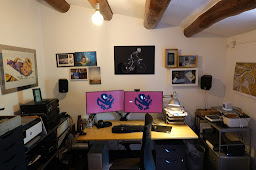
Christof Damian: My Workspace
I like looking at pictures of other people's office set-ups. With most people working from home at the moment you see more and more nice workspaces especially tuned for video conferencing.
I was lucky enough to have a space and a reasonable set-up already. By chance I also had ordered bits and pieces before everything was sold out on Amazon.
There are a few things I still want to improve. The light is not ideal for video conferencing and I am also going to try a separate microphone for better sound. -
Improved systemd integration with Podman 2.0
Podman is known for its tight and seamless integration into Linux systems. Staying true to the "containers are Linux" philosophy, we make containerization as easy as possible. A core component of modern Linux systems is systemd, which is the de-facto standard for managing services and their dependencies. Early on, we realized that a seamless integration of Podman and systemd is important to our users.
-
GNOME Internet Radio Locator 3.0.2 for Fedora Core 32
GNOME Internet Radio Locator 3.0.2 features updated language translations, new, improved map marker palette and now also includes radio from Washington, United States of America; WAMU/NPR, London, United Kingdom; BBC World Service, Berlin, Germany; Radio Eins, Norway; NRK, and Paris, France; France Inter/Info/Culture, as well as 118 other radio stations from around the world with audio streaming implemented through GStreamer.
»
-

- Login or register to post comments
 Printer-friendly version
- 2953 reads
 PDF version
More in Tux Machines
- Highlights
- Front Page
- Latest Headlines
- Archive
- Recent comments
- All-Time Popular Stories
- Hot Topics
- New Members
digiKam 7.7.0 is released
After three months of active maintenance and another bug triage, the digiKam team is proud to present version 7.7.0 of its open source digital photo manager. See below the list of most important features coming with this release.
|
Dilution and Misuse of the "Linux" Brand
|
Samsung, Red Hat to Work on Linux Drivers for Future Tech
The metaverse is expected to uproot system design as we know it, and Samsung is one of many hardware vendors re-imagining data center infrastructure in preparation for a parallel 3D world.
Samsung is working on new memory technologies that provide faster bandwidth inside hardware for data to travel between CPUs, storage and other computing resources. The company also announced it was partnering with Red Hat to ensure these technologies have Linux compatibility.
|
today's howtos
|


 Content (where original) is available under CC-BY-SA, copyrighted by original author/s.



Recent comments
1 year 11 weeks ago
1 year 11 weeks ago
1 year 11 weeks ago
1 year 11 weeks ago
1 year 11 weeks ago
1 year 11 weeks ago
1 year 11 weeks ago
1 year 11 weeks ago
1 year 11 weeks ago
1 year 11 weeks ago