



Fedora Silverblue is an amazing immutable desktop
Submitted by Roy Schestowitz on Sunday 12th of April 2020 12:42:18 AM
Filed under 
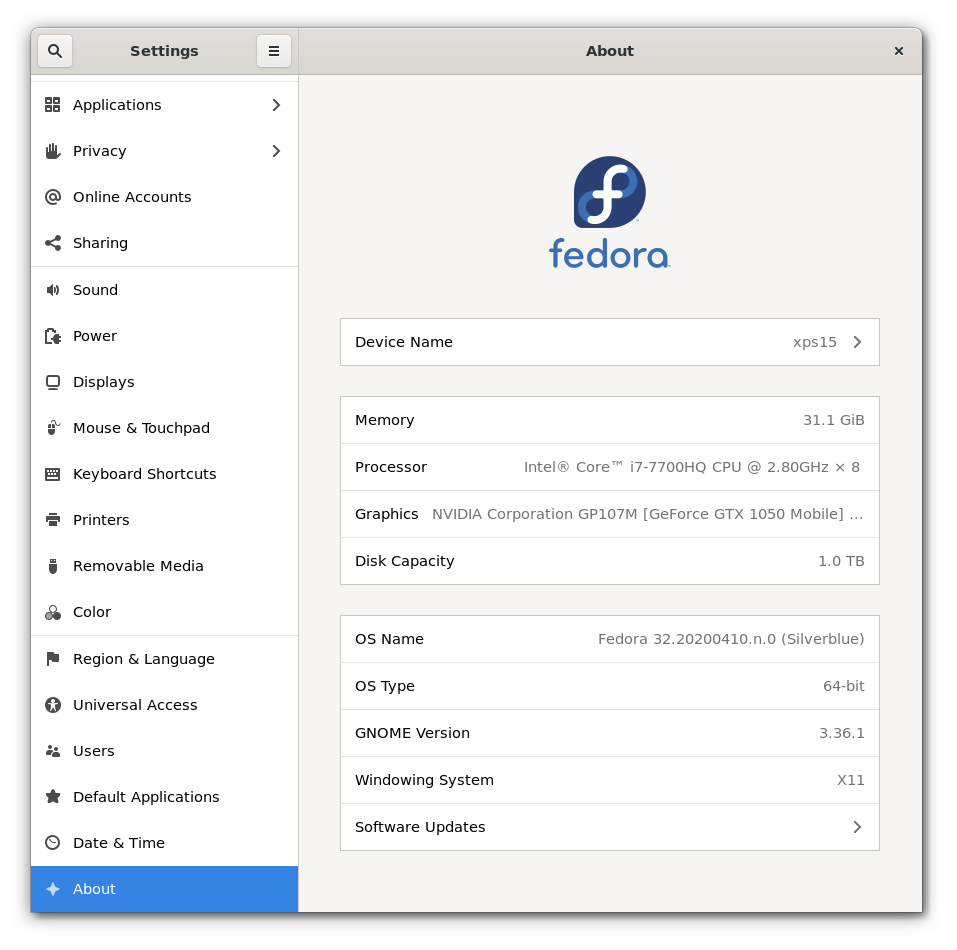
I recently switched my regular Fedora 31 workstation over to the 31 Silverblue release. I’ve played with Project Atomic before and have been meaning to try it out more seriously for a while, but never had the time. Silverblue provided the catalyst to do that.
What this brings to the table is quite amazing and seriously impressive. The base OS is immutable and everyone’s install is identical. This means quality can be improved as there are less combinations and it’s easier to test. Upgrades to the next major version of Fedora are fast and secure. Instead of updating thousands of RPMs in-place, the new image is downloaded and the system reboots into it. As the underlying images don’t change, it also offers full rollback support.
This is similar to how platforms like Chrome OS and Android work, but thanks to ostree it’s now available for Linux desktops! That is pretty neat.
It doesn’t come with a standard package manager like dnf. Instead, any packages or changes you need to perform on the base OS are done using rpm-ostree command, which actually layers them on top.
And while technically you can install anything using rpm-ostree, ideally this should be avoided as much as possible (some low level apps like shells and libvirt may require it, though). Flatpak apps and containers are the standard way to consume packages. As these are kept separate from the base OS, it also helps improve stability and reliability.

»
-

- Login or register to post comments
 Printer-friendly version
- 2688 reads
 PDF version
More in Tux Machines
- Highlights
- Front Page
- Latest Headlines
- Archive
- Recent comments
- All-Time Popular Stories
- Hot Topics
- New Members
digiKam 7.7.0 is released
After three months of active maintenance and another bug triage, the digiKam team is proud to present version 7.7.0 of its open source digital photo manager. See below the list of most important features coming with this release.
|
Dilution and Misuse of the "Linux" Brand
|
Samsung, Red Hat to Work on Linux Drivers for Future Tech
The metaverse is expected to uproot system design as we know it, and Samsung is one of many hardware vendors re-imagining data center infrastructure in preparation for a parallel 3D world.
Samsung is working on new memory technologies that provide faster bandwidth inside hardware for data to travel between CPUs, storage and other computing resources. The company also announced it was partnering with Red Hat to ensure these technologies have Linux compatibility.
|
today's howtos
|


 Content (where original) is available under CC-BY-SA, copyrighted by original author/s.



Recent comments
1 year 11 weeks ago
1 year 11 weeks ago
1 year 11 weeks ago
1 year 11 weeks ago
1 year 11 weeks ago
1 year 11 weeks ago
1 year 11 weeks ago
1 year 11 weeks ago
1 year 11 weeks ago
1 year 11 weeks ago