



Handling attacks on volunteers and their families
Submitted by Roy Schestowitz on Sunday 15th of March 2020 08:34:59 AM
Filed under 

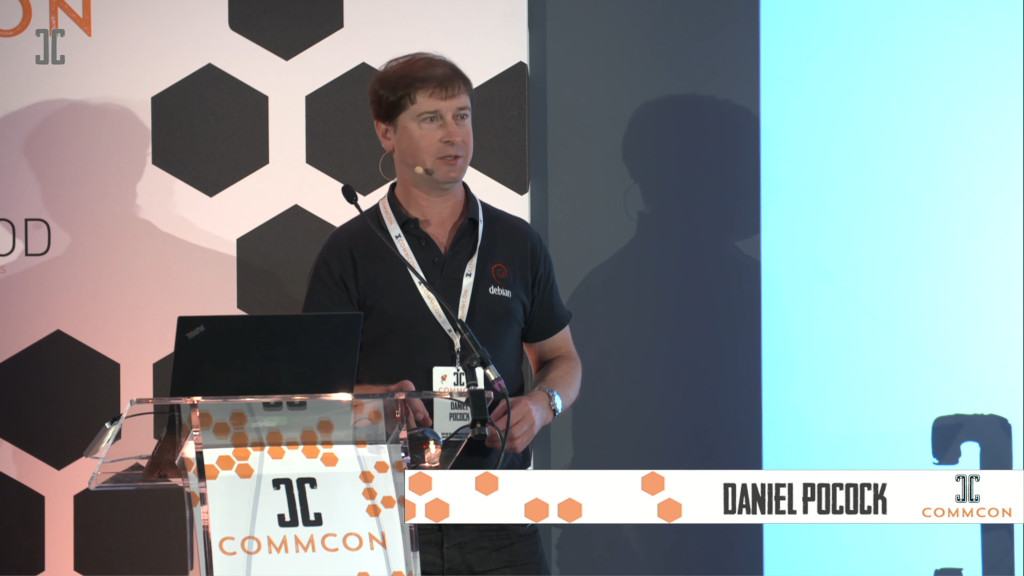
Over the years, volunteers have done a lot to promote and contribute to free and open source software and the organizations/communities in this space. The leaders are not the only ones doing this work. Many people are quietly doing far more work than the leaders of some free software organizations.
In 2017, the now defunct FSFE Fellowship, which consisted of approximately 1,500 Fellows, voted for me to be their community representative. Not only did I have to represent those who voted for me, but also those who voted for other candidates. I also discovered that I was representing a Fellow who died leaving a EUR 150,000 bequest. Although I was only a volunteer, I took all those responsibilities seriously.
I didn't realize this at the beginning but representing the interests of donors and volunteers put me in opposition to some people who had not previously had to deal with the same level of committment from a community representative. The type of people who paid themselves salaries and took long periods of paternity leave after receiving that bequest.
Around that time, I was also dealing with some incredibly tragic circumstances in my family life. I resigned from some of my roles, for example, being a Google Summer of Code admin in Debian. Thanks to the never-ending creativity of open source politics, people immediately started rather offensive lies trying to connect me to trolling or even suggesting that I was expelled. It isn't coincidence when people say things like that about somebody elected by the volunteers. My only mistake was joining the FSFE in the first place.
In September 2018, Debian's leader (DPL) Chris Lamb had the Debian Account Managers move my key from the DD keyring to the inferior DM keyring.
They wanted me to feel humiliated.
They wanted me to continue contributing to Debian, but under their coercive control. You can see the entry on 20 September 2018 when I was moved from the DD to the DM keyring, not expelled.
The thing is, my responsibility is to my employer and clients. By exercising this control over me, those co-conspirators aspired to have the power of an employer without actually paying me.
In other words, they wanted me to be their slave and their puppet.

»
-

- Login or register to post comments
 Printer-friendly version
- 1739 reads
 PDF version
More in Tux Machines
- Highlights
- Front Page
- Latest Headlines
- Archive
- Recent comments
- All-Time Popular Stories
- Hot Topics
- New Members
digiKam 7.7.0 is released
After three months of active maintenance and another bug triage, the digiKam team is proud to present version 7.7.0 of its open source digital photo manager. See below the list of most important features coming with this release.
|
Dilution and Misuse of the "Linux" Brand
|
Samsung, Red Hat to Work on Linux Drivers for Future Tech
The metaverse is expected to uproot system design as we know it, and Samsung is one of many hardware vendors re-imagining data center infrastructure in preparation for a parallel 3D world.
Samsung is working on new memory technologies that provide faster bandwidth inside hardware for data to travel between CPUs, storage and other computing resources. The company also announced it was partnering with Red Hat to ensure these technologies have Linux compatibility.
|
today's howtos
|


 Content (where original) is available under CC-BY-SA, copyrighted by original author/s.



Recent comments
1 year 11 weeks ago
1 year 11 weeks ago
1 year 11 weeks ago
1 year 11 weeks ago
1 year 11 weeks ago
1 year 11 weeks ago
1 year 11 weeks ago
1 year 11 weeks ago
1 year 11 weeks ago
1 year 11 weeks ago