



LibrePlanet day 1: Can free software carry an entire online conference? Yes, it can!
Submitted by Roy Schestowitz on Sunday 15th of March 2020 03:31:02 AM
Filed under 
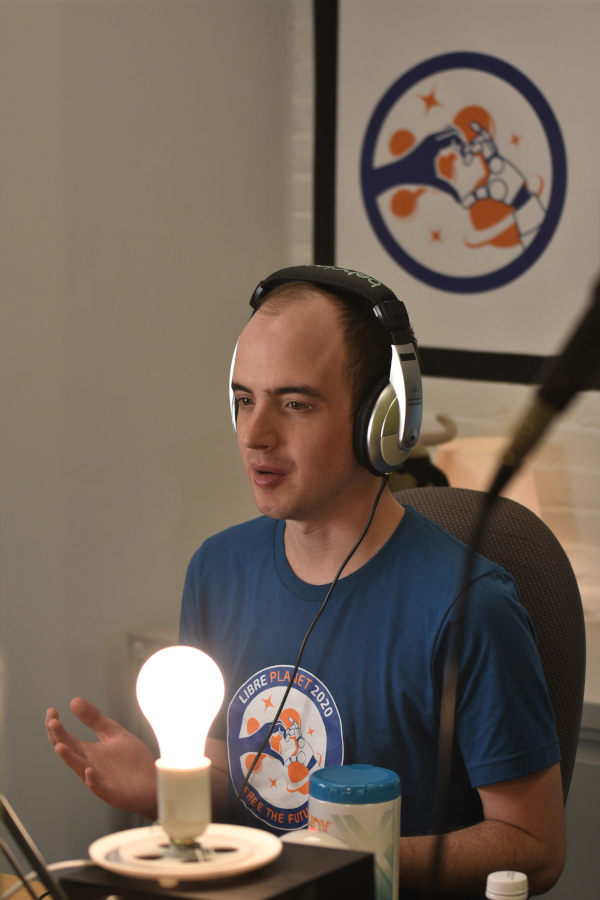
Sometimes, all of your best-laid plans can go awry, and when COVID-19 collided with LibrePlanet 2020, the Free Software Foundation (FSF) staff and management had to make an incredibly tough decision: how were we to weigh the risk of a spreading pandemic against our most important yearly event? Within the space of a week, we had to change course from months of scrupulous planning and figure out how to ensure that our carefully-composed program could move forward, giving the worldwide free software community access to the experts, creators, and enthusiasts we had planned to bring together in Boston. We were incredibly excited to present this slate of free software luminaries and newcomers, all eager to discuss what it will take to "Free the Future," and we weren't about to let all of that effort go to waste.
Thankfully, free software activists aren't afraid of a little adversity, and are accustomed to taking on challenges. In only a few days, we fully shifted gears to deliver the LibrePlanet 2020 program remotely, with online talks streaming in from all over the world. We're so grateful to our speakers, who have been so flexible, and to the last-minute benefactors that volunteered to help fill any gaps that might ensue. All this allowed us to present you with a nearly full program for the event!

»
-

- Login or register to post comments
 Printer-friendly version
- 2030 reads
 PDF version
More in Tux Machines
- Highlights
- Front Page
- Latest Headlines
- Archive
- Recent comments
- All-Time Popular Stories
- Hot Topics
- New Members
digiKam 7.7.0 is released
After three months of active maintenance and another bug triage, the digiKam team is proud to present version 7.7.0 of its open source digital photo manager. See below the list of most important features coming with this release.
|
Dilution and Misuse of the "Linux" Brand
|
Samsung, Red Hat to Work on Linux Drivers for Future Tech
The metaverse is expected to uproot system design as we know it, and Samsung is one of many hardware vendors re-imagining data center infrastructure in preparation for a parallel 3D world.
Samsung is working on new memory technologies that provide faster bandwidth inside hardware for data to travel between CPUs, storage and other computing resources. The company also announced it was partnering with Red Hat to ensure these technologies have Linux compatibility.
|
today's howtos
|


 Content (where original) is available under CC-BY-SA, copyrighted by original author/s.



Recent comments
1 year 11 weeks ago
1 year 11 weeks ago
1 year 11 weeks ago
1 year 11 weeks ago
1 year 11 weeks ago
1 year 11 weeks ago
1 year 11 weeks ago
1 year 11 weeks ago
1 year 11 weeks ago
1 year 11 weeks ago