



Kubuntu Linux 19.10 for a digital painting workstation: Reasons and Install guide.
Submitted by Rianne Schestowitz on Wednesday 11th of March 2020 08:16:24 PM
Filed under 
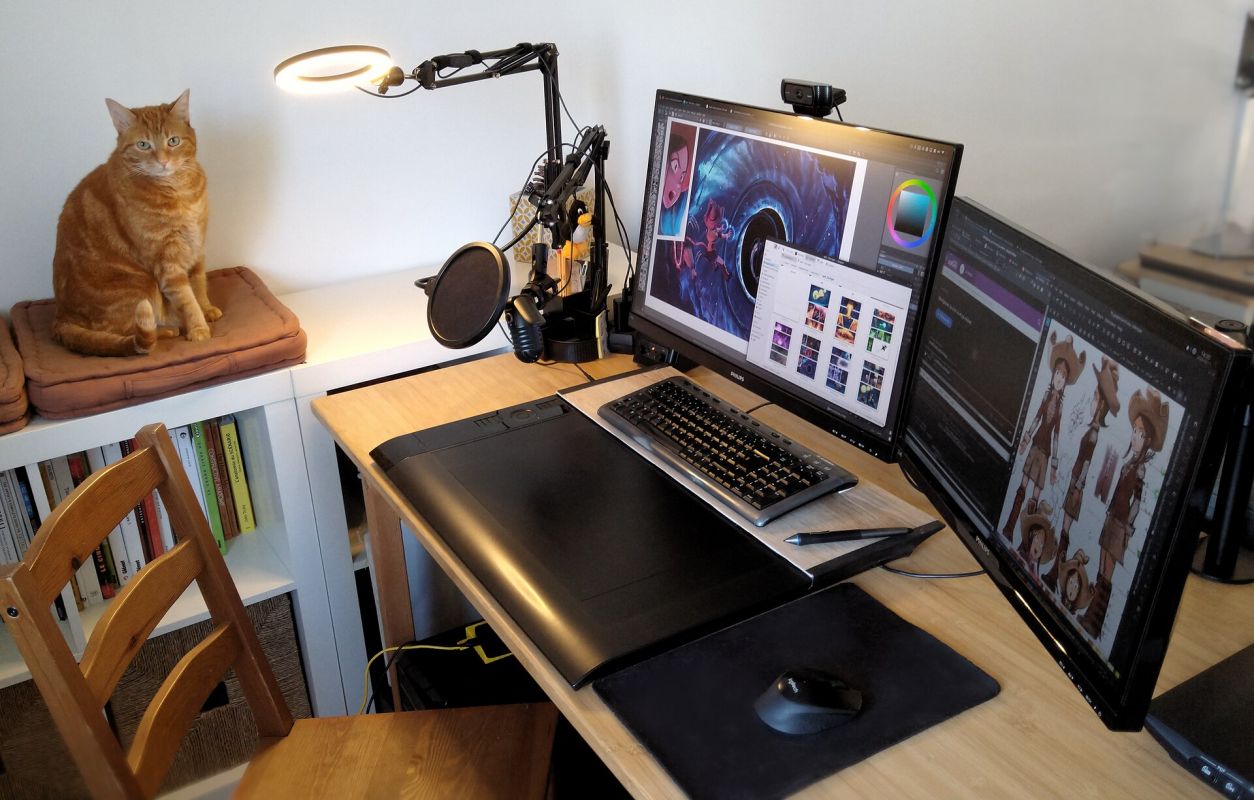
As you probably knows if you follow my blog, I'm using exclusively a GNU/Linux operating system for my workstation. I produce everything I do with it (webcomic, website, book, freelance, videos, etc...) and all of that since more than ten years now. Along the way, I tried so many existing solution for my workstation!.. And that's not a little journey because on this type of systems the options are numerous as you can see by yourself on this graph representing the development of various Linux distributions..
From April 2018 to end 2019, I used the same distro: Kubuntu 18.04 LTS and I was happy with it. It's even the first time I stick 1,5 year with the same operating system. I updated it recently to the latest version of Kubuntu 19.10 and this version made me even happier!
So, I decided to take notes on the way while reinstalling everything as I did over the last ten years when I wrote my previous five long install guide. Then the notes transformed into a draft, and now you'll find on this article two parts. First, my reasons to use it and why I advice it for a digital painting workstation. In a second and last part, I'll detail my tips, command-lines and methods to adapt the base Kubuntu install into an operating system similar to the one I use.

»
-

- Login or register to post comments
 Printer-friendly version
- 2523 reads
 PDF version
More in Tux Machines
- Highlights
- Front Page
- Latest Headlines
- Archive
- Recent comments
- All-Time Popular Stories
- Hot Topics
- New Members
digiKam 7.7.0 is released
After three months of active maintenance and another bug triage, the digiKam team is proud to present version 7.7.0 of its open source digital photo manager. See below the list of most important features coming with this release.
|
Dilution and Misuse of the "Linux" Brand
|
Samsung, Red Hat to Work on Linux Drivers for Future Tech
The metaverse is expected to uproot system design as we know it, and Samsung is one of many hardware vendors re-imagining data center infrastructure in preparation for a parallel 3D world.
Samsung is working on new memory technologies that provide faster bandwidth inside hardware for data to travel between CPUs, storage and other computing resources. The company also announced it was partnering with Red Hat to ensure these technologies have Linux compatibility.
|
today's howtos
|


 Content (where original) is available under CC-BY-SA, copyrighted by original author/s.



Recent comments
1 year 11 weeks ago
1 year 11 weeks ago
1 year 11 weeks ago
1 year 11 weeks ago
1 year 11 weeks ago
1 year 11 weeks ago
1 year 11 weeks ago
1 year 11 weeks ago
1 year 11 weeks ago
1 year 11 weeks ago