



Leftovers: GNU/Linux, LibreOffice, Openwashing, Security and More
Submitted by Roy Schestowitz on Tuesday 4th of February 2020 07:35:13 AM
Filed under 



-
Linux Fu: The Linux Shuffle
-
Trese Brothers Games reveal Cyber Knights: Flashpoint - a tactical RPG that looks like a flashy XCOM
Trese Brothers Games (Star Traders: Frontiers, Templar Battleforce + more) have revealed their next game. Cyber Knights: Flashpoint, a tactical RPG that plunges you and your team of hackers, mercs and thieves into the neon-soaked future of 2231.
Seeking funding on Kickstarter, they're a pretty safe bet for Linux support and their previous games have worked well. Looks like plenty of gamers agree in a more broad sense, since the campaign only launched today and they're closing in on $30,000 against their $50,000 goal.
-
Linux Gaming: Getting to know Lutris, the ultimate Linux game launcher
If you’ve spent some time gaming on Linux, you’ve probably run into some frustration installing and managing all your different games. Sure, Steam is great, but what if you’ve bought some games of other storefronts, like GOG? And what about your hundred plus gig collection of ROMs (don’t worry, we won’t snitch on you)? And how about games from Windows-only storefronts, like the Epic Games Store, Battle.net, or Origin?
Enter Lutris, a one-stop launcher and library manager for all your games, regardless of where you’ve bought them from. Unlike Windows, there’s no need to go and download extra emulation software – everything is already baked into Lutris. It’s also incredibly easy to configure run-time options to tweak settings needed to get specific titles running on Linux, use specific graphical settings, or even boost performance. Excited? Let’s get into it.
-
Ubuntu Weekly Newsletter Issue 616
Welcome to the Ubuntu Weekly Newsletter, Issue 616 for the week of January 26 – February 1, 2020. The full version of this issue is available here.
-
Ben Hutchings: Debian LTS work, January 2020
I was assigned 20 hours of work by Freexian's Debian LTS initiative and worked all 20 hours this month.
I rebased the Debian package of Linux onto 3.16.80 and send out a request for testing.
I prepared and, after review, released Linux 3.16.81. I then rebased the Debian package onto that and sent out another request for testing. Finally, I uploaded the package and issued DLA 2068-1.
-
HardROCK64 SBC with Rockchip RK3399 Processor to Launch in April for $35 and Up
If you thought we didn’t have enough Rockchip RK3399 SBCs already, Pine64 is working on a smaller and cheaper version of the RockPro64 single board computer with HardROCK64 SBC...
-
This Week in Glean: Cargo features - an investigation
As :chutten outlined in the first TWiG blog post we're currently prototyping Glean on Desktop. After a couple rounds of review, some adjustements and some learnings from doing Rust on mozilla-central, we were ready to land the first working prototype code earlier this year (Bug 1591564).
Unfortunately the patch set was backed out nearly immediately 1 for 2 failures. The first one was a "leak" (we missed cleaning up memory in a way to satisfy the rigorous Firefox test suite, that was fixed in another patch). The second one was a build failure on a Windows platform.
[...]
Both approaches are short-term fixes for getting Glean into Firefox and it's clear that this issue might easily come up in some form soon again for either us or another team. It's also a major hassle for lots of people outside of Mozilla, for example people working on embedded Rust frequently run into problems with no_std libraries suddenly linking in libstd again.
Initially I also planned to figure out a way forward for Cargo and come up with a fix for it, but as it turns out: Someone is already doing that!
-
LibreOffice 6.4 Features QR Code Generator
The Document Foundation has released LibreOffice 6.4 with new features and performance optimizations, especially when opening and saving spreadsheets and presentations, and also compatibility with DOCX, XLSX and PPTX files.
The new version includes a QR code generator, which is said to make it easy to add QR codes – that can be read by mobile devices – to documents. Also, Hyperlink context menus have been unified throughout the suite, and now provide the following menu entries: Open Hyperlink, Edit Hyperlink, Copy Hyperlink Location and Remove Hyperlink.
The new Automatic Redaction feature lets your hide classified or sensitive data in a document based on text or regular expression matches. Besides, the help system provides faster and more precise search results, while many help pages have localized screenshots for a better user experience.
-
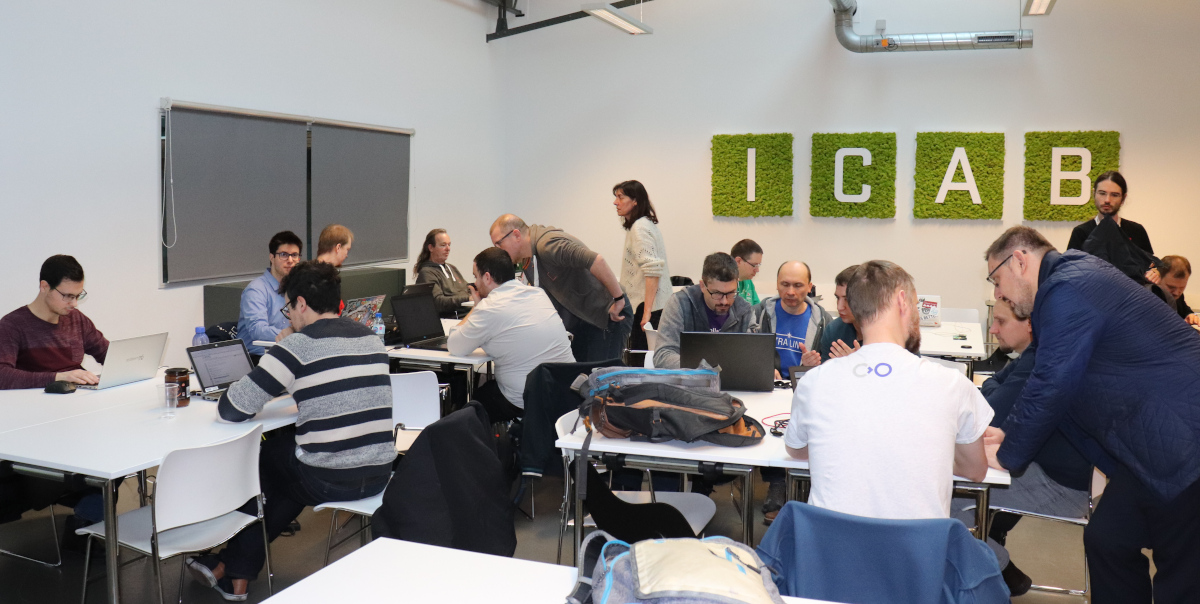
LibreOffice hackfest in Brussels, after FOSDEM
Our post-FOSDEM hackfest is underway!
-
Security updates for Monday
Security updates have been issued by Arch Linux (opensmtpd), Debian (firefox-esr, libidn2, libjackson-json-java, prosody-modules, qemu, qtbase-opensource-src, spamassassin, and sudo), Fedora (e2fsprogs, java-1.8.0-openjdk, mingw-openjpeg2, openjpeg2, samba, sox, upx, webkit2gtk3, and xar), Red Hat (git), Scientific Linux (git), Slackware (sudo), SUSE (ceph and rmt-server), and Ubuntu (sudo).
-
TechGenix patch roundup: January non-Microsoft patches
Popular Linux distros, as usual, have seen a number of security advisories and updates this month. As of October 31, Ubuntu has issued the following fifty-five security advisories since last month’s roundup. Some of these advisories address a large number of vulnerabilities in one advisory. In some cases, there are multiple advisories for the same vulnerabilities. Other commercial Linux vendors issued a similar number of updates.
-
Microsoft Teams goes down after Microsoft forgot to renew a certificate
Microsoft Teams went down this morning for nearly three hours after Microsoft forgot to renew a critical security certificate. Users of Microsoft’s Slack competitor were met with error messages attempting to sign into the service on Monday morning, with the app noting it had failed to establish an HTTPS connection to Microsoft’s servers.
Microsoft confirmed the Teams service was down just after 9AM ET today, and then later revealed the source of the issue. “We’ve determined that an authentication certificate has expired causing users to have issues using the service,” explains Microsoft’s outage notification. Microsoft then started rolling the fix out at 11:20AM ET, and by 12PM ET the service was restored for most affected users. Microsoft confirmed the fix was successfully deployed at 4:27PM ET.
This was an embarrassing mistake for Microsoft to make for its flagship “Office hub” software, especially as the company started its own TV commercials for Teams recently. It’s also surprising to see Microsoft forget to renew a key certificate for Teams, especially when the company develops software like System Center Operations Manager to monitor for things like certificate expiration.
-
Chef Automate Product Announcement: Identity and Access Management Release
Chef Automate provides DevOps teams a dashboard for complete operational visibility across large-scale or mission-critical infrastructure. This comprehensive visibility allows developers, operators, and security engineers to collaborate on delivering application and infrastructure changes at the speed of business. Chef Automate provides real-time data across the estate with intelligent access controls, ensuring the right team has the right access.
-
How Much Open Source Does Oracle Use? [Ed: Classic openwashing of classic proprietary software firms. But money can buy lies, too. They call it "perception management".]
»
-

- Login or register to post comments
 Printer-friendly version
- 1944 reads
 PDF version
More in Tux Machines
- Highlights
- Front Page
- Latest Headlines
- Archive
- Recent comments
- All-Time Popular Stories
- Hot Topics
- New Members
digiKam 7.7.0 is released
After three months of active maintenance and another bug triage, the digiKam team is proud to present version 7.7.0 of its open source digital photo manager. See below the list of most important features coming with this release.
|
Dilution and Misuse of the "Linux" Brand
|
Samsung, Red Hat to Work on Linux Drivers for Future Tech
The metaverse is expected to uproot system design as we know it, and Samsung is one of many hardware vendors re-imagining data center infrastructure in preparation for a parallel 3D world.
Samsung is working on new memory technologies that provide faster bandwidth inside hardware for data to travel between CPUs, storage and other computing resources. The company also announced it was partnering with Red Hat to ensure these technologies have Linux compatibility.
|
today's howtos
|


 Content (where original) is available under CC-BY-SA, copyrighted by original author/s.



Recent comments
1 year 11 weeks ago
1 year 11 weeks ago
1 year 11 weeks ago
1 year 11 weeks ago
1 year 11 weeks ago
1 year 11 weeks ago
1 year 11 weeks ago
1 year 11 weeks ago
1 year 11 weeks ago
1 year 11 weeks ago