



The Verdict On systemd Is In
Submitted by Roy Schestowitz on Monday 3rd of February 2020 07:10:27 PM
Filed under 
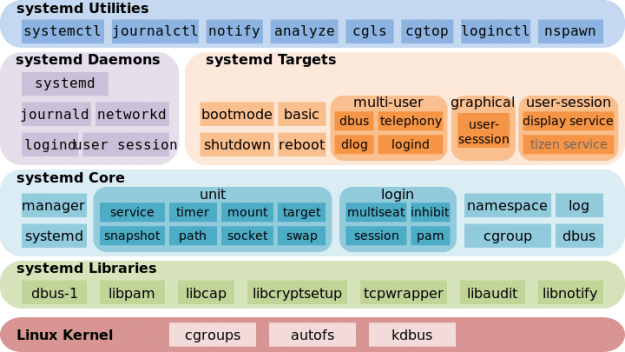
The winning option was to support systemd, but to explore other alternatives. By contrast, officially supporting multiple init systems was the first to be dropped in the multiple rounds of Debian’s complicated Condorcet voting system, no doubt because it would seriously complicate packaging many applications.
Clearly systemd has reached a level of acceptance that would have been unimaginable when it was first introduced eight or nine years ago. In fact, probably no other application had been so reviled since Mono, the Linux version of Microsoft’s .NET Framework. Critics claimed systemd’s centralized controls violate the Unix philosophy of using one small program for a single, limited purpose. Since systemd was developed by Red Hat, others viewed systemd as part of a ploy to dominate the Linux desktop.
On the technical side, many considered systemd as an unnecessary overlay of existing functions. Systemd was also condemned as making the entire system easier to crash, and acting on different assumptions from the rest of the system. Others praised elements of systemd like the systemctl command while objecting to the binary logging system. The wide-ranging debate was often venomous, and the venom often spilled over into personal attacks on Lennart Poettering and Kay Sievers, systemd’s original developers, who sometimes responded in kind.
Today, systemd is regarded differently. Arguments about the true Unix philosophy have proved moot, and the worst case scenarios have not materialized. Probably, too, the fact that most distributions use aliases to integrate systemd keeps non-administers unaware of its omnipresence.
In proposing the winning option, former Debian Project Leader Martin Michlmayr argued foremost that, “Cross-distribution standards and cooperation are important factors in the choice of core Debian technologies. It is important to recognize that the Linux ecosystem has widely adopted systemd and that the level of integration of systemd technologies in Linux systems will increase with time.” For Michlmayr, the technical benefits of supporting multiple init systems do not justify the efforts required.

»
-

- Login or register to post comments
 Printer-friendly version
- 1848 reads
 PDF version
More in Tux Machines
- Highlights
- Front Page
- Latest Headlines
- Archive
- Recent comments
- All-Time Popular Stories
- Hot Topics
- New Members
digiKam 7.7.0 is released
After three months of active maintenance and another bug triage, the digiKam team is proud to present version 7.7.0 of its open source digital photo manager. See below the list of most important features coming with this release.
|
Dilution and Misuse of the "Linux" Brand
|
Samsung, Red Hat to Work on Linux Drivers for Future Tech
The metaverse is expected to uproot system design as we know it, and Samsung is one of many hardware vendors re-imagining data center infrastructure in preparation for a parallel 3D world.
Samsung is working on new memory technologies that provide faster bandwidth inside hardware for data to travel between CPUs, storage and other computing resources. The company also announced it was partnering with Red Hat to ensure these technologies have Linux compatibility.
|
today's howtos
|


 Content (where original) is available under CC-BY-SA, copyrighted by original author/s.



Recent comments
1 year 11 weeks ago
1 year 11 weeks ago
1 year 11 weeks ago
1 year 11 weeks ago
1 year 11 weeks ago
1 year 11 weeks ago
1 year 11 weeks ago
1 year 11 weeks ago
1 year 11 weeks ago
1 year 11 weeks ago