



At SeaGL 2019, free software was in fine feather
Submitted by Rianne Schestowitz on Monday 9th of December 2019 06:31:00 PM
Filed under 
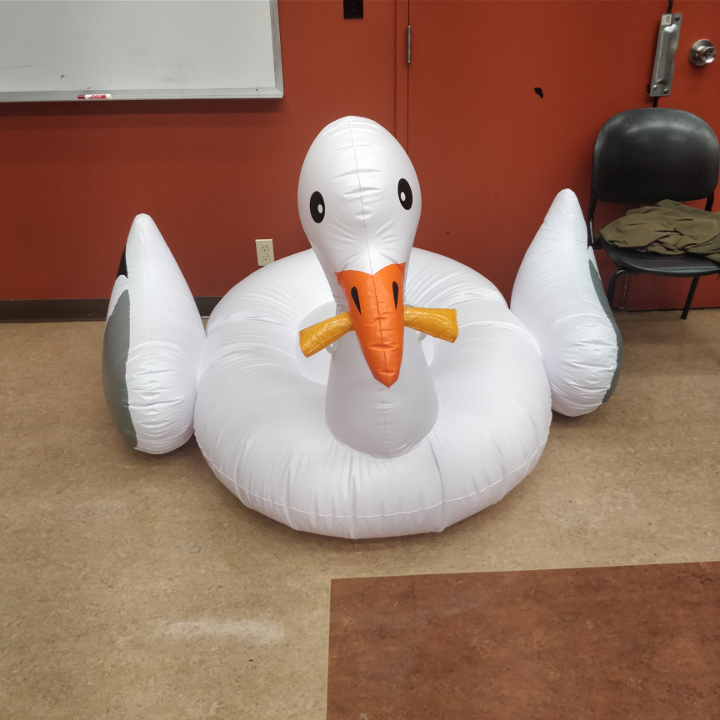
While the satisfactions of software freedom are quite enjoyable on your own, some of the greatest joys of free software come from our opportunities to flock together with other members of our community: to collaborate on our work, teach new skills, or simply show off new achievements. A grassroots gathering like the Seattle GNU/Linux Conference (SeaGL) is fun because it’s so thoroughly participatory: everyone comes into the room with something they’re excited to tell you about, and they’re equally excited to hear what you’re working on. The people at the front of the room giving a keynote talk are just as likely to be sitting next to you in the next session, so you can tell them what you thought of their talk, and even find out how to participate in their projects!
As someone who is fairly new to the free software world and comparatively short on tech knowledge, I mostly attended talks on free software culture and more easily understood technological talks, although these were hardly the only topics on offer. Having unfortunately missed the opening keynotes by Lisha Sterling and Abigail Cabunoc Mayes due to some bad allergies, I began the day with a talk on DIY decentralization, by Aeva Black. Black set an irreverent tone for their talk with a reference to the notoriously goofy nineties movie Hackers, but quickly veered into much more serious territory: major digital communication platforms have exercised bias and even overt censorship against marginalized groups. How do we navigate around the power of Facebook, Twitter, Google, and the rest? Decentralization, federation, and self-hosting provide some good solutions, and a quick demonstration showed that if you have some basic know-how and tools, anyone can do it.

»
-

- Login or register to post comments
 Printer-friendly version
- 1789 reads
 PDF version
More in Tux Machines
- Highlights
- Front Page
- Latest Headlines
- Archive
- Recent comments
- All-Time Popular Stories
- Hot Topics
- New Members
digiKam 7.7.0 is released
After three months of active maintenance and another bug triage, the digiKam team is proud to present version 7.7.0 of its open source digital photo manager. See below the list of most important features coming with this release.
|
Dilution and Misuse of the "Linux" Brand
|
Samsung, Red Hat to Work on Linux Drivers for Future Tech
The metaverse is expected to uproot system design as we know it, and Samsung is one of many hardware vendors re-imagining data center infrastructure in preparation for a parallel 3D world.
Samsung is working on new memory technologies that provide faster bandwidth inside hardware for data to travel between CPUs, storage and other computing resources. The company also announced it was partnering with Red Hat to ensure these technologies have Linux compatibility.
|
today's howtos
|


 Content (where original) is available under CC-BY-SA, copyrighted by original author/s.



Recent comments
1 year 11 weeks ago
1 year 11 weeks ago
1 year 11 weeks ago
1 year 11 weeks ago
1 year 11 weeks ago
1 year 11 weeks ago
1 year 11 weeks ago
1 year 11 weeks ago
1 year 11 weeks ago
1 year 11 weeks ago