



Changing the Python release cadence
Submitted by Roy Schestowitz on Thursday 31st of October 2019 02:24:38 AM
Filed under 
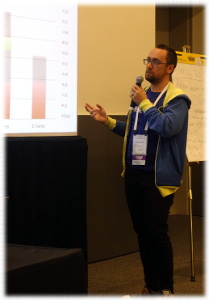
The idea had undoubtedly been discussed before, but the current push began with a 2018 Python Language Summit presentation on changing to a yearly major release that was given by Łukasz Langa—the release manager for Python 3.8 and 3.9. Roughly a year later, he proposed doubling the release frequency in the first posting of PEP 596 ("Python 3.9 Release Schedule"). That would mean a major Python release every nine months. Around the time that PEP 596 was being discussed, Nick Coghlan created PEP 598 ("Introducing minor feature releases"), which was meant to speed up feature releases; it was an early progenitor of the rolling-release model.
Nine months, as proposed in PEP 596, was too fast of a cycle for many, but the steering council did indicate support for a change of the release cycle; a one-year cycle was seemingly a better fit for most commenters. The council thought that the 3.9 schedule PEP was the wrong place to propose this kind of change, however; it suggested that a new PEP be created to propose the cadence change. To that end, Langa created PEP 602 ("Annual Release Cycle for Python"), returning to his original one-year cadence that was better received than the shorter cycle.
In the discussion of the PEP, Steve Dower suggested an even faster pace of continuous alpha releases. Coghlan was intrigued by Dower's proposal, so they teamed up to create PEP 605 ("A rolling feature release stream for CPython"). When it was posted for discussion, Coghlan noted that he had withdrawn his earlier proposal in favor of the new one.
PEP 605 itself is something of a wall of text, but it is also accompanied by a lengthy design discussion posting as well. As part of the discussion on both PEPs, though, it became clear that there was some confusion about the background and, in particular, what problems they were both trying to solve. That, naturally, led to yet another PEP, which was authored by Langa, Dower, and Coghlan: PEP 607 ("Reducing CPython's Feature Delivery Latency"). Looking at that PEP would seem to be a good starting point for disentangling the various pieces here.

»
-

- Login or register to post comments
 Printer-friendly version
- 2442 reads
 PDF version
More in Tux Machines
- Highlights
- Front Page
- Latest Headlines
- Archive
- Recent comments
- All-Time Popular Stories
- Hot Topics
- New Members
digiKam 7.7.0 is released
After three months of active maintenance and another bug triage, the digiKam team is proud to present version 7.7.0 of its open source digital photo manager. See below the list of most important features coming with this release.
|
Dilution and Misuse of the "Linux" Brand
|
Samsung, Red Hat to Work on Linux Drivers for Future Tech
The metaverse is expected to uproot system design as we know it, and Samsung is one of many hardware vendors re-imagining data center infrastructure in preparation for a parallel 3D world.
Samsung is working on new memory technologies that provide faster bandwidth inside hardware for data to travel between CPUs, storage and other computing resources. The company also announced it was partnering with Red Hat to ensure these technologies have Linux compatibility.
|
today's howtos
|


 Content (where original) is available under CC-BY-SA, copyrighted by original author/s.



Recent comments
1 year 11 weeks ago
1 year 11 weeks ago
1 year 11 weeks ago
1 year 11 weeks ago
1 year 11 weeks ago
1 year 11 weeks ago
1 year 11 weeks ago
1 year 11 weeks ago
1 year 11 weeks ago
1 year 11 weeks ago