



Habanero Qualcomm IPQ4019/IPQ4029 SoM Brings 802.11ac Wave2 WiFi to Linux Gateways and Routers
Submitted by Rianne Schestowitz on Thursday 12th of September 2019 11:16:21 AM
Filed under 
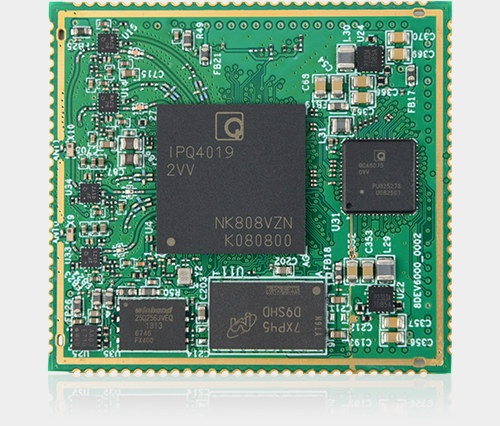
Last April, we first wrote about Qualcomm IPQ4019 quad-core Cortex-A7 processor with built-in 802.11ac Wave 2 WiFi, as it was found in Qualcomm Mesh Networking DevKit with support for Amazon Alexa. A few months later, we discovered router boards powered by either IPQ4019 or IPQ4029 processor such as Dakota DR40X9 or MikroTik RB450Gx4. The latter does not come with WiFi at all and instead leverages the hardware IPSec encryption built-into the processor.
Today, we’ve come across the first IPQ4019 / IPQ4029 system-on-module we’ve countered so far, courtesy of 8devices with their Habanero and Habanero-I 802.11ac Wave 2 modules based on the respective processors.
The company provides an OpenWrt Linux image for the board that boots from the NOR Flash. Both OpenWrt and U-boot (Caraboot) source code appears to be available on Github here and there.
There’s no detailed information about the differences between Habanero (IPQ4019) and Habanero-I (IPQ4029), but last time we have seen IPQ4029 supports “Qualcomm IoT Connectivity”, and is also available with an extended temperature range of -40°C to +110°C.

»
-

- Login or register to post comments
 Printer-friendly version
- 2742 reads
 PDF version
More in Tux Machines
- Highlights
- Front Page
- Latest Headlines
- Archive
- Recent comments
- All-Time Popular Stories
- Hot Topics
- New Members
digiKam 7.7.0 is released
After three months of active maintenance and another bug triage, the digiKam team is proud to present version 7.7.0 of its open source digital photo manager. See below the list of most important features coming with this release.
|
Dilution and Misuse of the "Linux" Brand
|
Samsung, Red Hat to Work on Linux Drivers for Future Tech
The metaverse is expected to uproot system design as we know it, and Samsung is one of many hardware vendors re-imagining data center infrastructure in preparation for a parallel 3D world.
Samsung is working on new memory technologies that provide faster bandwidth inside hardware for data to travel between CPUs, storage and other computing resources. The company also announced it was partnering with Red Hat to ensure these technologies have Linux compatibility.
|
today's howtos
|


 Content (where original) is available under CC-BY-SA, copyrighted by original author/s.



Recent comments
1 year 11 weeks ago
1 year 11 weeks ago
1 year 11 weeks ago
1 year 11 weeks ago
1 year 11 weeks ago
1 year 11 weeks ago
1 year 11 weeks ago
1 year 11 weeks ago
1 year 11 weeks ago
1 year 11 weeks ago