



Cross Architecture Linux Containers
Submitted by Roy Schestowitz on Saturday 20th of July 2019 02:19:24 PM
Filed under 


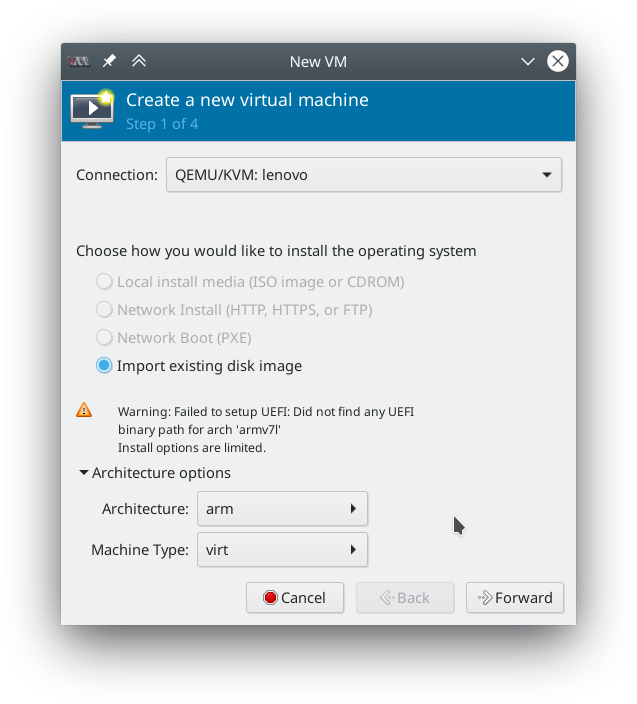
With more ARM based devices in the market, and with them getting more powerful every day, it is more common to see more of ARM images for your favorite Linux distribution. Of them, Debian has become the default choice for individuals and companies to base their work on. It must have to do with Debian’s long history of trying to support many more architectures than the rest of the distributions. Debian also tends to have a much wider user/developer mindshare even though it does not have a direct backing from any of the big Linux distribution companies.
Some of my work involves doing packaging and integration work which reflects on all architectures and image types; ARM included. So having the respective environment readily available is really important to get work done quicker.
I still recollect back in 2004, when I was much newer to Linux Enterprise while working at a big Computer Hardware Company, I had heard about the Itanium 64 architecture. Back then, trying out anything other than x86 would mean you need access to physical hardware. Or be a DD and have shell access the Debian Machines.
With Linux Virtualization, a lot seems to have improved over time.

»
-

- Login or register to post comments
 Printer-friendly version
- 6893 reads
 PDF version
More in Tux Machines
- Highlights
- Front Page
- Latest Headlines
- Archive
- Recent comments
- All-Time Popular Stories
- Hot Topics
- New Members
digiKam 7.7.0 is released
After three months of active maintenance and another bug triage, the digiKam team is proud to present version 7.7.0 of its open source digital photo manager. See below the list of most important features coming with this release.
|
Dilution and Misuse of the "Linux" Brand
|
Samsung, Red Hat to Work on Linux Drivers for Future Tech
The metaverse is expected to uproot system design as we know it, and Samsung is one of many hardware vendors re-imagining data center infrastructure in preparation for a parallel 3D world.
Samsung is working on new memory technologies that provide faster bandwidth inside hardware for data to travel between CPUs, storage and other computing resources. The company also announced it was partnering with Red Hat to ensure these technologies have Linux compatibility.
|
today's howtos
|


 Content (where original) is available under CC-BY-SA, copyrighted by original author/s.



Recent comments
1 year 11 weeks ago
1 year 11 weeks ago
1 year 11 weeks ago
1 year 11 weeks ago
1 year 11 weeks ago
1 year 11 weeks ago
1 year 11 weeks ago
1 year 11 weeks ago
1 year 11 weeks ago
1 year 11 weeks ago