



Debian Governance/Volunteer's Rights: Codes of Conduct and Hypocrisy
Submitted by Roy Schestowitz on Friday 19th of July 2019 02:39:07 PM
Filed under 

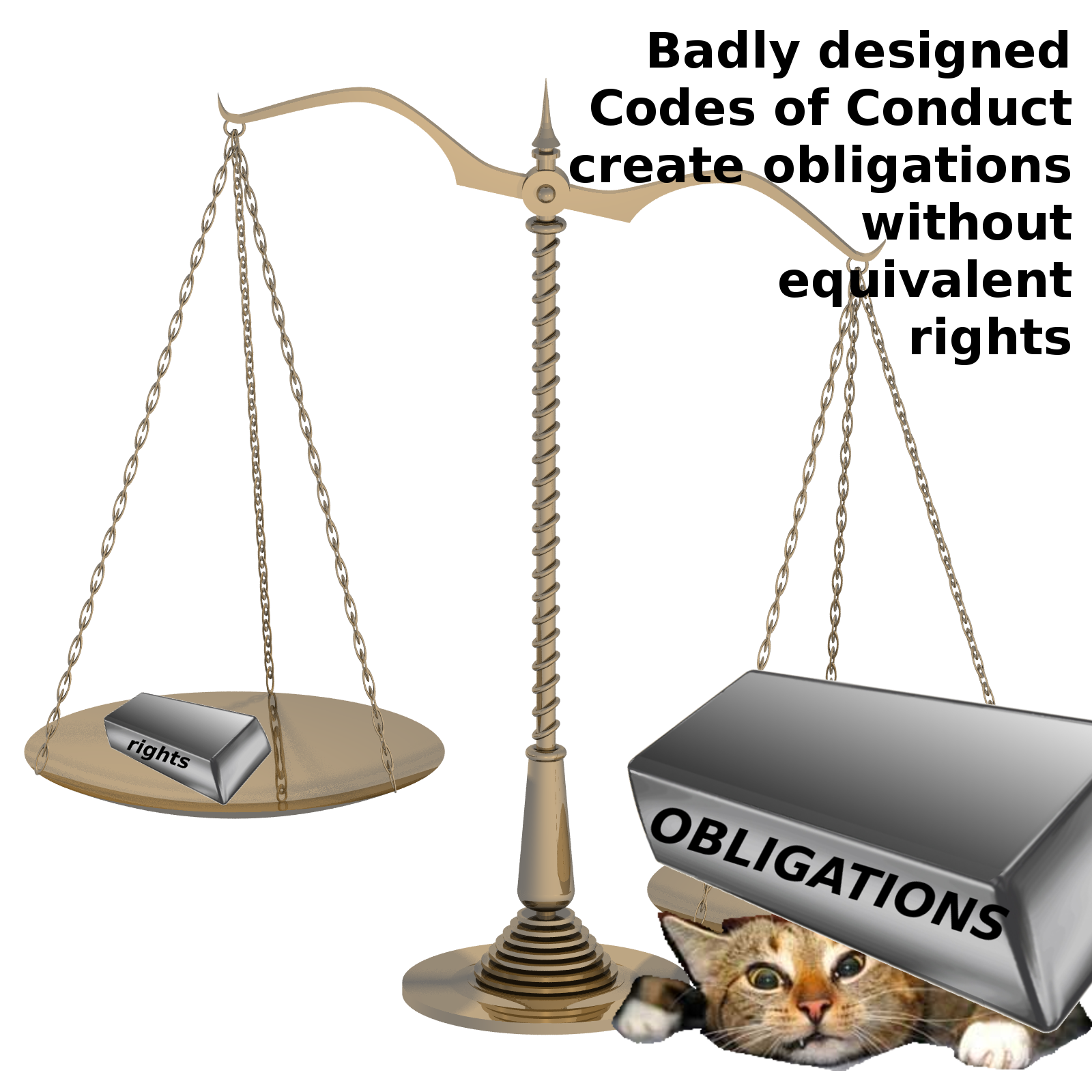
In 2016, when serious accusations of sexual misconduct were made against a volunteer who participates in multiple online communities, the Debian Account Managers sent him a threat of expulsion and gave him two days to respond.
Yet in 2018, when Chris Lamb decided to indulge in removing members from the Debian keyring, he simply did it spontaneously, using the Debian Account Managers as puppets to do his bidding. Members targetted by these politically-motivated assassinations weren't given the same two day notice period as the person facing allegations of sexual assault.
Two days hardly seems like sufficient time to respond to such allegations, especially for the member who was ambushed the week before Christmas. What if such a message was sent when he was already on vacation and didn't even receive the message until January? Nonetheless, however crude, a two day response period is a process. Chris Lamb threw that process out the window. There is something incredibly arrogant about that, a leader who doesn't need to listen to people before making such a serious decision, it is as if he thinks being Debian Project Leader is equivalent to being God.
The Universal Declaration of Human Rights, Article 10 tells us that Everyone is entitled in full equality to a fair and public hearing by an independent and impartial tribunal, in the determination of his rights and obligations. They were probably thinking about more than a two day response period when they wrote that.
Any organization seeking to have a credible code of conduct seeks to have a clause equivalent to article 10. Yet the recent scandals in Debian and Wikimedia demonstrate what happens in the absence of such clauses. As Lord Denning put it, without any process or hearing, members are faced with the arbitrary authority of the despot.

»
-

- Login or register to post comments
 Printer-friendly version
- 2836 reads
 PDF version
More in Tux Machines
- Highlights
- Front Page
- Latest Headlines
- Archive
- Recent comments
- All-Time Popular Stories
- Hot Topics
- New Members
digiKam 7.7.0 is released
After three months of active maintenance and another bug triage, the digiKam team is proud to present version 7.7.0 of its open source digital photo manager. See below the list of most important features coming with this release.
|
Dilution and Misuse of the "Linux" Brand
|
Samsung, Red Hat to Work on Linux Drivers for Future Tech
The metaverse is expected to uproot system design as we know it, and Samsung is one of many hardware vendors re-imagining data center infrastructure in preparation for a parallel 3D world.
Samsung is working on new memory technologies that provide faster bandwidth inside hardware for data to travel between CPUs, storage and other computing resources. The company also announced it was partnering with Red Hat to ensure these technologies have Linux compatibility.
|
today's howtos
|


 Content (where original) is available under CC-BY-SA, copyrighted by original author/s.



Recent comments
1 year 11 weeks ago
1 year 11 weeks ago
1 year 11 weeks ago
1 year 11 weeks ago
1 year 11 weeks ago
1 year 11 weeks ago
1 year 11 weeks ago
1 year 11 weeks ago
1 year 11 weeks ago
1 year 11 weeks ago