



aux.app – desktop music player
Submitted by Roy Schestowitz on Wednesday 6th of February 2019 09:17:31 AM
Filed under 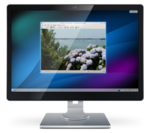

With my CD collection spiraling out of control, I’m spending more time streaming music. While digital music downloads are on the decline, music streaming services are soaring in popularity, not least because of the behemoths Google, Apple, Spotify, and Amazon. Streaming services let you pay a modest fee each month, or even listen to the music for no charge with some limitations.
Linux offers a great range of excellent open source music players. But I’m always on the look out for new and innovative streaming players.
You may have heard of Cloud-Player which was released under the GNU General Public License. It’s recently been relaunched/rebranded as aux.app. In this article, I’ll look at the native Linux player for aux.app. This streaming player plays music from YouTube, SoundCloud, and Deezer.
The frontend is written in TypeScript with Angular 7 (a platform that makes it easy to build applications with the web), Backbone (a JavaScript library with a RESTful JSON interface) and styling based on Bootstrap.
There’s a REST API written in Python 3 with Tornado. Playlists and accounts are stored using a PostgreSQL database. Redis is used to enable a Remote Control feature and the software’s recommendation system uses Elasticsearch.

»
-

- Login or register to post comments
 Printer-friendly version
- 1950 reads
 PDF version
More in Tux Machines
- Highlights
- Front Page
- Latest Headlines
- Archive
- Recent comments
- All-Time Popular Stories
- Hot Topics
- New Members
digiKam 7.7.0 is released
After three months of active maintenance and another bug triage, the digiKam team is proud to present version 7.7.0 of its open source digital photo manager. See below the list of most important features coming with this release.
|
Dilution and Misuse of the "Linux" Brand
|
Samsung, Red Hat to Work on Linux Drivers for Future Tech
The metaverse is expected to uproot system design as we know it, and Samsung is one of many hardware vendors re-imagining data center infrastructure in preparation for a parallel 3D world.
Samsung is working on new memory technologies that provide faster bandwidth inside hardware for data to travel between CPUs, storage and other computing resources. The company also announced it was partnering with Red Hat to ensure these technologies have Linux compatibility.
|
today's howtos
|


 Content (where original) is available under CC-BY-SA, copyrighted by original author/s.



Recent comments
1 year 11 weeks ago
1 year 11 weeks ago
1 year 11 weeks ago
1 year 11 weeks ago
1 year 11 weeks ago
1 year 11 weeks ago
1 year 11 weeks ago
1 year 11 weeks ago
1 year 11 weeks ago
1 year 11 weeks ago