
news
Recent Valnet Articles on Proxmox and Homelabs
-
XDA ☛ I optimized Proxmox’s defaults and cut my home lab energy costs without sacrificing speed
Proxmox is still the best home lab OS, but its defaults are much rougher than they should be
-
XDA ☛ Your Proxmox 8 server stops getting security updates in August, and upgrading to PVE 9 isn’t straightforward
Whatever you do, remember to back up your virtual guests
-
XDA ☛ I thought Proxmox would overcomplicate my home lab, but it did the opposite
I haven't been using Proxmox for too long, at least not compared to some of my esteemed colleagues. It has been a few years, but the primary reason for my sticking to my guns and running everything off a prebuilt network-attached storage (NAS) enclosure was simplicity. Synology, Asustor, and other brands all run some form of Linux on their devices, but the OS is heavily tailored to storage and running a few packages. As the home lab grew, I found that the NAS was no longer enough, and that's where Proxmox came into play.
My home lab went from running comfortably on a single low-powered device to requiring multiple platforms for services, experiments, running large language models (LLMs), and more. I had come across Proxmox countless times before the switch, but I always thought it would overcomplicate my home lab instead of simplifying a rather complex expansion. Proxmox always seemed like it belongs in the data center, but it also has a place on a PC or two at home.
-
XDA ☛ Proxmox containers made my home server faster, lighter, and easier to manage
I ran the majority of my home lab and smart home from a single network-attached storage (NAS) enclosure for years, relying on first-party apps for much of the heavy lifting. If I were to travel back in time and inform the past version of Richard that he'd fully make the switch to Proxmox and build out multiple nodes to handle everything, I would have responded with "That seems a little excessive for what I need," but requirements have most certainly evolved over time.
For those golden NAS-only years, Synology’s ecosystem felt like the perfect balance of simplicity and power with a polished GUI atop one of the best prebuilt OS options around. The brand was great for creating something with reliable storage and offered just enough container support to run everything I needed. Docker on Synology gave me media servers, automation tools, and monitoring stacks. It was mostly hands-off, which was neat. I didn't feel like I had to log in too often.
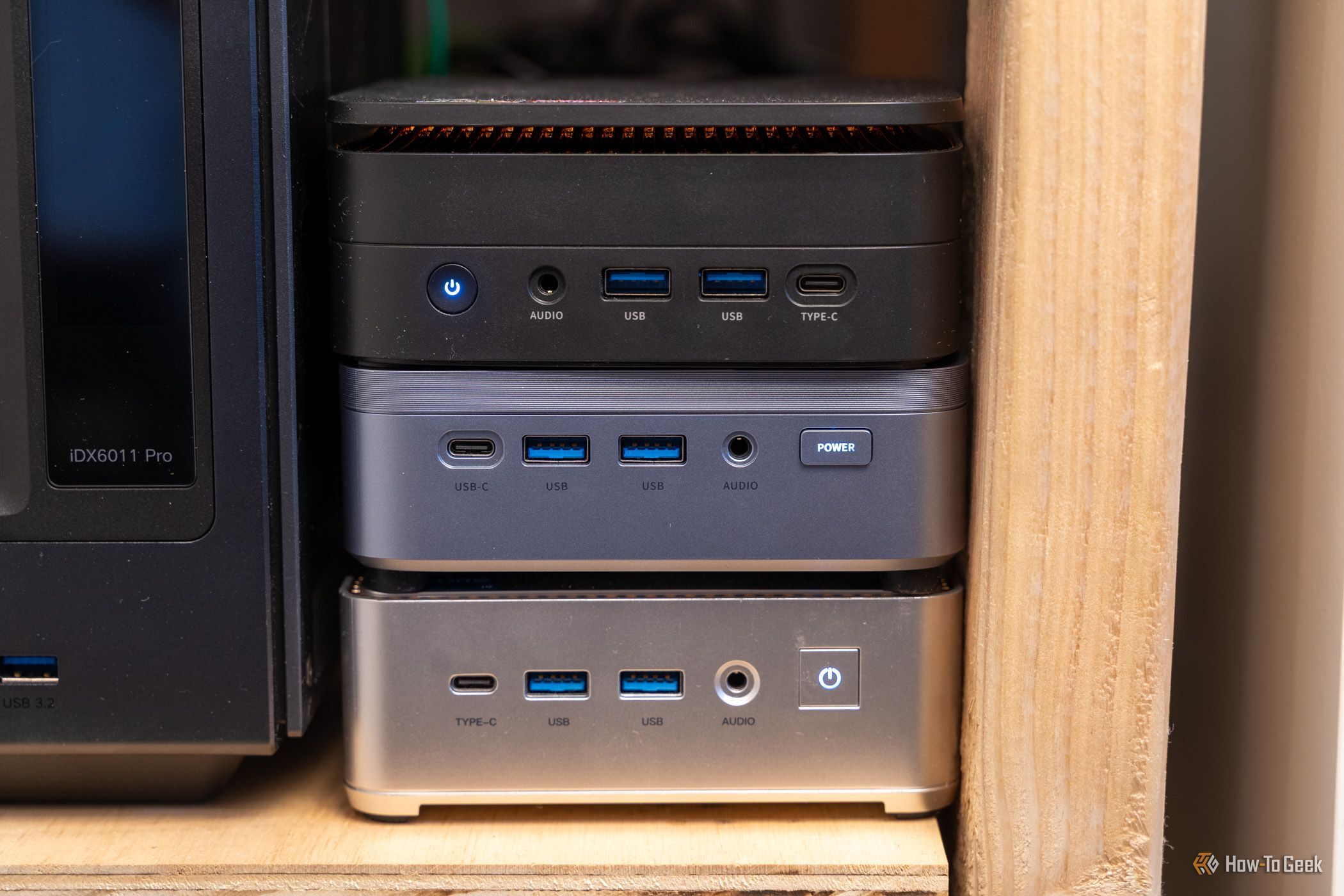
But as my home lab started to evolve outside of the NAS, things needed to change. I made the jump to bare metal solutions, but this was more hassle than it was worth. Enter Proxmox, which was extensively covered by my esteemed colleague Ayush Pande. Once I tried it out, I was immediately hooked. Making the switch from NAS to Proxmox nodes didn't just improve my hardware and software stack, but the hypervisor fundamentally changed how I approach technology, particularly running services and trying out software.
-
HowTo Geek ☛ 5 uncomfortable truths about Proxmox every homelabber needs to hear
Proxmox is a pretty powerful operating system for your homelab—too powerful, almost. While it’s both powerful and free, there are definitely some nuances to using it properly, so here are five uncomfortable truths that you should hear (and what you should do about them).
-
HowTo Geek ☛ High availability is the homelabbing trick everyone should know about
Downtime is the enemy of any homelab—mine especially. So, I finally decided to do something about it and made my homelab highly available. I only was able to do that because I already knew about it, so, if you’ve never heard of high availability, here’s why you should know about this unique trick.
-
HowTo Geek ☛ Forget bare metal: Why a hypervisor is the only way to run a professional homelab
The best operating system is one you don't have to reinstall often.