
news
today's leftovers
-
Kernel Space / File Systems / Virtualization
-
Thassilo Schulze ☛ The Tatix System
This week I finished up an OS project I have been working on for over a year. It’s a from-scratch kernel designed to serve this blog. The project originated from my interest in OS hacking. At some point, I decided I needed a goal to work towards, and serving web pages seemed like a cool and difficult thing to do. The project is done now because the system is at a point where it can (pretty reliably) serve web pages. (I planned to use it for this blog, but I need a dedicated server to run it, which is too expensive for my taste given it’s just for fun and nobody will use it).
-
-
Desktop Environments (DE)/Window Managers (WM)
-
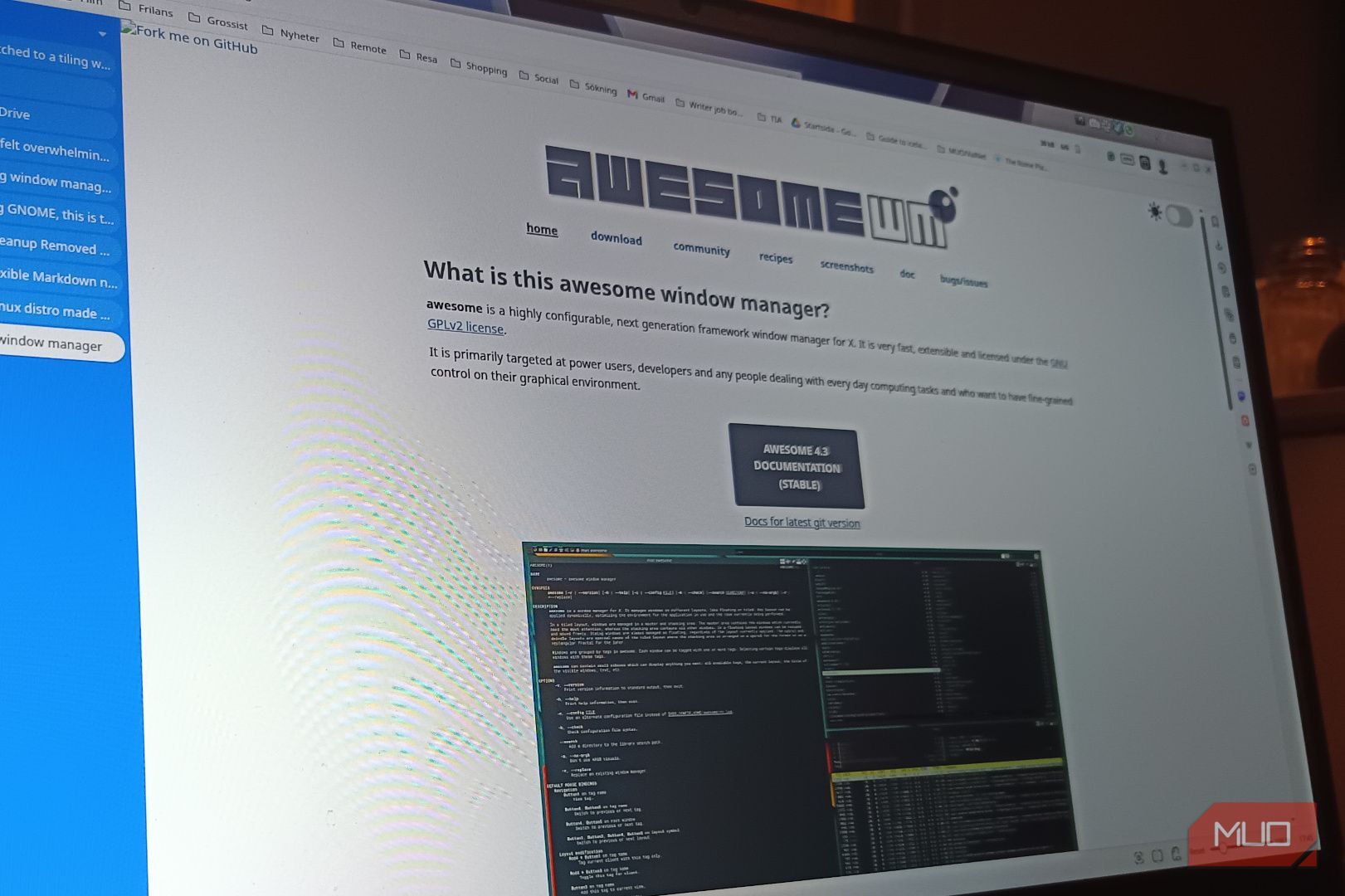
Make Use Of ☛ I switched to a tiling window manager and I'm never going back
I didn’t switch to AwesomeWM because I wanted to optimize my workflow. I switched because I was annoyed. Not dramatic-annoyed, or “throw the laptop out the window” annoyed. Just that low, steady irritation that builds when you realize you’ve resized the same two windows three times in 10 minutes. When the browser is slightly too wide, and the terminal is slightly too tall, Slack's hovering like it’s unsure of its purpose in life. When it's drag, adjust, resize, and repeat.
At some point, I stopped and thought: Why am I doing layout work before I’ve even started the actual work? My desktop felt like a needy coworker. Functional, but always asking for something. So I installed AwesomeWM. And I didn’t expect it to stick.
-
-
Distributions and Operating Systems
-
Fedora Family / IBM
-
Kevin Fenzi: misc fedora bits 3nd week of feb 2026
Well, another saturday, time for another bit of longer form recapping what has been going on in fedora infrastructure and other areas for me.
-
-
Open Hardware/Modding
-
Tom's Hardware ☛ ‘Mad scientist’ visualizes Atari 2600 fetching data from ROM for mesmerizing light show — signal propagation through the 8-bit circuits animated
A spectacular new CMOS FET level visualization of an Atari 2600 loading data has been shared by a 'mad scientist.'
-
Hackaday ☛ Love Complex Automata? Don’t Miss The Archer
He’s documenting the process of creating The Archer in a series of videos, the latest of which dives deep into just how intricate and complex of a challenge it truly is as he designs the intricate cams required.
-
Hackaday ☛ How The Intel 8087 FPU Knows Which Instructions To Execute
This decoding is mostly done by the microcode engine, with conditional instructions like cos featuring circuitry that sprawls all over the IC. Explained in the article is how the microcode engine even knows how to begin this decoding process, considering the complexity of these instructions. The biggest limitation at the time was that even a 2 kB ROM was already quite large, which resulted in the 8087 using only 22 microcode entry points, using a combination of logic gates and PLAs to fully implement the entire ROM.
-
-