
news
LWN: Predictions, 2025 Timeline, Kernel Space, and Technical Advisory Board (TAB)
-
LWN ☛ Predictions for the new year
The calendar has flipped over to 2026; a new year has begun. That means the moment we all dread has arrived: it is time for LWN to put out a set of lame predictions for what may happen in the coming year. Needless to say, we do not know any more than anybody else, but that doesn't stop us from making authoritative-sounding pronouncements anyway.
-
LWN ☛ An early look at the Graphite 2D graphics editor
Graphite is an effort to unify illustration, raster editing, desktop publishing, and animation in one browser-based application. The project has been in development since 2021 and announced its first alpha release in 2022. According to creator Keavon Chambers, the project's mission is to become ""the 2D counterpart to Blender"", by bringing a node-based, non-destructive workflow to 2D graphics. The project, currently still in alpha, is a long way from complete; but it is worth testing for anyone involved with open-source-graphics production. Current builds, from September 2025, include vector-illustration tools, a node-based compositor, and early brush tooling, with broader pixel-based- and photo-editing work still in progress.
-
LWN ☛ 2025 Linux and free software timeline
Last year we revived the tradition of publishing a timeline of notable events from the previous year. Since that seemed to go over well, we decided we should continue the practice and look back on some of the most noteworthy events and releases of 2025.
As always, our subscribers have made creation of the timeline—and our weekly coverage throughout the year—possible. If you like what you see here (and elsewhere on the site) please consider subscribing to LWN. Thanks a lot to all of our subscribers for making this and all of the rest of our coverage possible.
-
Kernel Space / File Systems / Virtualization
-
LWN ☛ Lessons from creating a gaming-oriented scheduler
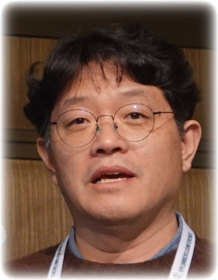
At the 2025 Linux Plumbers Conference (LPC), held in Tokyo in mid-December, Changwoo Min led a session on what he has learned while developing the "latency-criticality aware virtual deadline" (LAVD) scheduler, which is aimed at gaming workloads. The session was part of the Gaming on Linux microconference, which is a new entrant into LPC; organizers hope to see it return next year in Prague and, presumably, beyond. LAVD uses the extensible scheduler class (sched_ext) and has the primary goal of minimizing stuttering in games; it is implemented in a combination of BPF and Rust.
Min said that he has been developing LAVD as part of his work at Igalia on SteamOS and the Steam Deck. The name of the scheduler is a bit of a mouthful, but it is focused on making Windows games run better on Linux. SteamOS (and the Steam application for Linux) use Wine and the Proton compatibility layer. Most of the scheduling decision-making code for LAVD is written in BPF, with a thin, Rust-based user-space piece.
Some additional information about sched_ext and LAVD can be found in an article from last year's LPC. In addition, there were sessions on LAVD as part of the sched_ext microconference this year, including one about adapting LAVD to be the default scheduler for Meta's production fleet.
-
LWN ☛ The difficulty of safe path traversal
Aleksa Sarai, as the maintainer of the runc container runtime, faces a constant battle against security problems. Recently, runc has seen another instance of a security vulnerability that can be traced back to the difficulty of handling file paths on Linux. Sarai spoke at the 2025 Linux Plumbers Conference (slides; video) about some of the problems runc has had with path-traversal vulnerabilities, and to ask people to please use libpathrs, the library that he has been developing for safe path traversal.
Sarai began by defining what he meant by path safety. There are two kinds of path safety that are relevant to runc, he said. The first is "regular" path safety, which applies to any application working with files: when operating on a path, one of the components might change unexpectedly. For example, a program could be reading several files from a directory using absolute paths, only for a directory in the middle of the path to be changed, causing the program to see a mixture of files from different directories. That kind of time-of-check-to-time-of-use (TOCTTOU) error comes up all of the time in path-handling code. He shared a slide showing 14 different CVEs in runc since 2017, all of which involved this kind of problem. LWN covered one in 2024 and one in 2019 that were particularly noteworthy. The second kind of path safety deals with the peculiarities of virtual filesystems, and needs to be handled separately, Sarai added.
-
LWN ☛ Questions for the Technical Advisory Board
The nature and role of the Linux Foundation's Technical Advisory Board (TAB) is not well-understood, though a recent LWN article shed some light on its role and history. At the 2025 Linux Plumbers Conference (LPC), the TAB held a question and answer session to address whatever it was the community wanted to know (video). Those questions ended up covering the role of large language models in kernel development, what it is like to be on the TAB, how the TAB can help grease the wheels of corporate bureaucracy, and more.
Dan Williams opened the session by reminding everyone that the TAB has no formal authority to do anything — but, being composed of people who have spent years demonstrating leadership in the kernel community, it has a lot of influence and experience. The primary role of the TAB is to be a group of people who can be asked what "Linux" thinks about something, and have a reasonable chance of coming to an answer that the community will be happy with. With that in mind, he called for questions.
-