



Builder GTK 4 Porting, Part VII
Submitted by Roy Schestowitz on Saturday 25th of June 2022 06:06:09 AM
Filed under 

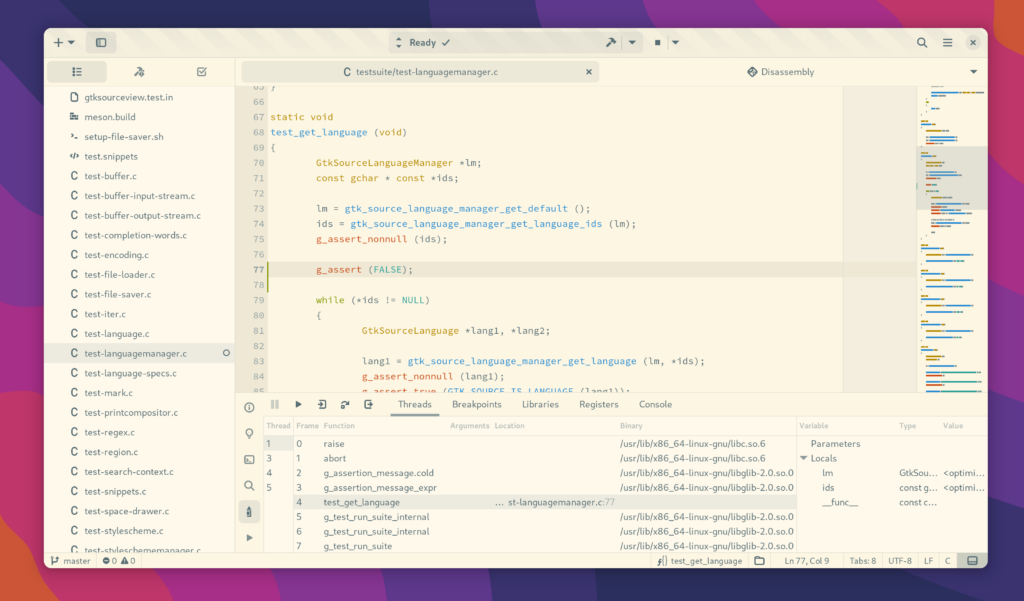
It’s been another couple weeks of porting, along with various distractions.
The big work this time around has been deep surgery to Builder’s “Foundry”. This is the sub-system that is responsible for build-systems, pipelines, external-devices, SDKs, toolchains, deployments-strategies and more. The sub-system was starting to show it’s age as it was one of the first bits of Builder to organically emerge.
One of the things that become so difficult over the years is dealing with all the container layers we have to poke holes through. Running a command is never just running a command. We have to setup PTYs (and make sure the TTY setup ioctl()s happen in the right place), pass environment variables (but to only the right descendant process), and generally a lot more headaches.
What kicked off this work was my desire to remove a bunch of poorly abstracted bits and we’re almost there. What has helped considerably is creating a couple new objects to help manage the process.
The first is an IdeRunContext. It is sort of like a GSubprocessLauncher but allows you to create layers. At the end you can convert those layers into a subprocess launcher but only after each layer is allowed to rewrite the state as you pop back to the root. In practice this has been working quite well. I finally have control without crazy amounts of argument rewriting and guesswork.

»
-

- Login or register to post comments
 Printer-friendly version
- 3492 reads
 PDF version
More in Tux Machines
- Highlights
- Front Page
- Latest Headlines
- Archive
- Recent comments
- All-Time Popular Stories
- Hot Topics
- New Members
digiKam 7.7.0 is released
After three months of active maintenance and another bug triage, the digiKam team is proud to present version 7.7.0 of its open source digital photo manager. See below the list of most important features coming with this release.
|
Dilution and Misuse of the "Linux" Brand
|
Samsung, Red Hat to Work on Linux Drivers for Future Tech
The metaverse is expected to uproot system design as we know it, and Samsung is one of many hardware vendors re-imagining data center infrastructure in preparation for a parallel 3D world.
Samsung is working on new memory technologies that provide faster bandwidth inside hardware for data to travel between CPUs, storage and other computing resources. The company also announced it was partnering with Red Hat to ensure these technologies have Linux compatibility.
|
today's howtos
|


.svg_.png)

 Content (where original) is available under CC-BY-SA, copyrighted by original author/s.


Recent comments
43 weeks 21 hours ago
43 weeks 21 hours ago
43 weeks 23 hours ago
43 weeks 1 day ago
43 weeks 1 day ago
43 weeks 1 day ago
43 weeks 1 day ago
43 weeks 2 days ago
43 weeks 2 days ago
43 weeks 2 days ago