
news
Open Hardware/Modding: Arduino, Raspberry Pi, and More
-
CNX Software ☛ StarFive Dubhe-100 – A 64-bit, RVA23-compliant RISC-V core for high-performance applications
StarFive has launched a new high-performance 64-bit RISC-V core from the Dubhe family with the RVA23-compliant Dubhe-100 designed for servers and HPC, as well as other high-performance applications. The new RISC-V IP core delivers a SPECint2006 score of 15/GHz, supports Vector and Vector Crypto extensions, and features a deep out-of-order design with a 15-stage pipeline and 6-wide issue.
-
CNX Software ☛ KAGA FEI ES4L15MA1 is a ridiculously small, ready-to-use BLE 6.0 module based on Nordic nRF54L15 SoC
Japanese company KAGA FEI has introduced another incredibly small ES4L15MA1 Bluetooth LE 6.0 module based on Nordic Semiconductor’s nRF54L15 ultra-low-power Cortex-M33 wireless MCU. Launched alongside the larger EC4L15MA1 module, the ES4L15MA1 module appears to be based on the same hardware as the ES4L15BA1 “world’s smallest module” unveiled in 2024 with an 8.55 x 3.25 x 1.00 mm form factor.
-
CNX Software ☛ PwrBlock 323 – A USB-C PD programmable power supply for automated test fixtures (Crowdfunding)
Finland-based Everypin has introduced the PwrBlock 323, a programmable USB-C PD power supply designed specifically for automated test fixtures. It can provide 1 to 32V at up to 3A, with up to 92W output from a 100W USB-C PD source, and supports software-controlled power switching, voltage and current measurement, and power cycling for a device under test (DUT). The company highlights that the PwrBlock 323 can be mounted inside a test jig or stand using its mounting points and pin headers to control and power the DUT directly as part of the automated test sequence.
-
Arduino ☛ Here’s what’s new in Arduino® Cloud: multi-page dashboards, Spaces Overview, and more!
Arduino Cloud has been getting some serious upgrades behind the scenes. Dashboards can now have multiple pages, you can see the health of your whole fleet at a glance, and devices can be locked to your account (or freed up for someone else). Here’s everything that shipped.
-
CNX Software ☛ Raspberry Pi Compute Module 5 gets an official programming jig
The Raspberry Pi Compute Module 5 Programming Jig is a single-head provisioning system designed to easily flash an OS to the Raspberry Pi CM5 without a carrier board. The jig connects to the provisioning network via Ethernet or Wi-Fi and also features a second Ethernet port for the Compute Module. The CM5 is kept in place by a mechanical clamping mechanism, and the jig relies on pogo pins to interface with the Compute Module.
-
Hackaday ☛ Smarting Up A Doorbell With Zigbee
The build is based around a wired doorbell setup, in particular, a Vistadoor ADV-100. [Philipp] was able to find a simple place to tap in to a signal that went to 5 V when the doorbell was rung. He wanted to hook this into his smart home system as easily as possible. Thus, he grabbed a rather unique part—the ESP32-H2. This is notable in the ESP32 family for having no WiFi connectivity. What it does have, however, is an 802.15.4 radio good for Thread and Zigbee communications.
-
Hackaday ☛ Mini Blinking Barrels Keep Desktop Traffic In Check
From there, things switch over to the electronics. Some in the audience will bemoan that he’s using a PIC12F1612 microcontroller to blink a single LED instead of a 555, but [Glen] brought the receipts on this one. Not only does the PIC offer more flexibility in terms of getting the blinking to look the way he wants, but it requires fewer passive components on the board and is considerably more energy efficient than the iconic timer IC. Even if you ignore all the other advantages, he calculates that going with a 555 would have cut the battery life of the finished product by approximately 15%.
-
Interesting Engineering ☛ Australia wins US deal for battery built for -76°F to 140°F extremes
EdgeVOLT is a rugged, modular battery system designed to provide portable power for communications equipment, sensors, field infrastructure, autonomous platforms and other mission equipment. Its scalable design allows power to be deployed where it is needed in remote or difficult operating environments.
-
Raspberry Pi ☛ Introducing the Raspberry Pi Compute Module 5 Programming Jig
Making a single device is hard; you have to prepare your hardware, your software, your documentation, and how you’re going to sell it. Once you clear all of those barriers, you stare down a new realm of problems — how do you make the next thousand?
-
Jeff Geerling ☛ Hands-on with Raspberry Pi's CM5 Programming Jig
One, two, or even three Pis isn't a big deal, but once you hit 4+, the process of plugging the Compute Module into a carrier board, plugging that into a computer, managing Raspberry Pi Imager, and trying to match up details like a hostname, MAC address, and the physical Pi itself, gets annoying.
Solvable, but annoying.
Raspberry Pi has a solution for that, now. It's the CM5 Programming Jig (pictured above), one of which they sent for testing.
-
Nick Moore ☛ Three-axis motion with GRBL
For an upcoming project I want to get three axis motion working with linear stages which use a stepper motor and a trapezoidal thread to move in a very accurate way.
-
Macnica 32-Channel ST 2110, Linux Zero-Copy Media Pipelines
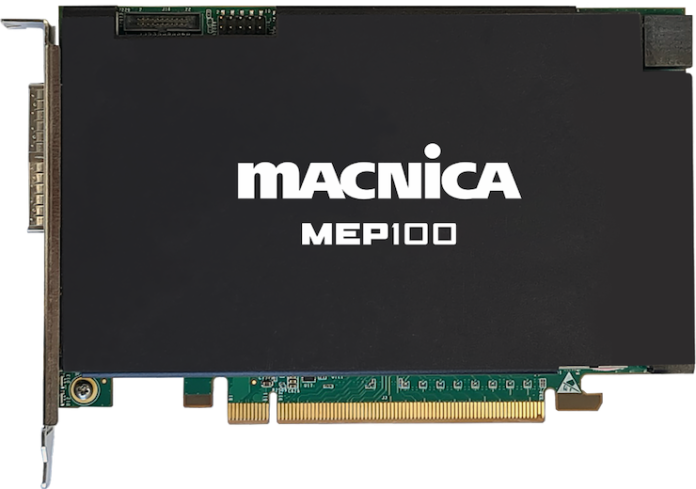
At IBC2026, Macnica will demonstrate how an open development philosophy, expanded Linux support and mature software and hardware platforms are making SMPTE ST 2110 product development more accessible while helping manufacturers accelerate time to market. Through its MEP100 SmartNIC, M2S Media Streaming SDK and growing ecosystem of technology partners, Macnica enables developers to build interoperable IP media products on the operating system and computing platform that best aligns with their engineering strategy.
-
Mobile Systems/Mobile Applications
-
Dedoimedo ☛ Repurpose an old smartphone as an offline 2FA token
Smartphones that you no longer wish to use for everyday browsing or whatnot can still be useful for several more years serving as an offline 2FA authentication tool, your own custom hardware token. This may sound a bit avantgarde, especially the offline adjective, but let's explore. I'm going to show you a somewhat clunky yet neat trick on how to accomplish this, and give elderly phones a fresh breath of practical life.
-