



Devices and Programming Leftovers
Submitted by Roy Schestowitz on Sunday 10th of July 2022 06:32:30 AM
Filed under

-
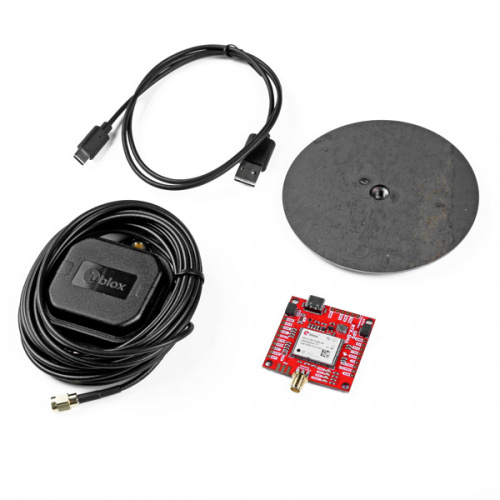
Two New GPS-RTK Kits for Extreme Accuracy
-
Swarm x SparkFun - News - SparkFun Electronics
Today's guest post will focus on the capabilities of Swarm, and Swarm’s network architecture in conjunction with SparkFun.
-
Espressif unveils "One-Stop Matter Solution" for ESP32 wireless SoC's - CNX Software
Espressif Systems have announced their one-stop Matter solution that features their ESP32, ESP32-C, and ESP32-S series wireless microcontrollers with WiFi and/or Bluetooth LE connectivity, as well as the ESP32-H series with an 802.15.4 radio for Thread and Zigbee connectivity.
Matter, which was first introduced in 2019 as Project CHIP, aims to improve interoperability among Smart Home products, has a focus on security, and the protocol is supposed to work on top of the most popular communication standards like Ethernet, Thread, 802.15.4, WiFI, Bluetooth, and so on, but more on that later. The first commercial products with support for Matter are scheduled for the end of the year, so all major vendors of wireless chips have already introduced Matter-ready solutions including NXP, Silicon Labs, Nordic Semi, and others. Espressif had actually already talked about Matter support with the announcement of the ESP32-C2 chip.
-
Go generics are not bad
When programming, we often need to write ‘generic’ functions where the exact data type is not important. For example, you might want to write a simple function that sums up numbers.
Go lacked this notion until recently, but it was recently added (as of version 1.18). So I took it out for a spin.
-
10 Most Common Mistakes That Java Developers Make
If you’re working on any new programming language, there might be certain phases where you can get stuck. This eventually leads any developer to make minor-major errors and creates a roadblock towards their learning curve. Not to forget, as much as you’ll be making mistakes, you’ll achieve excellence. Besides this, learning Java is no different task and thus it can also be excelled with time and with the right resources (tutorials, courses, books, etc) but the path towards becoming an expert is not as simple as it sounds, you need to ensure that you’re avoiding all the “Basic” mistakes that most developers do when they’re at “Beginner” level.
-
Applications, Advantages and Disadvantages of Heap
Heap is a special tree-based data structure where the three is always a complete binary tree. Heaps are of two types: Max heap and Min heap. In the case of the max-heap, the root node will have a higher value than its subtree, and for the min-heap, the root node will have a lower value than its subtree.
-
Fresh: is a New Web Framework for Building Interactive apps
Fresh is a next generation web framework, that built for speed, reliability, and simplicity. It is built on top of TypeScript and uses it primarily for development.
-
10 Open-source Dart Web server Frameworks
Dart is an open-source general purpose programming language that can be used to produce stable, fast, apps for desktop, mobile and web.
While it is around for years, it was only popular when it is used as the core for Flutter, the ever-growing framework for building mobile and desktop applications.
-
Vide: An Open Source IDE for the V Language
Vide is a lightweight open source IDE and code editor for the V programming language that written in V itself.
The V language is a simple, fast, safe, compiled language for developing maintainable software.
-
Linux Plumbers Conference: Microconferences at Linux Plumbers Conference: Rust
Linux Plumbers Conference 2022 is pleased to host the Rust MC
Rust is a systems programming language that is making great strides in becoming the next big one in the domain.
Rust for Linux aims to bring it into the kernel since it has a key property that makes it very interesting to consider as the second language in the kernel: it guarantees no undefined behavior takes place (as long as unsafe code is sound). This includes no use-after-free mistakes, no double frees, no data races, etc.
This microconference intends to cover talks and discussions on both Rust for Linux as well as other non-kernel Rust topics.
-
Spearphishing: it can happen to you too
[Microsoft] LinkedIn becomes a treasure trove of data to enable spearphising attacks.
»
-

- Login or register to post comments
 Printer-friendly version
- 896 reads
 PDF version
More in Tux Machines
- Highlights
- Front Page
- Latest Headlines
- Archive
- Recent comments
- All-Time Popular Stories
- Hot Topics
- New Members
today's howtos
| Open Hardware: XON/XOFF and Raspberry Pi Pico
|
Security Leftovers
| How to Apply Accent Colour in Ubuntu Desktop
A step-by-step tutorial on how to apply accent colour in Ubuntu desktop (GNOME) with tips for Kubuntu and others.
|


 This section of TuxMachines will no longer have new stories in it (with some caveats, including this post). To see the latest stories go to


 Content (where original) is available under CC-BY-SA, copyrighted by original author/s.



Recent comments
2 days 2 hours ago
2 days 6 hours ago
2 days 6 hours ago
3 days 13 hours ago
3 days 14 hours ago
3 days 15 hours ago
3 days 15 hours ago
3 days 16 hours ago
3 days 18 hours ago
3 days 20 hours ago