
news
Best Free and Open Source Software
-
15 Best Free and Open Source Linux TUI Typing Tutors - LinuxLinks
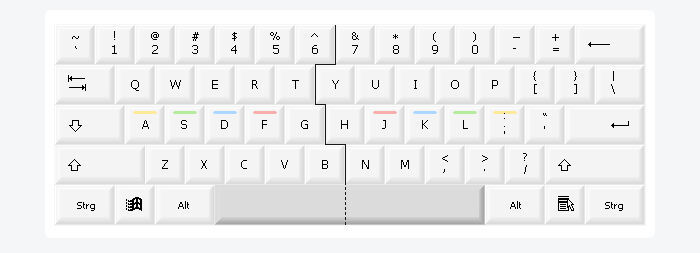
Being able to touch type is the ability of typing without looking at the keyboard. When touch-typing, the individual uses all fingers instead of just a few fingers. Consequently, typing speed increases dramatically.
It’s not only transcriptionists and secretaries that benefit from being able to type without looking at the keyboard. By concentrating on their thoughts and creative processes rather than the keyboard, all users will focus more on the content of the text, thereby increasing its quality. Moreover, touch-typing is less tiring, and less demanding on the brain. It also reduces the risk of Repetitive strain injury and Carpal tunnel syndrome.
Typing tutor software teaches fast and accurate typing through a system of informative lessons and progress tracking. We think it is important that learning should be fun, so we have included some typing games in this feature.
To provide an insight into the quality of software available, we have compiled a list of 15 useful TUI-based typing tutors. Hopefully there will be something of interest for anyone looking to improve their typing skills.
Here’s our verdict captured in a legendary LinuxLinks-style ratings chart. Only free and open source software is eligible for inclusion here. GUI tools are covered in this separate roundup.
11 Best Free and Open Source Linux Terminal-Based Clocks - LinuxLinks
One of the strengths of Linux is the vast number of small, niche utilities that are made available under an open source license.
One of the most basic utilities supplied with any operating system is a clock utility. The clock typically resides in the taskbar /menubar, showing the current system time. Nothing very exciting there.
In this article we pick the finest terminal-based clocks. Most of them offer a TUI, with the remaining few running from the command-line. They are all small, well-crafted, unobtrusive utilities that are released under an open source license.
Hopefully, there will be something of interest for anyone who wants more functionality offered by the standard clock featured in desktop environments. Here’s our verdict captured in a legendary LinuxLinks-style ratings chart.
Xjump - reimplementation of the classic Xjump game - LinuxLinks
Xjump is an arcade platform game where you keep climbing while the tower beneath you collapses.
This version is a modern SDL reimplementation of the classic Xjump, created to keep the game practical to build and run on current Linux systems while staying close to the feel of the original.
This is free and open source software.
cargo-deny - Cargo subcommand for Rust projects - LinuxLinks
cargo-deny is a Cargo subcommand for Rust projects that helps audit and enforce dependency policy.
It can scan dependency graphs for security advisories, flag banned or duplicate crates, verify that crate licenses match your project’s requirements, and ensure dependencies come from approved sources. It’s useful for developers who want tighter control over supply chain, compliance, and dependency hygiene in local development, CI pipelines, and pre-commit workflows.
This is free and open source software.
Katalog - manage catalogs of disks and files - LinuxLinks
Katalog is a desktop application for cataloging files and storage devices so you can search, browse, and analyze their contents even when the original media is offline.
It’s well suited to people managing archives across external drives, folders, and backup media, with tools for organizing catalogs and storage devices, comparing collections, and viewing file statistics. Katalog is designed with Qt and KDE KF6 libraries
This is free and open source software.
solidtime - modern time tracking application - LinuxLinks
solidtime is a modern time tracking application aimed at freelancers, agencies, and teams.
It offers a clean interface for recording work, organizing business activity, and handling time data across individual users or collaborative organizations. The project supports both self-hosted deployments and a hosted cloud service, so it can fit users who want full control over their own infrastructure as well as those who prefer a managed setup.
This is free and open source software.
Developer of the Week: Matthias Ettrich - LinuxLinks
Matthias Ettrich, born on 14 June 1972, is a German computer scientist best known as the founder of the KDE and LyX projects.
Matthias Ettrich matters to Linux because he helped turn it from a powerful but rough technical platform into something ordinary people could actually live in every day.
In 1996, when Linux and Unix desktops were still fragmented and inconsistent, he announced the project that became KDE: a “consistent, nice looking” desktop environment for Unix-like systems, built with Qt and aimed at end users rather than just specialists. That was a big shift in ambition. Ettrich was not trying to make a better window manager; he was trying to make Linux feel coherent, approachable, and complete. KDE’s own timeline marks that announcement as one of the defining moments in the history of the community, and its first stable release arrived in 1998.
rush - command-line tool for executing jobs in parallel - LinuxLinks
rush is a cross-platform command-line tool for executing jobs in parallel.
It is intended for users who want a flexible alternative to parallel and similar utilities, with support for complex command construction, replacement strings, retries, timeouts, and resumable workflows. The project is particularly well suited to shell-based batch processing and data-heavy pipelines where you need controlled parallel execution from the command line.
This is free and open source software.
Mundi - geography learning application for GNOME - LinuxLinks
Mundi is a geography learning application for GNOME that helps users test their knowledge of world regions through interactive map exercises.
It offers quizzes on continents, countries, capitals, and administrative divisions, providing immediate feedback to enhance learning. The application is written in Rust and uses GTK 4 with libadwaita, offering a modern and responsive interface for educational purposes.
This is free and open source software.