
original
How Free Software Probably Improves Physical and Mental Health
Health is a subject that's close to my heart - a subject I wrote about quite a lot in my personal site as far back as 2001. Last week I wrote about what freedom actually means [1, 2] because many people conflate possessions with freedom. This inane notion completely evades what it means to be human and human life being finite, irrespective of one's wealth (capital), possessions, and social status (as tied to perceived affluence, not merit).
Physical health is typically not the same as strength. Many correlate it with longevity, which is deeply connected to quality of life but also - inherently - relates to hereditary traits. Mental health impacts physical health and vice versa, so speaking about those two things in isolation misses the point. For instance, depression in people impacts appetite, which in turn impacts the immune system and all sorts of other vital functions.
That brings us to Free software.
In the latest talk by Dr. Richard Stallman some people publicly joked that he was unrecognisable because of his clean-shaved face. He's about 73 now and he looks younger than this:
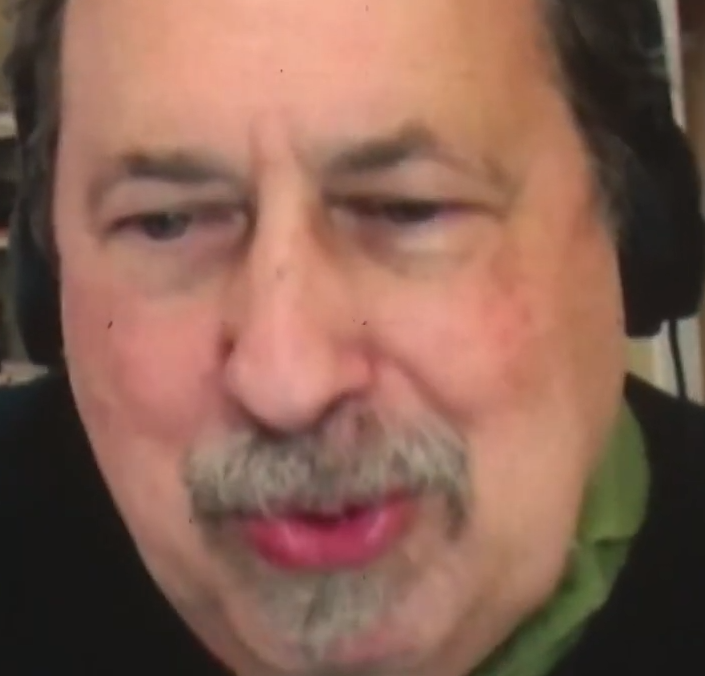
Without a goatee he might look even younger. Compare him to Linus Torvalds, about 17 years his junior:
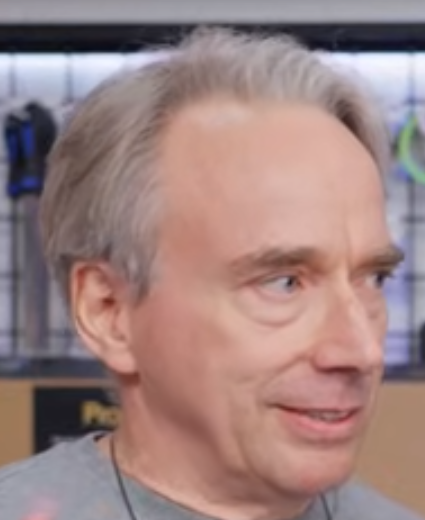
Torvalds was all groomed for this high-budget production (video) last month, so he probably looks worse "in real life".
Now, it would be unfair to judge these sorts of things based on just two individuals, but let's assume that Dr. Stallman has less stress than Torvalds and remember that Torvalds is bossed by the Linux Foundation, which compels him to do bad things. He can't be happy about it, but he cannot talk about it, either.
One thing that inspires me (as far as Dr. Stallman goes) is his raves from the 1990s about not taking a mortgage, "owning" a home (on a loan), and collecting all sorts of "assets" such as cars, which can complicate life and cause stress instead of simplifying things and reducing stress.
Any car owner knows that, costs aside, cars are a pain in the neck each time something breaks down and you must visit a garage (it's time-consuming, not just costly). Mortgages are a persistent (decades-long) yoke that enslave people who pretend that they own a home (but is actually owned by some bank or financial institution; read the finer prints).
Now, dealing with the ideals of Free software, I recently read some blog posts from people who use many "apps" and "subscriptions" (such as Netflix). They came to realise that their "running expenses" were high and increasing rapidly while subjecting them to gradual enshittification. They were paying more and getting less. That, in turn, meant they had to work harder and worry more. Such work corrodes not only the body but also the mind (overworking means a lack of sleep and posture issues). Eventually, inevitably (or in turn), it can lead to fatigue, even breakdown.
In the Free software world, we share things and create networks of mutual support. We help one another based on perceived contributions by our peers. This not only fosters a better state of mind (including stability), it also spreads the "workload".
The reason people like Gerald Jay Sussman (FSF Board) can still function mentally and be productive is that they lived in academia and worked towards freedom. Sussman turns 80 in about 14 months.
From his homepage:

People who want to become and stay healthy ought to rethink their way of life, as being humble and sharing rather than hoarding leads to a self of contentment and makes it easy to sleep (and stay asleep) at night. █